
What charging plugs, sockets and certifications a European importer should require for Type 2 and CCS2 products
 2026-10-20

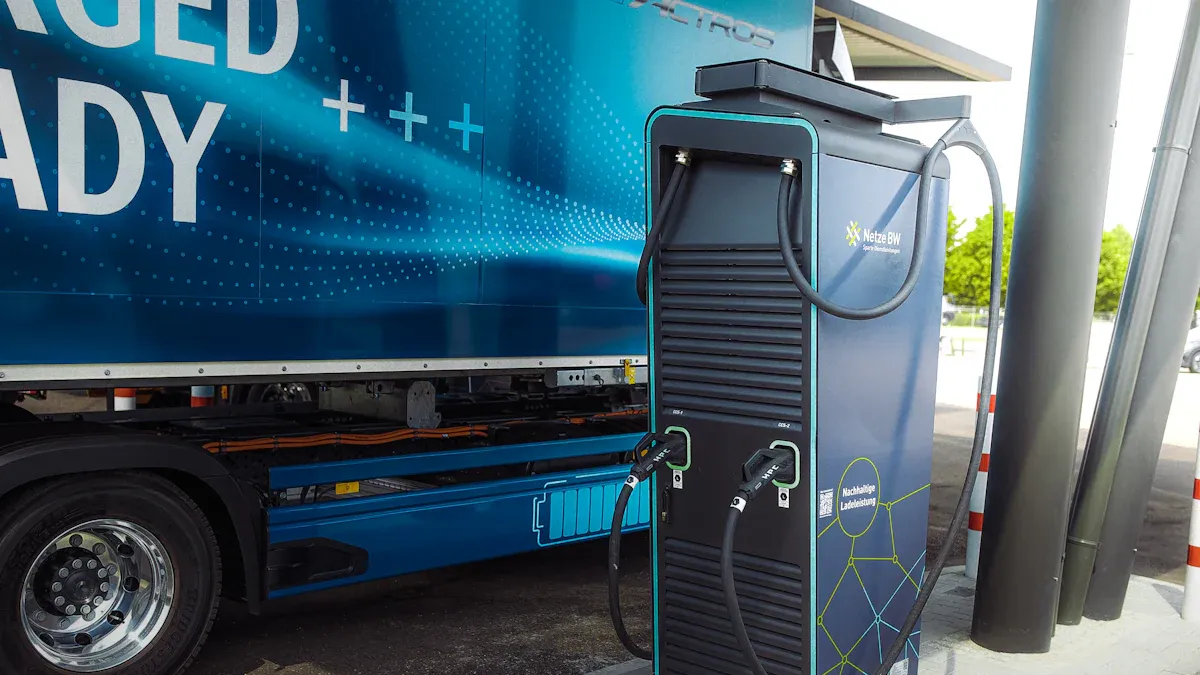
If you import electric vehicle supply equipment into the European Union, your charging plugs and sockets must match the market. Products headed for the EU need the right plug and socket setups, plus CE marking backed by the IEC 62196 type 2 standard, RoHS, and REACH compliance. Type 2 connectors are used for AC charging. CCS2 connectors are used for DC fast charging. If you get either setup wrong, your shipment fails at the port or at the installation site. You need a clear guide to the connectors each situation requires, and a document checklist to give every supplier before you place a purchase order. Wrong parts cost you time and money.
Key Takeaways
Keep both Type 2 and CCS2 connectors in stock. This covers AC and DC charging needs in Europe.
Make sure every product has the CE marking and meets IEC 62196, RoHS, and REACH standards.
Ask for a Declaration of Conformity and test reports from accredited labs before you place your order.
Check the certificate numbers in official databases to make sure they cover your exact model.
Pick suppliers who give you clear paperwork and pass tough quality tests.
Type 2 Connectors vs. CCS2
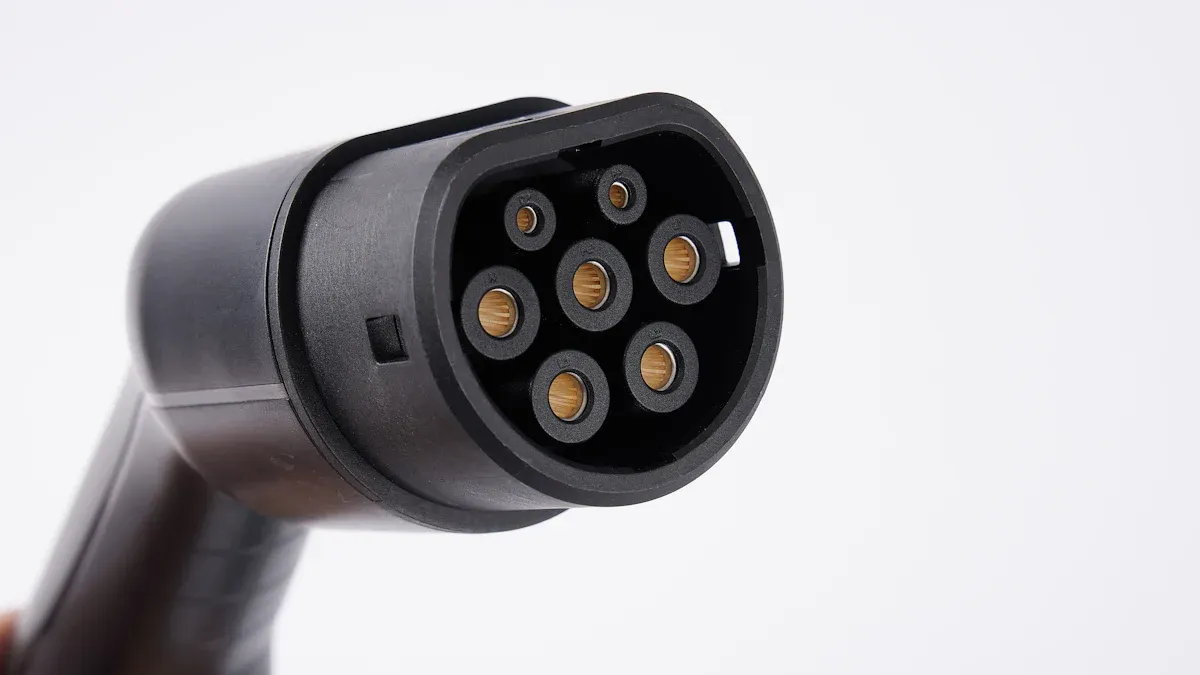
The two connector families do different jobs, and you must stock both to have a complete product line. The IEC 62196 type 2 connector takes care of AC charging. CCS2 uses a combined interface: it keeps the Type 2 AC pins and adds two extra DC power contacts below them, as defined in IEC 62196-3. This design lets one vehicle inlet accept both slow and fast charging.
AC Charging Role
Type 2 connectors deliver alternating current. A single-phase setup usually supplies 3.7 kW, and a three-phase setup reaches 22 kW. The IEC 62196-2 standard allows up to 43 kW at 400 V and 63 A. AC charging in Europe follows a driver-supplied cable model, so your station sockets must accept a standard Type 2 plug. DUOSIDA, the EV charging brand of Zhangjiagang UCHEN New Energy Technology Co., Ltd., supplies Type 2 sockets and inlets tested to CE and TUV standards.
DC Fast Charging Role
The ccs – combined charging system standard covers direct current. A ccs2 plug cannot fit a Type 2-only port, and a Type 2 cable cannot deliver DC fast charging. European networks run CCS2 chargers from 50 kW to 350 kW, with high-power sites reaching beyond that range. These ev charging standards do not work with CHAdeMO or GB/T stations, so vehicles with GB/T sockets need adapters in Europe.
Every CCS2 port accepts a Type 2 plug for slower AC charging, but a Type 2 port cannot accept a CCS2 plug.
Feature
Type 2 (AC)
CCS2 (DC)
Current type
Alternating current
Direct current
Typical power
3.7–22 kW
50–350 kW
Best use
Home and overnight charging
Highway fast charging
Charging Plugs and Sockets by Scenario
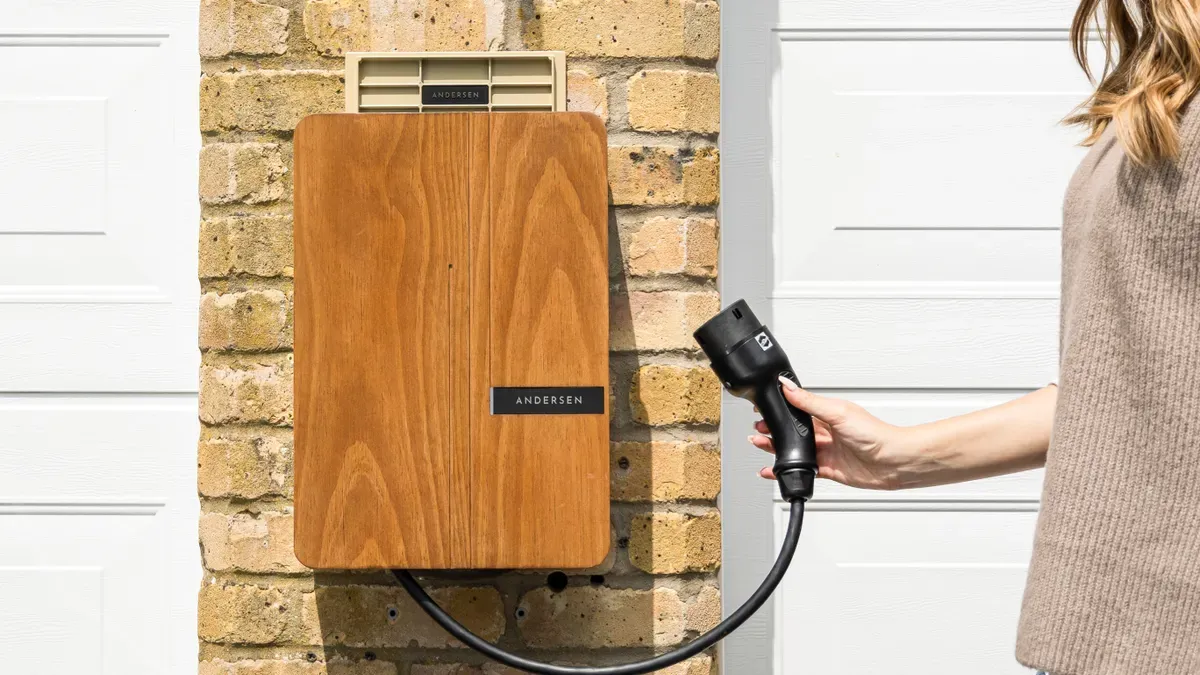
Your product line must match the connector to the charging scenario. A station built for AC duty needs different hardware than a DC rapid charger. Get this mapping right before you finalize any purchase order.
IEC 62196 Type 2 EV Charging (AC)
For AC, you put Type 2 sockets on charging stations and Type 2 inlets on vehicles. The IEC 62196 type 2 connector carries single-phase and three-phase current. The IEC 62196 type 2 socket takes a standard plug without adapters. AC charging in Europe follows a driver-supplied cable model. Drivers usually bring their own type 2 iec 62196 cable and plug it into the station socket. So your station design should focus on a durable type2 ac ev charging socket, not a tethered cable. DUOSIDA supplies Type 2 sockets and inlets tested to CE and TUV standards, and the brand fits this driver-supplied model well. A second type2 ac ev charging socket variant with a mechanical shutter adds protection without breaking compatibility. The type 2 iec 62196 interface must stay within EN 62196-2 tolerances, because a loose fit causes overheating at high current.
CCS2 DC Fast Charging
For DC, you put CCS2 connectors on rapid chargers and CCS2 inlets on vehicles. A ccs2 dc charging cable carries direct current at 50 kW to 350 kW on typical European networks. High-power sites push beyond that range. New EV chargers in the UK should be specified with Type 2 sockets for AC and CCS2 connectors for DC rapid charging. This dual setup keeps one station useful for both overnight and highway charging. The ccs2 inlet accepts a Type 2 plug for slower AC sessions, so vehicle-side compatibility stays intact. Note that ccs2 does not work with CHAdeMO or GB/T stations, and those networks need adapters in Europe.
The Alternative Fuels Infrastructure Directive (AFID) sets the interoperability baseline for member states:
Charging point category | Mandated connector | Referenced standard |
|---|---|---|
AC normal power | At least Type 2 socket outlets or vehicle connectors | EN 62196-2 |
AC high power | At least Type 2 connectors | EN 62196-2 |
DC high power | At least Combo 2 connectors | EN 62196-3 |
Every AC point must offer at least a Type 2 connector, and every DC point must offer at least a CCS Combo 2 connector. Other connector types are allowed. These ev charging standards give you a clear specification target. The european market treats Type 2 and CCS2 as the default pair, and your charging plugs should follow that rule. Stock both families, check the standard reference on each datasheet, and your charging plugs will clear customs and site inspection without rework.
Certifications and the IEC 62196 Type 2 Standard
Mandatory Marks and Directives
CE marking is your legal entry ticket to the European market. It is not a single test. It is a statement that your product meets every directive that applies to it. For charging equipment, several directives usually apply at the same time.
Directive | Reference | Scope |
|---|---|---|
Low Voltage Directive (LVD) | 2014/35/EU | Electrical safety within the directive's voltage scope |
EMC Directive | 2014/30/EU | Electromagnetic emissions and immunity |
Radio Equipment Directive (RED) | 2014/53/EU | Chargers that send or receive radio signals |
RoHS Directive | 2011/65/EU | Limits on hazardous substances |
WEEE | National implementation | Producer registration and end-of-life duties |
The LVD covers equipment that runs at 50–1000 VAC or 75–1500 VDC, so DC chargers fall inside that range. The EMC Directive requires testing to harmonized standards such as EN 61851-21-1 for conductive charging systems. The RED applies whenever the station contains 4G, Wi-Fi, or Bluetooth modules, which covers most networked chargers. You must also register for WEEE in each member state where you sell.
Material compliance sits alongside these directives. RoHS 2011/65/EU limits hazardous substances in electrical equipment. REACH controls chemicals, including Substances of Very High Concern. Both act as baseline market-access requirements for type 2 and ccs2 connector materials. Suppliers of Type 2 cables typically confirm TUV, CE, RoHS, and REACH together as one certification set. CCS2 socket makers often specify halogen-free, flame-retardant housings that satisfy RoHS and REACH. Ask for the test reports, not just the claim.
Connector and Material Standards
The iec 62196 standard is the technical backbone of your file. Part 2 covers type 2 ac connectors for AC charging. Part 3 covers DC connectors, including the ccs2 interface with its dedicated high-current pins below the Type 2 AC face. Part 3 also sets rated current and voltage, pin geometry, and safety rules for direct battery charging. A compliant CCS2 assembly may carry ratings of 300 A, 400 A, or 500 A at up to 1000 V DC, with 10,000+ mating cycles and IP55 protection.
Europe adopts this framework as EN IEC 62196. Once the EN version is cited in the Official Journal of the EU, products that meet it gain presumption of conformity with the cited directives. That is how iec 62196 type 2 ev charging hardware becomes legally defensible in the EU. The iec 62196 international ev charger standard therefore supports your CE file directly. Insist on third-party test reports from accredited bodies. DUOSIDA, the EV charging brand of Zhangjiagang UCHEN New Energy Technology Co., Ltd., tests its type 2 connectors and CCS2 products to CE and TUV standards, which gives you a documented starting point for your own compliance file.
Verifying Compliance and Choosing Suppliers
Documents to Request
Paperwork shows that your charging plugs meet EU rules. Begin with a Declaration of Conformity. It must list the exact model, the directives that apply, and the harmonized standards. A legally responsible person signs it, and the revision has a date. Next, ask for test reports from IECEE CB Scheme-accredited labs or recognized NRTLs. These reports should cover safety and EMC for the configuration you are quoted. Accredited bodies such as UL Solutions issue CB certificates for the IEC 62196 series, and the CB Scheme accepts these certificates in more than 50 countries. IDIADA holds ENAC accreditation under ISO 17025 for conductive charging system testing, which gives you a second recognized route.
Check every certificate number yourself. Look up UL file numbers on UL Product iQ and confirm CB certificate numbers in the IECEE database. Ask for a model and variant matrix. It must show the certificate covers the exact power tier, connector type, voltage range, and enclosure rating you buy. Add a change-notification clause to the contract. This clause requires the supplier to report any material change to the certified design. Treat ISO 9001 as a quality signal only, never as product certification. Pair it with calibration records and corrective-action logs.
Supplier Evaluation Checklist
A strong supplier answers with specifics, not slogans. Use the table below to score each response.
Capability area | Strong response | Weak signal |
|---|---|---|
Product coverage | Named cable, connector, adapter, cap, and mount options | Large catalog with no model references |
Fitment | Vehicle, inlet, and charger mapping with drawings | "Universal" claims |
Evidence | Datasheets, reports, and traceability | Certificates with no product identity |
QC | Defined checkpoints and records | "100% inspection" with no records |
Supply | MOQ, lead times, and warranty terms | One optimistic delivery date |
Lock down the sample identity before you approve anything. Record the SKU, revision, batch, and sample date. Test the physical fit against the intended vehicle and charger. Then test insertion, removal, and cable bend. Compare markings, labels, manuals, and datasheets against the quotation. Record each result as pass, conditional, hold, or reject, and name an owner for closure. Seal a control sample with photos and the approved document revision.
DUOSIDA, the EV charging brand of Zhangjiagang UCHEN New Energy Technology Co., Ltd. (stock code: 873087), fits this checklist well. The company was established in June 2004 and lists on the New Third Board Innovation Layer. Its products carry UL, CSA, TUV, BS, CE, PSE, and 16949 certification. That range supports your compliance documentation from the first quotation.
Your import file rests on three main supports. Match charging plugs to the situation: Type 2 sockets for AC, CCS2 connectors for DC. Support every model with CE marking, IEC 62196 type 2 conformity, RoHS, and REACH compliance. Treat certification documents and supplier checks as must-haves before you place any order.
EU requirements will keep changing. The European Commission aims for 3.5 million public charging points by 2030, while ACEA estimates 8.8 million are needed. That gap points to tighter rules ahead. Check your product line against AFIR updates each year, and keep your compliance file up to date.
FAQ
Can I use a Type 2 cable for DC fast charging?
No. A Type 2 cable only carries alternating current. DC fast charging needs a CCS2 connector, which adds two extra DC pins below the Type 2 face per IEC 62196-3. Your CCS2 inlet still takes a Type 2 plug for slower AC sessions.
Which certifications should I demand before placing an order?
Ask for a signed Declaration of Conformity that lists the applicable directives and harmonized standards. Request test reports from accredited labs that cover safety and EMC. Add RoHS and REACH material statements. Confirm the certificate covers your exact model, power tier, and connector type.
Does one product line cover both AC and DC charging?
No. You need Type 2 sockets and inlets for AC stations, plus CCS2 connectors and inlets for DC rapid chargers. Stock both families to serve European sites. AFID requires at least Type 2 for AC points and at least Combo 2 for DC points.
How do I confirm a supplier's certificates are genuine?
Check each certificate number in the issuing body's database, such as UL Product iQ or the IECEE CB Scheme database. Match the certificate to your exact model and variant. Require written notice of any design change that affects the certified configuration.
Where does DUOSIDA fit into a compliant supply chain?
DUOSIDA, the EV charging brand of Zhangjiagang UCHEN New Energy Technology Co., Ltd. (stock code: 873087), supplies Type 2 and CCS2 products tested to CE and TUV standards. Its products also carry UL, CSA, BS, PSE, and 16949 certification, which supports your compliance file from the first quotation.