
Charging architecture launch with NACS/J3400 only or retain CCS1 compatibility?
 2026-10-20

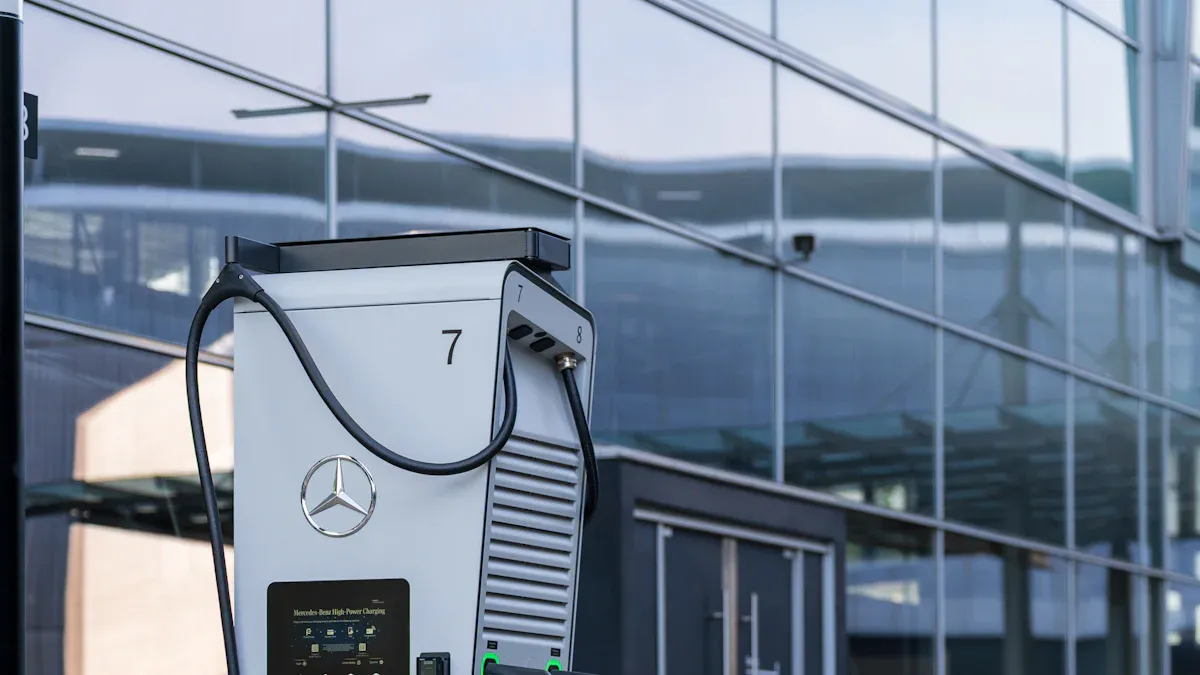
For most new electric vehicle models sold in the United States, the charging architecture launch with NACS/J3400 only or retain CCS1 compatibility decision should favor starting with a charging setup that uses only NACS/J3400. Keeping CCS1 compatibility still makes sense in some specific cases. Four things lead to this recommendation. Technical performance shows how each connector handles speed, durability, and bidirectional charging. Application fit weighs network access and interoperability for drivers. Regulatory compliance covers alignment with U.S. EV charging standards, including SAE J3400 and state programs. Cost compares manufacturing, infrastructure, and consumer pricing. Together, these factors make clear when the North American Charging Standard leads and when a dual-standard CCS approach fits best.
Key Takeaways
Most new electric vehicle models should come out with only the NACS/J3400 charging port. This makes charging easier and gets them ready for the future.
NACS has a smaller, tougher connector and supports higher voltage for faster charging.
Drivers can still use CCS stations with an adapter, so a car with only NACS does not lose charging options.
Fleet or niche models that rely on current CCS infrastructure may still keep CCS1 compatibility.
Federal rules require CCS connectors at stations paid for by NEVI, so some models may need to support both standards.
Technical Performance: NACS vs. CCS
Speed and connector design
Peak power is only one part of the picture. The Tesla NACS connector supports up to 250 kW at V3 Supercharger stations right now, while CCS1 hardware can handle up to 350 kW. A driver who uses an adapter to connect the two must think about these power differences. The adapter becomes the bottleneck, and the vehicle may charge below the station's rated output.
Voltage headroom matters for future models. The NACS/SAE J3400 standard is built to support charging up to 1,000 volts. That ceiling gives engineers room for higher-voltage packs without needing a new connector. The J3400 connector reaches 350 kW class charging by raising maximum working voltage to 1,000 V. CCS1 deployments usually run at lower voltages today, though newer hardware has increased voltage capabilities over time.
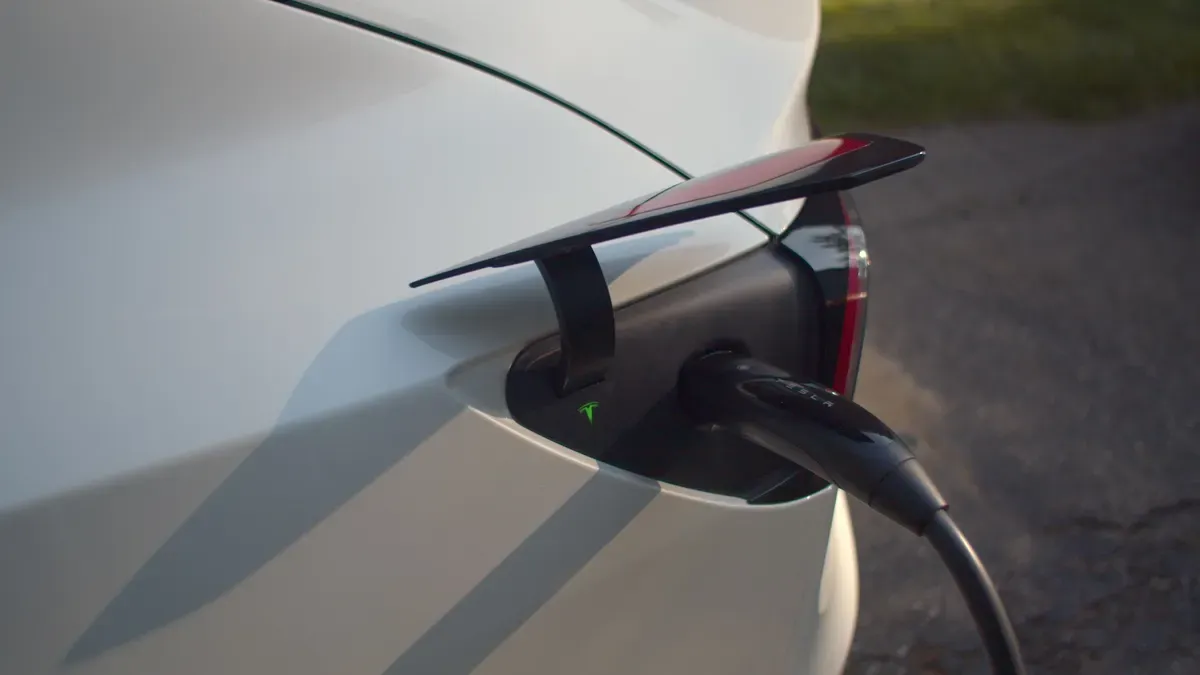
Design clearly separates the two connectors. The NACS connector uses a compact 5-pin layout. AC and DC share the same pins, so the vehicle port stays small. CCS1 stacks two large DC pins beneath a J1772 AC connector. The result is a bulky, non-ergonomic plug. A lightweight NACS plug supports easy one-handed handling. Thick liquid-cooled CCS1 cables make operation physically demanding, especially in cold weather when cables get stiff.
Durability and bidirectional charging
Durability favors the simpler design. The NACS locking mechanism sits on the vehicle side. The handle has no moving parts, which removes the most common mechanical failure point. CCS1 places a plastic latch on the handle side. That latch is prone to breaking when dropped or frozen, and it is a leading cause of maintenance calls and charger downtime.
Bidirectional charging support differs by standard. The SAE J3400 framework is designed as V2G-ready, so vehicle-to-grid functions have a clear path. CCS supports bidirectional charging too, but protocol differences can limit functionality. NACS and CCS-based charging both rely on Power Line Communication. Older protocols such as CHAdeMO use CAN bus. This mismatch can cause charging-start delays and reduced charging speeds when adapters bridge incompatible systems.
Each option fits a distinct role. The NACS inlet suits mass-market models that prioritize driver convenience, compact packaging, and long-term voltage headroom. CCS1 fits platforms that need maximum current DC power today or that serve fleets already built around CCS infrastructure. Neither standard is weak. The right pick depends on the model's power targets and charging strategy.
Application Fit and Interoperability
Charging network access and convenience
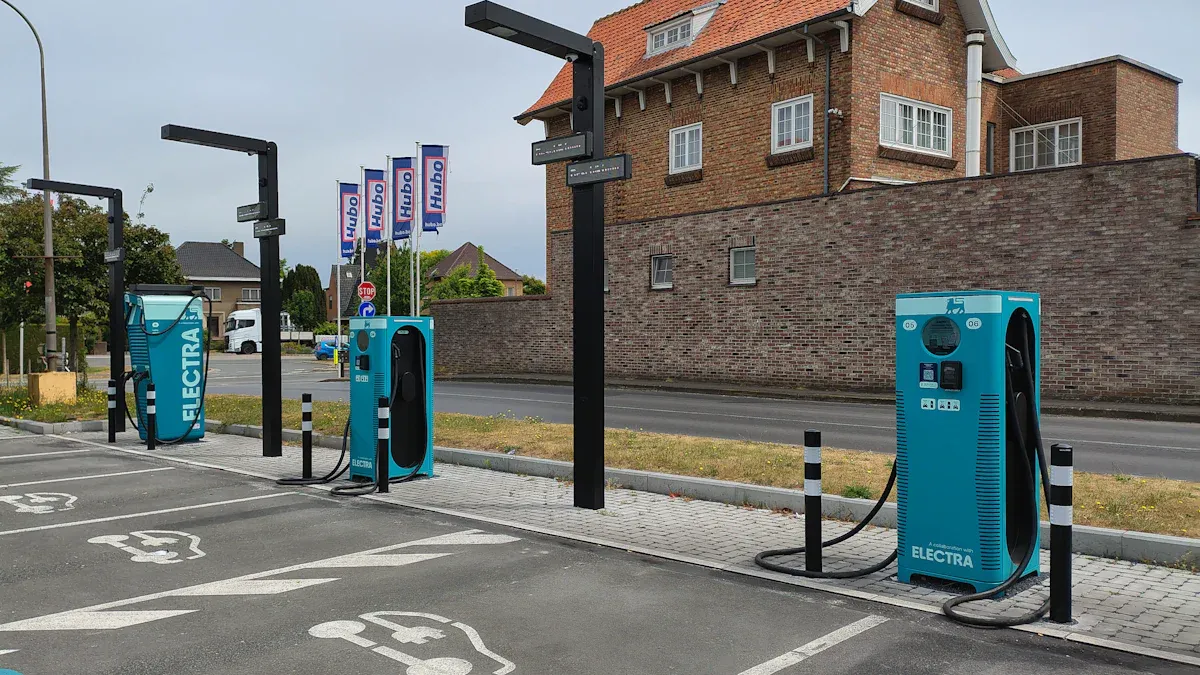
The North American Charging Standard is becoming the national EV charging plug standard in the United States. Nearly all major automakers have committed to integrating NACS ports into future models. The infrastructure is moving the same way. An analysis of Alternative Fuels Data Center data published in January 2026 counted almost 37,500 SAE J3400 DC fast-charging connectors nationwide as of January 1, 2026, a 27% year-over-year increase. That growth shows strong nacs adoption across the country.
Drivers still want to use the existing CCS network. Cars with a J3400 port usually come with a ccs1 to nacs adapter, so the car still works with older stations. Tesla Magic Dock locations fix the problem from the other side. These Supercharger sites are open to all electric vehicles and have a built-in CCS adapter. The station releases that adapter when a session starts, so any CCS1-equipped vehicle can plug in and charge without bringing its own adapter. One location then serves both the nacs connector and the ccs1 connector.
Some models need more than hardware. Non-Tesla vehicles need software updates so they can talk to Tesla's Supercharger software. The table below sums up what access takes.
Requirement | Details |
|---|---|
Hardware | A nacs to ccs1 adapter, or a built-in NACS port |
Software | An automaker update that lets the vehicle talk to Supercharger software |
Caution | Third-party adapters may void warranty coverage and may fail to start a charge |
Most automakers have committed to J3400. Kia, Mercedes-Benz, Rivian, Stellantis, Toyota, Volkswagen, and Volvo have all announced NACS plans, and several include adapters for existing owners.
Future-proofing the model
The charging architecture launch with NACS/J3400 only or retain CCS1 compatibility choice comes down to two paths. A native NACS port brings convenience and future-proofing. The nacs plug fits the growing Supercharger footprint, and nacs charging works without an adapter at most new stations. A kept CCS1 port brings wide interoperability with the established CCS network. That path suits fleets with depot chargers already wired for CCS and niche models whose buyers depend on specific CCS sites.
Connector compatibility also shapes the buyer's daily routine. An adapter adds a step at every session and can limit power transfer. A native port removes that step. The trade-off is real, and neither path is wrong. The next section covers how ev charging standards and state programs treat each option.
Regulatory Compliance
U.S. standards and NEVI alignment
Federal rules still affect which connectors you can use. Under the National Electric Vehicle Infrastructure program, every DCFC port must have a CCS Type 1 connector. A port can also offer other open connectors, like the nacs connector, if it can still charge a CCS-compliant vehicle. Every port must keep at least one permanently attached CCS Type 1 connector that stays accessible. AC Level 2 charging still requires J1772 connectors.
The policy has become more flexible around the North American Charging Standard. The Federal Highway Administration changed NEVI to support NACS adoption, and the program can now fund NACS-equipped systems under the same CCS condition. NEVI can pay for up to 80% of eligible project costs, and the FHWA made $100 million available to repair and replace charging infrastructure that is not working, including NACS upgrades. SAE, the group behind CCS, named the standard SAE J3400 and worked to make it an open standard. That step matters for ev charging standards and for any electric vehicle maker thinking about a single-port design.
State incentives and certification
State programs add their own rules. Kentucky became the first state to require federally funded stations to include NACS connectors along with the required CCS connectors. Texas passed a similar policy, and Washington introduced comparable legislation. These rules favor a design that keeps CCS1 present while adding NACS.
Interoperability conditions also apply to funded chargers. Corridor sites must support open communication standards, and states must publish connector type, power level, real-time status, and pricing through a free API. A backward compatible architecture makes this work easier, because one port serves both connector standards.
From a compliance view, a NACS-only launch fits models sold outside federally funded corridors. A dual-standard design fits any model that depends on NEVI-funded sites or state programs that require CCS alongside j3400.
Cost
Manufacturing and infrastructure
A single-port design costs less to build. One NACS inlet takes the place of a dual-port setup, and fewer parts mean a smaller bill of materials. A bundled adapter adds cost to the vehicle, but it keeps CCS1 access for drivers. The nacs connector also makes harness routing inside the vehicle simpler. A dual-port design raises part count, assembly time, and warranty exposure. Each path has a real trade-off, and neither one wins on every line item.
Infrastructure investment follows the same logic. Site operators who add NACS hardware serve the growing share of new electric vehicle models with native ports. Operators who keep CCS1 hardware protect access for older vehicles. A provider with experience across both formats lowers risk on either path. DUOSIDA (Zhangjiagang UCHEN New Energy Technology Co., Ltd.) fits that role. The company calls itself a first-class charging solution service provider in China, with a focus on high-performance charging products for new energy vehicles. It was established in June 2004, completed stock reform in 2017, and listed on the New Third Board Innovation Layer. Its main products cover EV charging connection devices, charging stations, high-voltage connectors and assemblies, plus wireless charging technology research, manufacturing, and sales of components. Its products hold UL, CSA, TUV, BS, CE, PSE, and 16949 certifications. Domestic customers include mainstream domestic car companies, well-known overseas car companies, and the top three charging pile companies in Europe and America.
Consumer pricing impact
Pricing pressure reaches the buyer in several ways. A native NACS port removes the adapter purchase, and nacs charging needs no extra hardware at most new stations. A kept CCS1 option may carry a higher sticker price when the automaker bundles an adapter or builds two inlets. Adapter cost also shifts to the buyer when the automaker sells it as an accessory.
The two paths serve different buyers. A mass-market model with a native port keeps the price low and the daily routine simple. A fleet or niche model with existing CCS dependencies spreads infrastructure cost across known routes. Buyers who weigh upfront price against long-term convenience will judge each option differently. The right fit depends on the target buyer and the charging plan behind the model.
Technical performance, application fit, regulatory compliance, and cost all point one way for most models. The charging architecture launch with NACS/J3400 only or retain CCS1 compatibility choice favors a native port for convenience. Retaining CCS1 compatibility suits fleets tied to existing sites.
The recommendation holds. Most new models launch with NACS/J3400 only. Mass-market models take the single port. Fleet or niche models with CCS dependencies keep the dual path.
The charging architecture launch with NACS/J3400 only or retain CCS1 compatibility decision still depends on target buyers and charging strategy. SAE J3400, interoperability, and EV charging standards shape that call. North American Charging Standard adoption grows, and each electric vehicle program weighs it differently.
FAQ
Does a NACS-only launch lock drivers out of the CCS network?
No. Most automakers include a CCS1-to-J3400 adapter with cars that have a native port. Tesla Magic Dock sites also give out a built-in adapter at the station. Drivers can still use older stations without a second inlet on the vehicle.
Which connector supports higher voltage for future models?
The SAE J3400 standard supports charging up to 1,000 volts. That headroom gives engineers room for higher-voltage packs. CCS1 hardware has raised voltage capabilities over time, but the J3400 ceiling sets a clear path for future electric vehicle platforms.
Do federal funds require a CCS connector at every station?
Yes. Under the National Electric Vehicle Infrastructure program, every DCFC port must keep at least one permanently attached CCS Type 1 connector. A port may also offer NACS. The FHWA now lets NEVI funds support NACS-equipped systems under that same condition.
What does a dual-port design cost the automaker?
A dual-port setup raises part count, assembly time, and warranty exposure. One NACS inlet costs less to build and makes harness routing simpler. A bundled adapter adds cost, but it keeps CCS1 access for drivers. Each path carries a real trade-off.
Which models should keep CCS1 compatibility?
Fleet and niche models with existing CCS dependencies fit the dual path best. Mass-market models fit a single SAE J3400 port. The SAE J3400 framework and growing NACS adoption favor the single-port route for most new electric vehicle programs sold in the U.S.