
Top 10 Type 2 and CCS2 Connector Suppliers for European Charging-Station Manufacturers in 2026
 2026-09-17

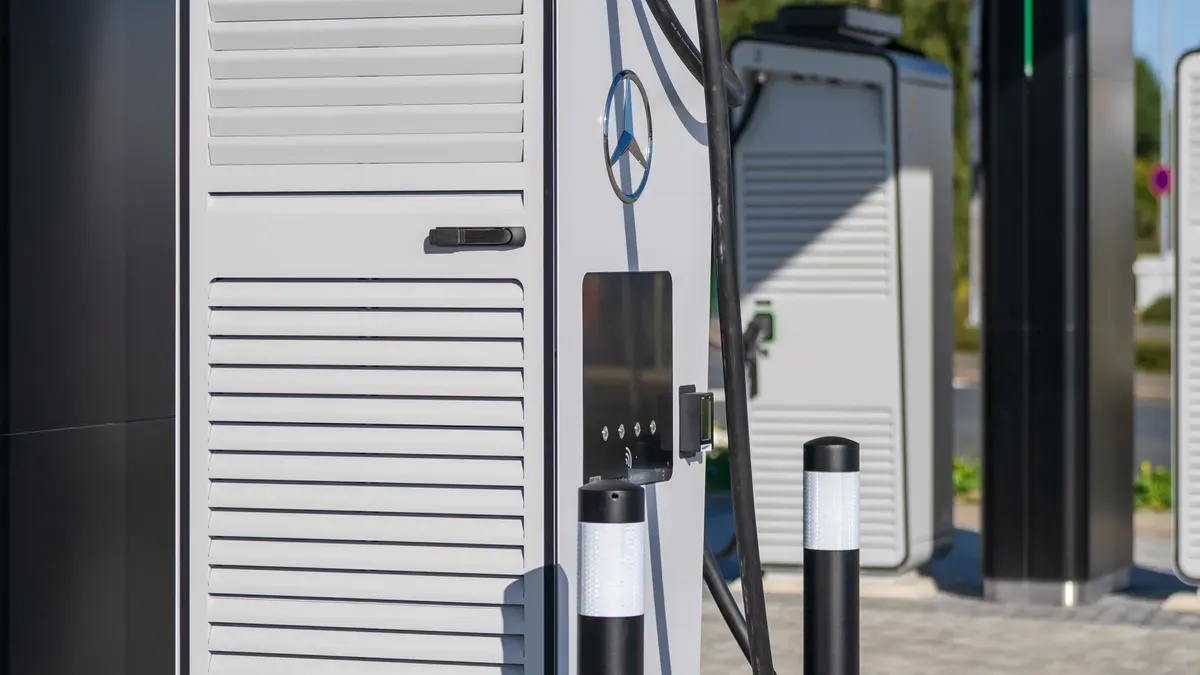
As more electric vehicles hit the road, European charging station makers need dependable EV charging connectors. Based on IEC 62196 certifications, steady supply chains, ISO 15118 readiness, and a presence in Europe, the most reliable Type 2 and CCS2 connector suppliers for 2026 are Mennekes, Phoenix Contact, Amphenol, TE Connectivity, ITT Cannon, Huber+Suhner, Stäubli, Sanco, Molex, and HARTING. These companies make CCS Type 2 and combined charging system solutions for electric vehicle charging stations. Their connector lineup supports high-power charging and strong charging infrastructure for the growing EV market. Top suppliers offer CCS standard compatibility for EV systems and make sure they follow EV regulations.
Key Takeaways
Pick suppliers that have IEC 62196 certification and CE marking to meet European rules.
Think about the full cost of the product and how much delivery times can change, not just the price for one unit.
Test connector samples on real vehicles to make sure they work together.
Pair each main supplier with a backup source to prevent supply delays.
Match what each supplier does best with what your project needs: premium for following the rules, cost-effective for large amounts, high-power for DC fast charging.
How We Identified the Most Reliable Type 2 and CCS2 Connector Suppliers
Evaluation Criteria: Certifications, Compliance, and Localization
We picked the most dependable type 2 and CCS2 connector suppliers based on five key things. First, every supplier must have IEC 62196 certification for its EV charging connectors. This rule sets how charging plugs and sockets work physically, electrically, and with heat across Europe. Second, a steady supply chain is important. A supplier that makes parts in different places and gets raw materials from many sources can avoid delays that stop EV charging station projects. Third, ISO 15118 compliance shows the supplier is ready for Plug and Charge and smart grid talks. Fourth, making or storing products in Europe cuts down shipping time and lowers border problems. Fifth, a good history of large-scale use shows the supplier can handle real-world needs without losing quality.
Localization also helps chargers work across different networks. A connector made to the CCS standard must fit well with cars from many brands. Suppliers with European plants can test against local vehicles and change designs faster. This point matters most for combined charging system products, where one plug handles both AC and DC power. Reliable EV performance depends on this kind of regional testing.
Scoring Methodology and Data Sources
Our scoring model gives points across the five key areas. Certifications and compliance count the most because they let the supplier sell in the market. Supply chain stability and a European presence come next. Past use history finishes the score. We got data from public certification lists, supplier documents, industry reports on EV charging standards, and feedback from charging network buyers.
Each supplier gets a score from one to five per area. The total score decides the final ranking. This method favors companies that mix certified quality with reliable shipping. It also points out experts in DC fast charging and high-power charging, where heat control and durability tell good parts from great ones. Buyers can use the same method to compare offers and check claims before signing a contract. Having a second connector source lowers risk for any charging project. For DC fast charging rollouts, this step is very important. It protects EV fleet operators and drivers from problems when one supplier fails and keeps EV charging networks working.
Premium European Suppliers with Local Manufacturing
European charging station makers like suppliers that build parts close to them. Making products nearby cuts shipping delays and allows faster design changes. Two companies lead this group with deep technical know-how and strong local ties.
Mennekes: Type 2 AC Connector Pioneer
Mennekes created the Type 2 connector, and it still sets the standard for AC charging in Europe. Its IEC 62196 certified parts power most public and private AC stations across the continent. The Type 2 connector works with every EV brand sold in Europe. Mennekes makes these EV charging connectors at its factory in Kirchhundem, Germany. This location gives European buyers short lead times, often within a few weeks for standard orders. The company also has CE marks and designs products for the combined charging system through its CCS Type 2 inlet range. Fleet operators trust Mennekes for depot charging because the connector locks firmly and resists wear across thousands of cycles. The company's track record spans decades of high-volume use. Buyers looking for the most reliable Type 2 and CCS2 connector suppliers put Mennekes at the top of their list for AC infrastructure.
Phoenix Contact: Type 2 and CCS2 DC Solutions
Phoenix Contact builds both AC and DC charging connectors at its German factories. The company's CCS2 DC connectors support very high power levels for DC fast charging networks. In Boost Mode with active cooling, these connectors reach up to 1,000 kW, meaning 1,000 A at 1,000 V. Continuous operation delivers 800 kW. With passive cooling, the same connector achieves 800 kW Boost and 600 kW continuous. A liquid cooling system using a water-glycol mix handles heat during long charging sessions. The design is roughly 20 percent lighter than older models and has a better grip. Key specs include CCS Type 2 standard compliance, IP67 protection, Pt 1000 temperature sensors, leak detection through an insulation monitor, and four-wire measurement technology.
Phoenix Contact also leads in smart charging interoperability. Its products provide Plug-and-Charge feature according to ISO 15118-2. The company holds Hubject certification for the global Plug-and-Charge system. This certification allows automatic authentication and billing of charging processes. The SEC 3050 and SEC 3150 controller series support these features. The design also follows the EU Alternative Fuels Infrastructure Regulation. European manufacturers gain a partner with local support and proven DC fast charging know-how. Phoenix Contact serves EV fleet operators and public charging networks across Europe. Its German factories ensure steady supply for EV charging projects. The company's focus on CCS standards and EV regulations makes it a strong choice for high-power charging rollouts.
Asian Manufacturers with European Warehousing
Asian makers with European storage give buyers the best from both sides. They produce a lot and deliver fast in Europe. Amphenol and TE Connectivity lead this group with strong supply chains and deep knowledge of high-power charging.
Amphenol: High-Volume CCS2 and Type 2 Production
Amphenol runs big factories in Asia. It helps European buyers through local warehouses. This setup keeps order times short for large orders of CCS2 and Type 2 ev charging connectors. The company makes many inlets and plugs for combined charging systems. Its worldwide supply network lowers the chance of running out of materials. European charger makers get a steady supply of parts without waiting for long ship trips.
Amphenol's CCS2 connectors handle the heat and wear of public dc fast charging. The company checks its products against IEC 62196 and CE rules. High-volume production keeps unit costs low for big rollouts. Fleet depots and highway charging sites gain from this mix of price and performance. Buyers who need many units each year find Amphenol a good choice for ev charging projects.
TE Connectivity: Ruggedized Connectors for HPC
TE Connectivity makes its CCS2 connector line for the hardest high-power charging jobs. The HPC 200A and 350A models use a one-piece molding contact for great temperature rise control. An optional high-performance temperature sensor can watch safety for 24 hours. The smart locking system has a 180° in-line design with 360° rotation, quick lock, and press-to-release for fast assembly. Composite terminal technology with highly conductive materials gives excellent conductive efficiency and lower temperature rise.
Ruggedness Aspect | Design Feature | Benefit |
|---|---|---|
Thermal control | One-piece molding contact (HPC 200A/350A) | Excellent temperature rise control |
Safety monitoring | Optional high-performance temperature sensor | Supports 24-hour system safety monitoring |
Mechanical robustness | Smart locking system with 180° in-line design | Provides 360° rotation, quick lock, and press-to-release |
Terminal conductivity | Composite terminal technology | Outstanding conductive efficiency and lower temperature rise |
To support peak charging loads of 350 kW and beyond, TE Connectivity made a new method. This method finds temperature increases from parts and heat loss at all times. It uses system-wide and near real-world thermal simulation. Engineers can check part design earlier and guess performance across different operation modes over time. This method gives a provable basis for future load profiles. It shows safety, reliability, and durability along the high voltage and high current path. European makers gain trust for dc fast charging and ev fleet operations.
Cost-Effective Certified EV Charging Connectors for European Compliance
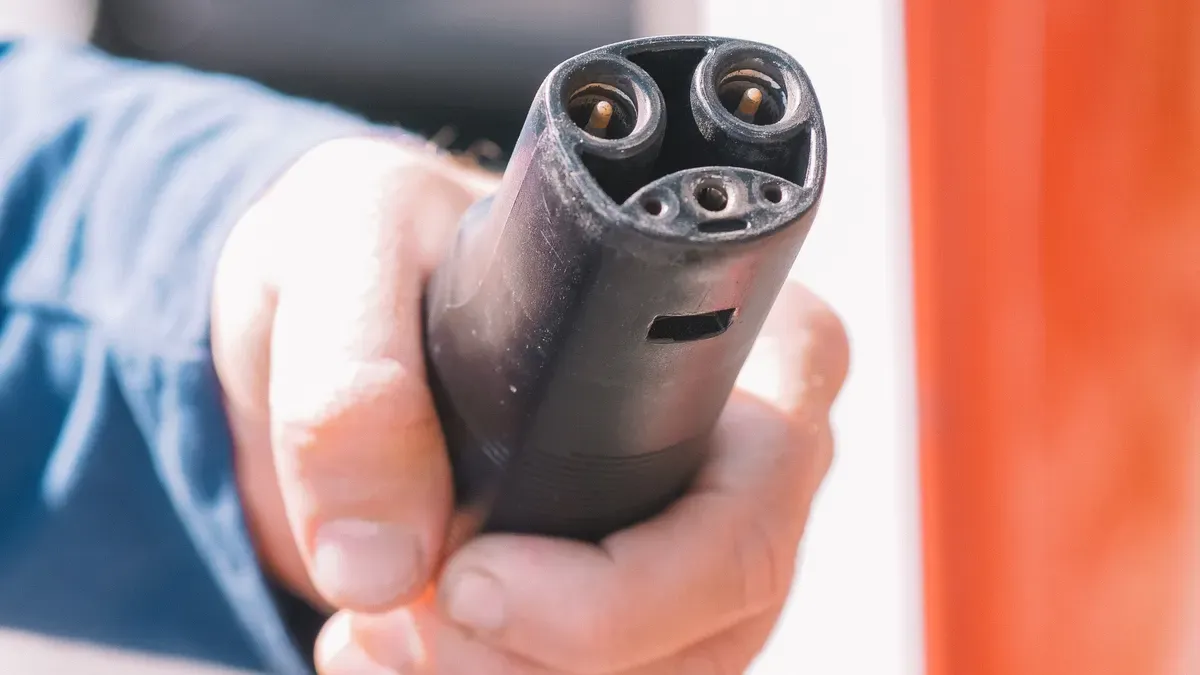
ITT Cannon: Cost-Effective Type 2 and CCS2
ITT Cannon makes certified EV charging connectors at prices that work for big rollouts. The company has IEC 62196 and CE marks for its Type 2 and CCS2 lines. Buyers get full European compliance without paying high prices. ITT Cannon runs production in several regions. This spread keeps material costs low and guards against supply gaps. European public charging networks use these parts in AC and DC stations. The company's track record covers thousands of installed units.
The Type 2 connector from ITT Cannon handles standard AC charging for fleet depots and workplace sites. Its CCS2 range supports DC fast charging for highway corridors. Both lines pass the same safety and durability tests as higher-priced rivals. Procurement teams pick ITT Cannon when budgets are tight but certification cannot slip. The company also offers design support for custom cable assemblies.
Huber+Suhner: Mid-Power DC Connector Specialist
Huber+Suhner focuses on mid-power DC charging, a sweet spot for urban networks and retail sites. Its CCS2 connectors give reliable performance at power levels below the highest HPC tiers. European public charging networks have used these parts for years. The company makes its EV charging connectors in Europe, which shortens lead times and makes logistics simpler.
The connector design resists wear from frequent plug cycles. Temperature sensors inside the housing watch heat during each session. This feature matters for shared stations that run all day. Huber+Suhner also supplies cable assemblies and cooling components. Operators value the brand for steady quality and quick technical support. The mid-power range fills a gap between slow AC posts and costly high-power hardware. This balance helps network builders control costs while meeting driver expectations.
DUOSIDA: Certified Cost-Effective Connectors from China
DUOSIDA, operated by Zhangjiagang UCHEN New Energy Technology Co., Ltd., offers another cost-effective path. The company holds UL, CSA, TUV, BS, CE, PSE, and 16949 certifications. These marks cover European and North American compliance needs. DUOSIDA ranks as a first-class charging solution service provider in China. Its stock code is 873087.
The firm supplies Type 2 and CCS2 connectors to mainstream car companies and top charging pile makers in Europe and America. This experience shows its parts work across many vehicle brands and station designs. The combined charging system range supports both AC and DC operation. Buyers seeking low unit costs with verified certification can add DUOSIDA to their shortlist.
High-Power and Interoperability-Focused Connector Specialists
Stäubli: High-Power DC and Interoperability Solutions
Stäubli makes connector systems for the toughest charging spots. Its pantograph solutions give automatic high-power fast charging for buses and trucks. Fleet operators use them at depots where drivers need quick charging. The pantograph design means no more manual plug handling. This makes charging faster and cuts cable wear.
Stäubli also makes CCS connectors for public DC fast charging networks. Its products meet IEC 62196 rules and handle the highest CCS voltages and currents. The company designs connectors to work with many charger types. This helps network operators support all EV brands. Stäubli tests with different vehicle models and charger types. European makers like this for highways and city hubs. The company's history shows thousands of units in use across Europe. Its engineering team helps with custom charging projects.
Sanco: CCS2 Socket Manufacturer for High Volume
Sanco makes CCS2 sockets in large numbers for China and Europe. It offers low-cost parts without skipping steps on certification. Its CCS sockets have IEC 62196 marks and work with ISO 15118. This lets vehicles use Plug and Charge features.
Sanco's high-volume making keeps each part cheap for big projects. European buyers gain from the company's experience in China, where charging networks grow quickly. The socket handles many plug cycles in public DC fast charging. Sanco also supplies Type 2 connectors for AC stations. Its EV charging line covers fleet depots, retail sites, and highway stops. The company's parts work with major charger brands. Buyers looking for certified CCS sockets at good prices pick Sanco. The brand's focus on EV charging and market knowledge makes it a trusted partner for big projects.
Additional Trusted Connector Suppliers for European Markets
Molex: Diverse EV Connector Portfolio
Molex has spent many years making industrial connectors, and now it serves the EV market too. The company sells a wide range of products, including Type 2 AC plugs, CCS2 inlets, and cable assemblies for charging stations. European charger makers like this variety because a single seller can provide many parts of a charging system. Molex supports its products with IEC 62196 compliance and CE marking for use in Europe.
The company also puts money into interoperability testing with big vehicle brands. This work helps network operators steer clear of compatibility issues at public charging sites. Long-term availability stands out as a major strength. Molex keeps older parts in production for many years, which saves charger makers from redesign costs. European buyers get a steady partner for small pilot projects and large rollouts alike.
HARTING: Rugged Industrial EV Connectors
HARTING makes EV charging accessories using industrial-grade materials. Its connectors have a PA66 fiberglass build with a thick-wall design. This construction stands up to extreme heat, cold, weather, and rough handling by drivers. The design also keeps out water, heavy dust, vibration, and shock. These features cut down exposure to environmental elements at busy public stations.
The tough housing helps prevent heat loss and power waste during energy transfer. HARTING puts every product through strict testing to confirm it lasts. Its connectors and cables handle non-stop use in harsh environments. The lineup works for at-home charging, public station charging, ultra-fast charging, and mobile work station charging. European charger makers team up with HARTING for projects that need a long service life. The brand's industrial background gives buyers confidence in reliability and long-term availability.
Quick Comparison: Price, Lead Time, and Certifications
Comparing Pricing and Certifications Across the Top 10
The table below sums up the ten suppliers by estimated price range, usual lead time, and main certifications. Price bands show relative standing, not fixed quotes.
Supplier | Price Range | Typical Lead Time | Key Certifications |
|---|---|---|---|
Mennekes | High | Short (weeks) | IEC 62196, CE |
Phoenix Contact | High | Short (weeks) | IEC 62196, ISO 15118-2, CE |
Amphenol | Medium | Short to medium | IEC 62196, CE |
TE Connectivity | High | Medium | IEC 62196, CE |
ITT Cannon | Low to medium | Medium | IEC 62196, CE |
Huber+Suhner | Medium | Short (European build) | IEC 62196, CE |
Stäubli | High | Medium | IEC 62196 |
Sanco | Low | Medium | IEC 62196, ISO 15118 |
Molex | Medium | Medium | IEC 62196, CE |
HARTING | Medium to high | Medium | IEC 62196, CE |
How to Use This Table for Procurement Decisions
A low unit price can stop being a good deal once freight, duty, tax, MOQ, defects, or long lead time get added in. Buyers should compare total landed cost and lead time, not just the headline price. Give each factor a set weight: price and total landed cost at 25–35 percent, MOQ at 10–20 percent, lead time including variability at 20–30 percent, quality proof and QC process at 20–30 percent, and after-sales terms at 10–20 percent. Score every supplier from one to five in each category, then look at the comments and evidence behind each score. This habit keeps sourcing decisions steady across purchase cycles.
A practical workflow starts with the target purchase quantity, so every supplier competes on the same order size. Add each quote with unit price, freight cost, tax or duty percentage, and lead time. Check total landed cost, landed unit cost, and lead time before you shortlist anyone. When one shipment covers multiple SKUs, split freight carefully across items. When a discount means buying more inventory than usual, check the MOQ impact first.
Certification claims need direct checking. A supplier may hold IEC 62196 for a ccs type 2 inlet but lack ISO 15118 for smart charging features. Others carry extra marks such as UL, CSA, TUV, BS, PSE, or 16949 for North American and European compliance. Make sure the exact part number on the quote matches the certificate, not just the brand. This step protects interoperability across vehicle brands and charger networks.
For dc fast charging projects, lead time variability matters more than the average. A supplier with a short typical lead time but frequent delays can stall a rollout. Ask for maximum lead time, not just the typical figure. Pair each primary supplier with a second source for ev charging connectors. This backup protects ev fleet operators and ev drivers when one vendor stumbles. The most reliable type 2 and ccs2 connector suppliers combine certified quality, stable logistics, and honest lead-time data. A connector that meets the ccs standard and ships on schedule keeps combined charging system projects on track. Buyers who score suppliers this way avoid surprises during charging infrastructure buildouts.
What you need for your project decides the right partner. Premium brands that need full ISO 15118 compliance and European production pick Mennekes or Phoenix Contact. Projects that care about cost and high volume get the best balance from ITT Cannon, Sanco, or Huber+Suhner. High-power DC work and fleet depots fit Stäubli or TE Connectivity. Each choice ranks among the most reliable type 2 and ccs2 connector suppliers for 2026.
Buyers should reach out to these suppliers directly for 2026 quotation samples. Testing a connector on real vehicles proves interoperability before large orders. This step protects charging infrastructure budgets and keeps ccs projects on schedule. Careful sampling also lowers risk for ev fleets, ev drivers, and the manufacturers who build dc fast charging and everyday charging stations. Reliable charging starts with verified parts.
FAQ
Which certifications should European manufacturers verify before buying Type 2 or CCS2 connectors?
Buyers need to make sure the connector meets IEC 62196 rules and has CE marking to be sold in Europe. For smart charging features, check if it is ready for ISO 15118. Some suppliers also carry UL, CSA, TUV, BS, PSE, or 16949 marks. Always make sure the exact part number on the quote matches the certificate.
How does ISO 15118 affect EV charging station design?
ISO 15118 makes Plug and Charge possible, which lets cars verify and pay on their own. Phoenix Contact has Hubject certification for this feature. Stations without ISO 15118 support cannot give smooth charging for modern EVs. European rules more and more support this feature for public networks.
What lead times can buyers expect from European versus Asian suppliers?
European suppliers like Mennekes and Phoenix Contact often deliver within weeks for standard orders. Asian makers with European warehousing, such as Amphenol, keep short to medium lead times. Budget-friendly options like Sanco and DUOSIDA usually need medium lead times. Always ask for the longest lead time, not just the average.
Which suppliers offer the best value for high-volume CCS deployments?
ITT Cannon, Sanco, and DUOSIDA give certified CCS connectors at lower unit costs. DUOSIDA holds UL, CSA, TUV, BS, CE, PSE, and 16949 certifications and works with mainstream car companies. Sanco offers sockets that meet IEC 62196 and ISO 15118. These suppliers fit fleet depots and public charging rollouts with tight budgets.
How can buyers ensure interoperability across different EV brands and charger networks?
Test connector samples on real cars before placing large orders. Check that the part meets the ccs standard and carries the right certification for each market. Pair every main supplier with a second source. This step shields charging infrastructure projects from compatibility problems and supply delays.