
Choosing the Right EV Charging Socket for Different Electric Vehicle Markets
 2026-07-22

Introduction
As electric vehicles (EVs) continue to expand across global markets, charging compatibility has become one of the most important considerations for vehicle manufacturers, charging infrastructure companies, and component buyers. Different regions have developed their own charging standards, connector designs, and electrical requirements, making EV charging socket selection a critical part of EV system development.
For EV manufacturers and charging equipment suppliers, choosing the right charging socket is not simply about matching a connector type. Factors such as regional charging standards, current rating, vehicle architecture, charging speed requirements, safety certifications, and future market expansion plans all need to be considered.
As a company specializing in high-performance charging products for new energy vehicles, DUOSIDA provides professional charging connection solutions including vehicle inlets, charging sockets, and related components for global electric mobility applications. With experience serving different EV markets, DUOSIDA helps customers select suitable charging socket solutions based on technical requirements and application scenarios.
Understanding the Importance of EV Charging Socket Selection
An EV charging socket, also known as a vehicle inlet or charging interface, is the connection point between an electric vehicle and the charging equipment. It directly affects charging efficiency, safety performance, and compatibility with charging infrastructure.
A suitable charging socket should meet several requirements:
· Compliance with local charging standards
· Compatibility with vehicle electrical systems
· Support for required charging current and voltage
· Reliable mechanical durability
· Protection against environmental conditions
· Compliance with international certifications
For global EV manufacturers, selecting the wrong charging socket standard can create significant challenges during vehicle development and market expansion. A vehicle designed for one region may not be compatible with charging networks in another region without the correct charging interface.
Therefore, understanding different EV charging socket standards is essential for companies developing vehicles, charging stations, and related components.
EV Charging Socket Standards in Different Markets
Europe: Type 2 and CCS2 Charging Sockets
Europe has widely adopted Type 2 AC charging interfaces as the standard solution for passenger electric vehicles. Type 2 charging sockets support single-phase and three-phase AC charging, making them suitable for residential charging, commercial charging stations, and public charging networks.
For fast charging applications, Europe mainly uses the CCS2 standard. CCS2 combines AC charging capability with DC fast charging through additional DC pins, allowing higher charging power for modern electric vehicles.
For EV manufacturers targeting European markets, Type 2 and CCS2 charging sockets are usually the preferred choices because they are compatible with most European charging infrastructures.
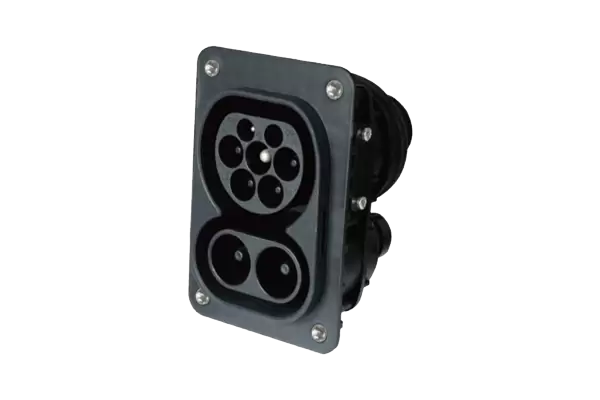
DUOSIDA provides different charging socket configurations designed for various vehicle platforms, helping manufacturers meet European charging requirements with reliable connection solutions.
North America: Type 1 and CCS1 Charging Systems
The North American EV market mainly uses Type 1 AC charging sockets and CCS1 DC charging interfaces.
Type 1, also known as SAE J1772, is commonly used for AC charging in the United States and Canada. It features a single-phase charging design and is widely adopted among passenger vehicles.
For DC fast charging, CCS1 is the dominant standard in North America. It allows electric vehicles to receive higher charging power and supports the growing demand for fast charging infrastrue
ture.
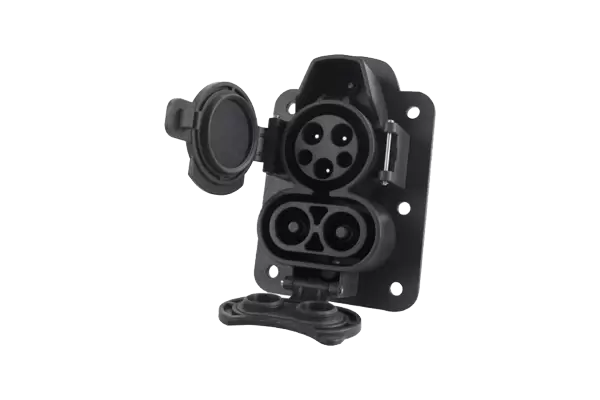
When selecting charging sockets for North American vehicles, manufacturers need to consider:
· SAE charging standards
· Vehicle voltage platform
· Charging current requirements
· Compatibility with regional charging networks
High-quality charging sockets with stable electrical performance are essential for ensuring long-term vehicle reliability.
China: GB/T Charging Socket Solutions
China has developed its own EV charging standard system, with GB/T being the primary charging interface used in domestic electric vehicles.
GB/T charging sockets are widely applied in China's passenger vehicles, commercial vehicles, buses, and charging infrastructure. Compared with some international standards, GB/T systems have specific requirements for communication protocols, charging control, and connector structures.
For companies entering the Chinese EV market, selecting GB/T-compatible charging sockets is essential to ensure vehicle compatibility with local charging networks.
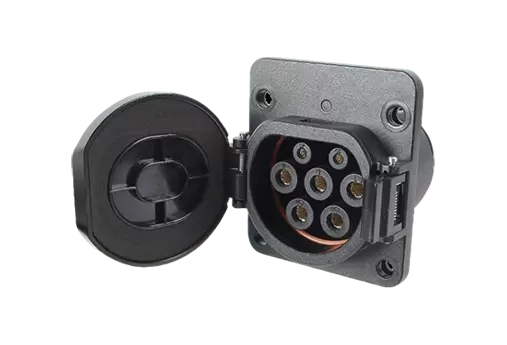
DUOSIDA offers GB/T charging socket solutions designed for different charging applications, including AC and DC charging requirements. These products are developed to support high-current charging demands and new energy vehicle applications.
Japan and Emerging Markets: CHAdeMO and New Standards
Japan has historically used the CHAdeMO charging standard, which remains an important DC charging system in many markets.
CHAdeMO charging sockets are known for their reliable communication system and safety features. Although CCS standards are expanding globally, CHAdeMO continues to be used in Japan and some international markets.
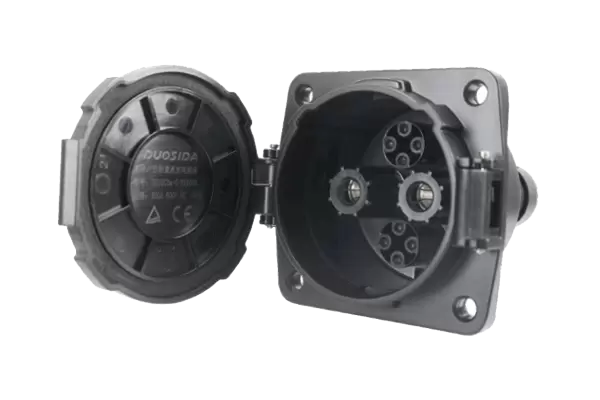
In addition, new charging standards such as ChaoJi are being developed to support higher charging power and future EV requirements. These next-generation charging systems aim to improve charging efficiency and provide better compatibility between different regions.
For vehicle manufacturers planning global expansion, considering both current standards and future charging trends is important when selecting charging socket designs.
Key Factors When Choosing an EV Charging Socket
1. Market Compatibility
The first consideration is the target vehicle market. A vehicle intended for Europe, North America, China, or Japan may require different charging socket standards.
Manufacturers should identify regional charging requirements before finalizing vehicle designs.
2. Charging Power Requirements
Charging current and voltage determine the charging performance of an EV.
Different applications require different charging capabilities:
· Passenger vehicles may use standard AC charging sockets
· Commercial vehicles may require high-current DC charging sockets
· Heavy-duty vehicles may need advanced charging solutions
Selecting a socket that matches the vehicle power system helps ensure charging safety and efficiency.
3. Vehicle Application Environment
EV charging sockets are exposed to different environmental conditions, including:
· Temperature changes
· Dust
· Moisture
· Frequent plugging and unplugging
Therefore, manufacturers should consider durability, protection level, and mechanical reliability when selecting charging components.
4. Supplier Manufacturing Capability
For automotive manufacturers and charging equipment companies, choosing a reliable charging socket supplier is equally important as selecting the correct standard.
A professional manufacturer should provide:
· Stable production capability
· Strict quality control
· Certification support
· Customization services
· Technical assistance
DUOSIDA focuses on developing and manufacturing high-performance charging products for new energy vehicles, providing charging connection solutions for global EV applications.
DUOSIDA Charging Socket Solutions for Global EV Applications
Different markets require different charging interfaces, and a flexible product portfolio helps manufacturers adapt to changing EV requirements.
DUOSIDA provides various charging socket products, including:
· Type 2 AC Vehicle Inlet for European AC charging applications
· CCS2 Vehicle Inlet for high-power DC charging systems
· GB/T Charging Socket Solutions for China's EV charging standards
· Type 1 and CCS1 Charging Socket Solutions for North American electric vehicle markets
With experience in EV charging connection technology, DUOSIDA supports vehicle manufacturers, charging equipment companies, and energy solution providers with dependable charging products.
Conclusion
Selecting the right EV charging socket is a key decision for electric vehicle manufacturers entering different global markets. Type 1, Type 2, CCS1, CCS2, GB/T, and CHAdeMO each serve different regional requirements and vehicle applications.
Companies developing EV products should evaluate market standards, charging power, vehicle design requirements, and supplier capabilities before choosing a charging interface.
As global EV adoption continues to grow, reliable charging connection solutions will play an increasingly important role in building efficient and compatible charging networks. Working with an experienced charging product manufacturer can help businesses achieve better performance, safety, and market adaptability.