
Which Is Better for Apartment Parking Tethered or Socketed EV Charging
 2026-10-28

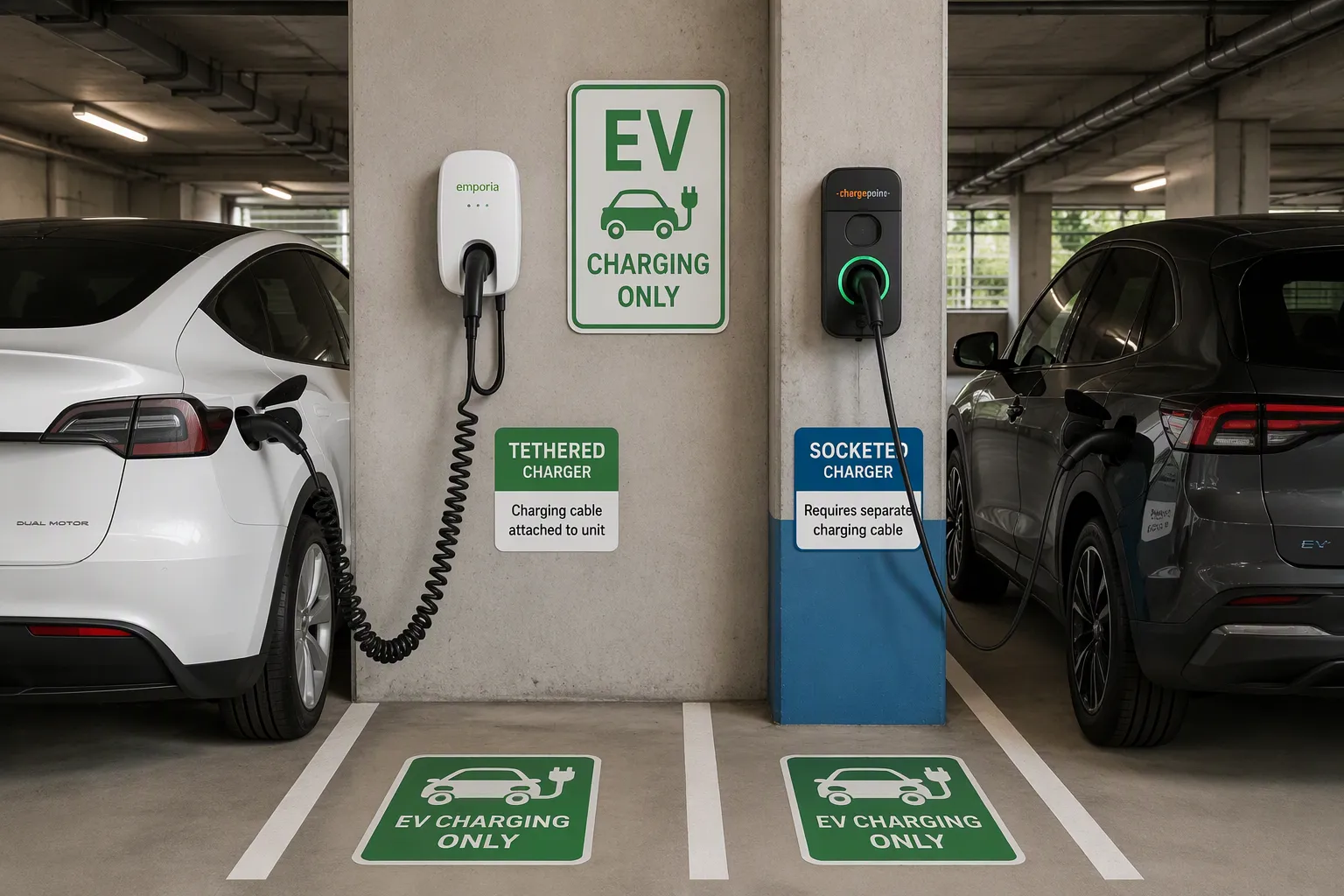
For most apartment parking, a Type 2 socketed station is the better fit. A tethered station works best for a dedicated spot. That's the short answer to which design is better for apartment parking.
Why does the socketed option win in shared lots? Four reasons stand out. First, many drivers share one station. Second, untethered chargers put less wear on any single cable. Third, the design fits more vehicles without swapping hardware. Fourth, you pay less upfront because the cable isn't included.
A tethered unit still makes sense when one car parks in one assigned bay every night. Match the design to your setup, and the choice gets simple.
Key Takeaways
Pick a socketed station for shared apartment parking. It costs less and works for many drivers.
Pick a tethered station for a parking spot that is just for you, because it gives you simple plug-and-play charging.
Socketed stations cut down on cable wear because each driver uses their own cable.
Tethered stations cost more at the start, but they are handy for one person who charges every night.
Pick the charger design that fits how your parking spot is assigned, so you get the best value over time.
Tethered Cable vs Socket: Key Differences
What Is a Tethered Station?
A tethered charging station carries its cable as a permanent part of the unit. The cable stays fastened to the box, so it is always there and always ready. You park, open your charge lid, plug in, and walk away. No unpacking, no hunting for a cable in the trunk.
That fixed setup shapes the whole experience. A wallbox with a tethered cable includes the cable in the purchase price, and the connector type is locked in at the factory. Most units ship with a Type 2 plug, which suits the cars sold across Europe and many other markets. The trade-off is simple: you gain plug-and-play speed, and you give up the freedom to swap connectors later. These are the first key differences between tethered and untethered ev chargers to keep in mind.
What Is a Type 2 Socketed Station?
A socketed unit flips that design. It gives you a type 2 socket on the front and no cable at all. You bring your own type 2 cable and plug one end into the station and the other into the car. Think of the AC chargers at shopping malls — that is exactly how they work.
The type 2 socket follows the IEC 62196-2 standard, with seven pins and support for AC power up to 400 V and 63 A. Because the cable lives with the driver, an untethered ev charger stays flexible across vehicles and connector types. It also takes up less space and looks sleeker when nothing is plugged in. So when you weigh a wallbox with a tethered cable or a socket, ask who supplies the cable and who stores it.
Comparison: Tethered Cable vs Socket
Cost and Installation
The main differences between tethered and untethered ev chargers show up in the price first. A tethered ev charger costs more upfront. The cable is part of the unit, so you pay for hardware you would otherwise buy on its own. An untethered ev charger costs less because you bring the cable yourself.
Here is how the numbers break down for typical installations:
Charger type | Supplied & fitted cost range |
|---|---|
Untethered (socketed) | £750 – £1,100 |
Tethered | £850 – £1,300 |
Tethered units cost about £100 more at the low end and £200 more at the high end. For a 7kW smart wallbox, the gap shrinks to about £50 at both ends. These figures are for home installations, not apartment parking, but the pattern still holds. Installation labor is about the same for both designs. The real difference is in the cable and connector. A socketed unit also takes up less wall space, which helps in tight parking garages.
Long-Term Replacement Costs
The tethered cable vs socket debate often starts with price, but long-term costs tell a bigger story. A tethered cable takes a lot of wear over time. Weather exposure ages the rubber, and cracks show up faster on a cable that stays outside. When damage happens, you need an installer or electrician to replace it. You can't easily change the cable length without professional help. That repair bill falls on whoever owns the station.
Untethered ev chargers move that burden away. The charger unit itself rarely fails. The user-supplied cable can be replaced on its own, so you keep costs under control. Upgrading is easier too. A wallbox with a tethered cable locks you into one connector and one length. Switching means replacing the whole charger. With untethered chargers, you change only the cable to match a different EV. That flexibility makes the comparison: tethered cable vs socket come down to long-term control. Tethered chargers suit a fixed setup. Untethered chargers give you room to adapt.
Tethered vs. Untethered EV Chargers: Convenience
Daily Plug-In Effort
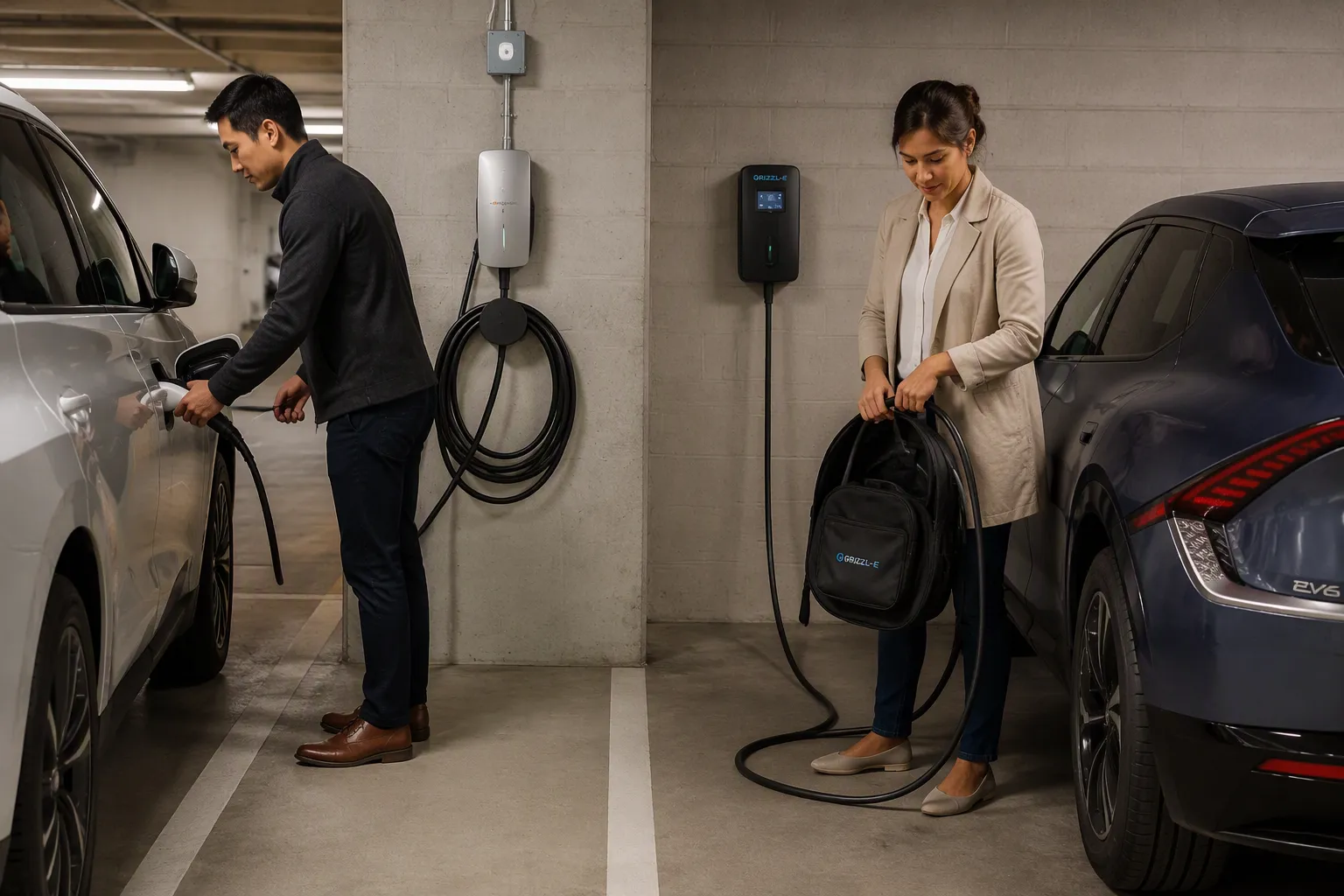
Daily charging depends on how many steps you repeat each time. A tethered ev charger keeps the cable attached to the box. You grab the connector, plug it into the car, and you're done. A wallbox with a tethered cable asks nothing more of you than that.
An untethered ev charger works differently. You carry your own cable, unwind it, connect both ends, then disconnect and store it after every session. That extra handling adds up over a week of charging.
Aspect | Tethered charger | Untethered charger |
|---|---|---|
Daily plug-in effort | Cable stays attached; you only plug the connector into the car | You carry, unwind, connect, then disconnect and store a cable each session |
Frequent use | Higher convenience, no cable handling | Lower convenience, a minor chore every time |
Cable management | Cable stores neatly on the unit | Cable needs managing and storage space |
Daily handling: tethered stations usually mean fewer steps to connect, while a detached cable must be plugged in and put away.
Cable Handling in Tight Spaces
Tight garages make messy cable routes a problem. Before you pick a format, check that the cable reaches your charging port in your normal parking position without pulling tight. Park as you usually do and trace the route from the charger to the inlet. Watch for bends around the car and slack at the connectors.
Reach changes with parking orientation. A wallbox near the front of a bay may easily reach a front port, while a rear port on another car needs a longer route. Reversing in changes the reach again. Check every position you use, and settle the mounting spot with your installer before paying for extra length.
The cable should reach the inlet without crossing walkways, and it should rest on its holder without dragging or bending sharply.
Extra length means more cable to lift and store. Weigh that against your storage space. This is where untethered chargers shine in tight lots: the cable lives with the driver, so nothing dangles from the wall between sessions. When you compare tethered vs untethered ev charger setups for a cramped bay, think about handling first. The tethered vs. untethered ev chargers question often ends right here.
Durability and Cable Wear
How Shared Use Affects Cables
A cable that one driver handles stays in better shape than a cable that twenty drivers handle. Shared use multiplies the small stresses. Each user coils the cable a little differently. Some yank the plug free. Others drag the cord across concrete or let it sit in a puddle. Over months, those habits add up.
A wallbox with a tethered cable carries every one of those habits on a single cord. The unit's cable takes the full load of the whole building. One careless driver can shorten the life of hardware that everyone depends on. An untethered ev charger spreads that wear across many personal cables instead. Each driver damages only their own cord, and the station itself stays protected.
Which Design Lasts Longer
The station hardware in both designs holds up well over time. The cable is the weak point, and here the socketed format has the edge. A tethered cable sits outside in sun, rain, and frost, and the rubber ages faster when it never comes indoors. When it fails, you book an electrician and pay for a fixed replacement.
Untethered chargers shift that risk to the driver. A worn personal cable is cheap to swap, and the driver does it without touching the station. That keeps long-term costs predictable for the building. Tethered chargers still last well in low-traffic spots, such as a private garage with one nightly user. In a busy shared lot, though, untethered chargers usually stay in service longer with less downtime.
Security and Safety
Cable Theft and Vandalism
In shared apartment lots, there is a greater chance that someone with bad intentions will walk past your charger. Theft and vandalism aimed at EV chargers more than doubled in 2025 compared to 2023. Public stations get hit the hardest, but home setups can still be targets.
Each design has its own risk pattern. A wallbox with a tethered cable is harder to strip because the cord stays fixed to the unit, which puts off thieves looking for an easy grab. Still, that same visible cable can attract unwanted attention. Untethered ev chargers flip the trade-off: the cable is easy to take when left plugged in, but the risk drops to almost zero once the driver unplugs it and puts it away.
Design | Theft risk | Vandalism risk |
|---|---|---|
Tethered | Lower, cable is fixed to the unit | Higher visibility, more exposed |
Socketed | Higher if the cable is left out | Lower once the cable is removed |
A few practical steps can shrink both risks. Mount the station in a well-lit spot where people can see it, add cameras, and put bollards or fencing in front of the unit. Ask drivers to take their cables inside after each session.
Safety Parity Between Designs
Here is the point that settles many debates: tethered and untethered chargers are equally safe. Both formats follow the same electrical standards, the same protective earth, and the same communication between car and station. The safety of tethered vs. untethered chargers comes down to how well the unit is installed, not the cable format. A certified installer matters far more than the plug style you pick.
Access control is where the designs truly differ. Tethered chargers lock the connector into the car during a session, so nobody can unplug a neighbor mid-charge. Many untethered chargers add a locking socket or an app-based release for the same protection. For shared apartment use, pair either design with RFID cards or a keypad so only residents can start a session. That single step keeps strangers from drawing free power and keeps your equipment safer.
Compatibility With Multiple Vehicles
One Station, Many Drivers
An apartment lot serves a changing group of cars. A new tenant shows up with a different EV every few months. A guest plugs in for a weekend. Your station must handle all of them without swapping hardware.
This is where the untethered ev charger proves its value. The station has a type 2 socket, and each driver brings a type 2 cable that fits their car. One unit covers a whole building. A tethered cable ties you to a single connector for as long as the unit lasts.
The same idea works for AC charging in different regions. Type 1 and type 2 connectors cover most AC vehicles, and a socketed design lets drivers bring the plug end their car needs. Tethered chargers can't offer that range.
Connector Standards and Adapters
AC and DC charging use different connector families, and the standards keep changing. Here is how the main ones fit together:
Connector | Role | Key details |
|---|---|---|
SAE J1772 (Type 1) | Standard AC Level 1/2 plug | 5-pin, up to 19.2 kW |
Type 2 | Standard AC plug in Europe and beyond | 7-pin socket, per IEC 62196-2 |
CCS1 | DC fast charging in North America | J1772 layout plus two DC pins, up to 350 kW |
CHAdeMO | Legacy DC fast charging | 10-pin plug, being phased out internationally |
J3400 / NACS | Emerging standard for AC and DC | SAE TIR published Dec 2023; automakers adopting from 2025 |
Adapters close the gaps. FHWA rules from May 2023 allow J3400/NACS adapters on federally funded DC chargers when a CCS1 connector is also there. Tesla's Magic Dock does the same job at Superchargers.
For apartment AC charging, the real point is simpler. Untethered chargers take whatever cable the driver carries, and type 2 and type 1 sockets cover the common cases. Untethered ev chargers also let you add adapters later without replacing the station. That keeps one install useful as the cars around you change.
Shared Use in Apartment Settings
Managing Cables Between Users
When people share parking, they share habits too, and the cables show it. One driver coils the cable neatly. Another drops the plug on the floor. A third leaves a wet cord coiled on the wall box. With a tethered cable, all those habits hit the same cord, and the whole building deals with the result.
A simple routine fixes most of this. Ask each driver to hang the connector on its holder after use, never on the ground. Wipe the plug dry before it goes back. Report frayed insulation or a bent pin right away, not next month. Post these steps on a small sign beside the station. A short checklist works better than a long policy.
Fair Access and Cleanliness
Fair access starts with how you assign the space. Shared charging spaces support fair access at lower upfront cost, while assigned spaces give long-term residents predictability. Pick the model that matches your tenants, then back it with clear rules.
A few practices keep access fair in apartment buildings:
Split available electrical capacity across charge points with load management, so no single session overloads the supply.
Use resident authentication and usage-based billing, so each driver pays for their own electricity instead of spreading it across shared property expenses.
Run the stations through a networked management platform for usage tracking and transparent cost recovery.
Let property managers set access rules and usage policies for multi-tenant environments.
Add charge points in phases as demand grows, which preserves fair access over time.
Cleanliness needs the same attention. Untethered chargers help here, because drivers take their cables away and the socket stays covered. Untethered ev chargers also leave less clutter between sessions. Tethered chargers keep the cord on site, so add a hook and a weekly wipe-down to the routine. Either way, a quick monthly check of plugs and sockets keeps the station tidy and safe.
Cable Length Considerations
Tethered Cable Reach and Layouts
Reach decides whether a fixed cable works in your lot. A wallbox with a tethered cable comes in a set length, and you can't stretch it. Match that length to where the car's charging port sits relative to the box.
Typical cable length | Parking layout it accommodates |
|---|---|
~5 m (≈16 ft) | Standard domestic setups; may fall short when the port is on the opposite side from the wall box |
5–8 m (≈16–25 ft) | General domestic bridging; flexible enough for varied parking arrangements |
10 m | Larger or more awkward setups needing extra reach |
Longer cables (with caution) | Must be routed safely to avoid trailing or trip hazards |
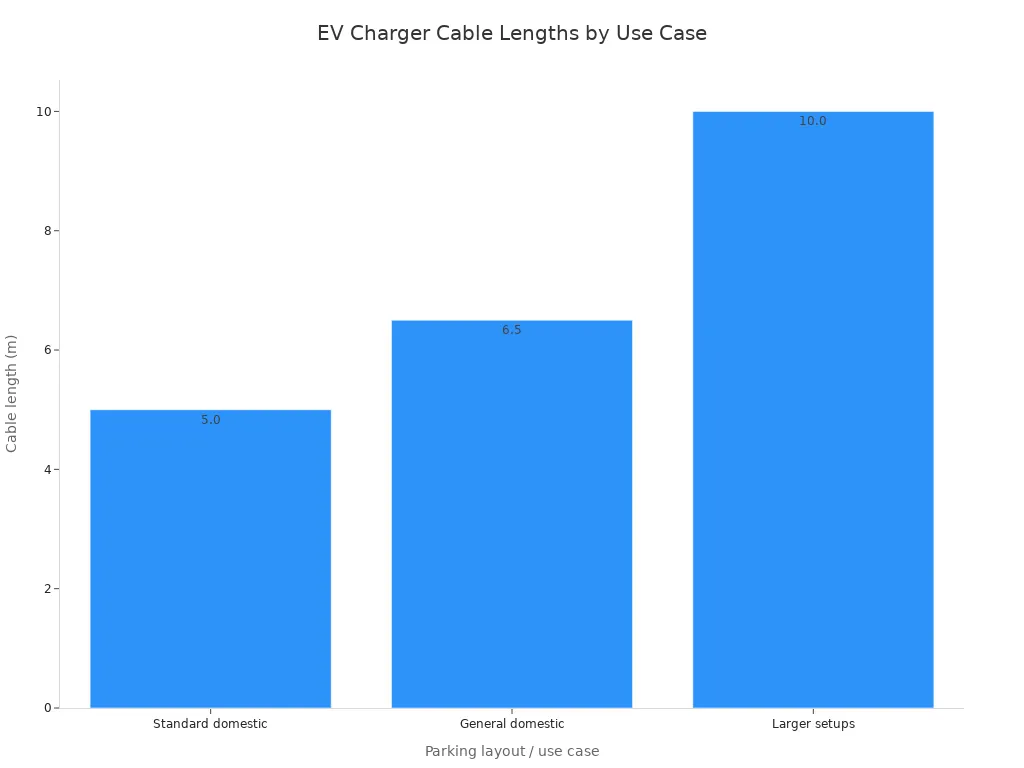
Narrow driveways, on-street parking, and tight garage access all limit how close the car parks. A longer cable bridges that gap, but it also means more cord to lift and store. Tethered chargers lock you into one length for the life of the unit, so measure your worst-case parking position before you buy.
Why Socketed Lets Drivers Use Their Own Cable
A type 2 socket has no fixed cord, so each driver plugs in a type 2 cable only when charging. That changes how you handle reach. A driver whose port sits far from the station simply brings a longer cable. No one pays for extra length the building doesn't need.
The benefits stack up. The unit costs less to buy, and no cable hangs on the wall between sessions, which keeps the lot tidier. Drivers can detach their cable whenever they want. The trade-off is an extra step each session: take the cable out, connect both ends, then pack it away. Some users split the difference and leave their cable plugged into the station, gaining tethered-style convenience while keeping the freedom to unplug it. For shared apartment parking, untethered chargers hand cable choice to the driver. That is why untethered ev chargers suit changing vehicles and awkward layouts so well.
Which Design Is Better for Apartment Parking?
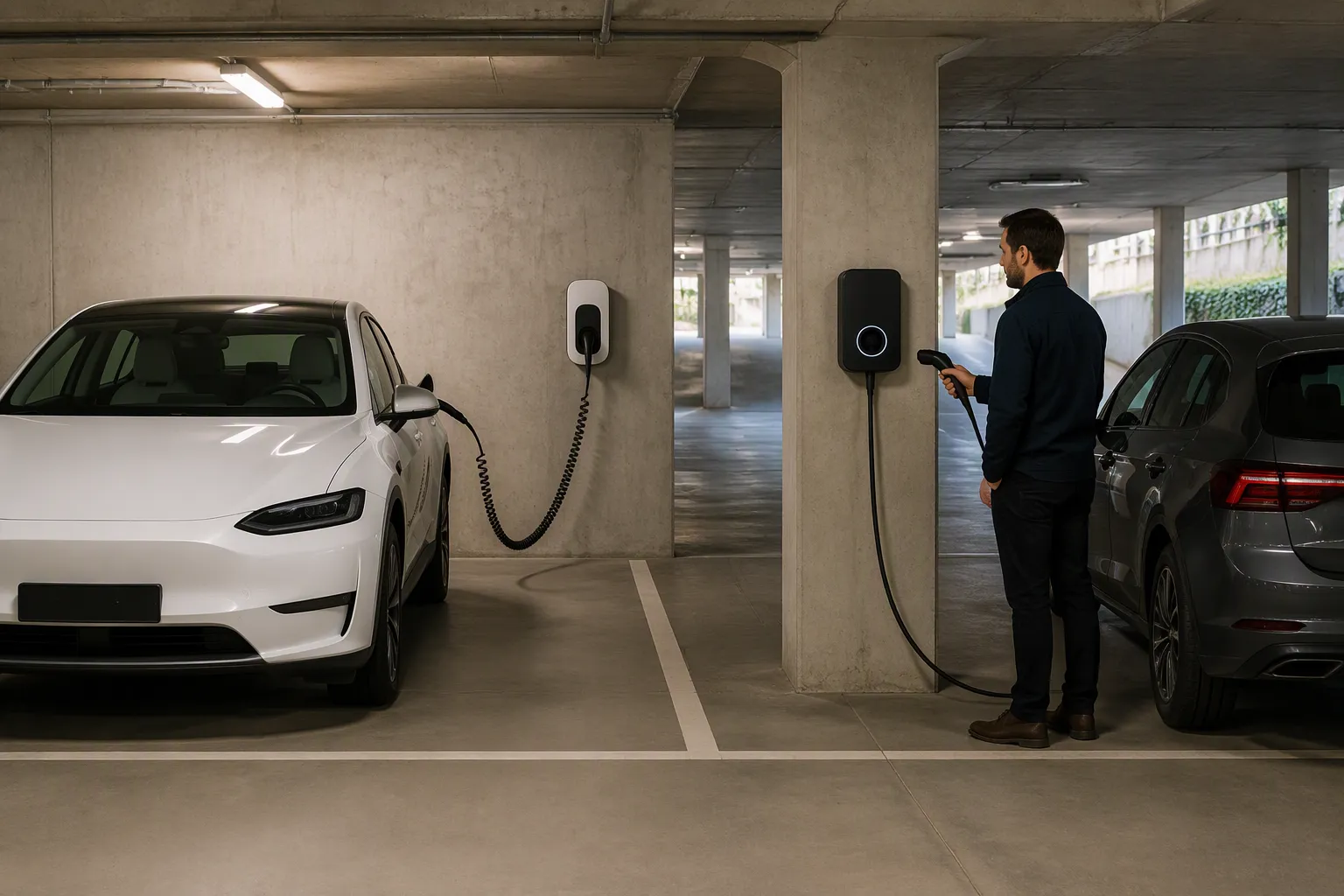
You now have the full picture, so let's settle the question. The answer to which design is better for apartment parking depends on one thing: who uses the bay. A dedicated spot points to a tethered unit. A shared bay points to a socketed one. That split resolves most of the tethered vs untethered ev charger debate in a single step.
Tethered for Dedicated Spots
Take the assigned bay or single-car garage first. Here the cable stays with one driver, so the wear argument fades. You get walk-up convenience every night, and the cable is already part of the unit. An allocated spot, outdoor or underground, is a good starting point for a personal charger. Tethered wall-mounted units near the resident's space count as a workable option once permission is granted and a site survey confirms it can be done.
A few points make this case stronger:
The cable comes with the unit, so you buy once and plug in.
One nightly user puts little stress on the cord.
A tethered home ev charging station suits a fixed connector and a fixed car.
If your parking never changes hands, a tethered home ev charging point is a good pick. Many drivers find the best choice is a wallbox with a tethered 5 m cable, since that length covers a standard bay. Just measure your worst-case parking position first. A tethered charging station locks in one length for life, and a tethered cable left outdoors ages faster than one stored indoors.
Socketed for Shared Parking
Now flip to a shared lot. Several drivers, changing cars, one station. A socketed unit wins on flexibility, cable wear, and upfront cost. Each driver brings a cable that fits their car, and the station itself rarely fails. That is why untethered chargers suit apartment buildings so well.
Shared Level 2 stations handle most multi-tenant sites, while portable chargers suit individual renters who move often. Compare tethered and untethered ev chargers on a busy lot and the pattern holds: untethered chargers spread wear across many personal cords instead of one shared one. An untethered home ev charging station also costs less, because the cable is not included.
So which design is better for apartment parking when tenants rotate? The socketed format. Untethered home ev chargers keep one install useful as the cars around you change, and an untethered ev charger lets each driver own their cable and their repair bill. Weigh both formats against your setup, and the choice stays simple.
For most shared apartment parking, socketed wins. For a dedicated spot, tethered chargers win. That is the short answer to which design is better for apartment parking.
Cost, cable wear, flexibility, and shared use decide it. A tethered cable costs more upfront and takes the full load of every user. Untethered ev chargers cost less and let each driver bring a cable that fits their car. Untethered chargers also spread wear across many cords instead of one.
Here is the practical tip: match the design to how your space is assigned. One driver, one bay, every night? Go tethered. Many drivers, changing cars, one station? Untethered chargers keep that setup simple.
FAQ
Can one socketed station really serve a whole apartment building?
Yes. Each driver brings a cable that fits their own car, so one unit can charge many vehicles. That is why untethered chargers work so well in shared lots. You don't have to swap hardware every time a tenant changes cars.
Do untethered chargers cost less than tethered ones?
They usually do. The cable is not included, so the upfront price is lower. A tethered cable adds cost because it comes with the unit. You also save later, since a worn personal cable is cheap to replace on its own.
Is a tethered cable safer than a socketed setup?
No. Both formats follow the same electrical standards and protective earth. Safety depends on how well a certified installer mounts the unit, not on the cable design. Pick the format that fits your parking, then focus on installation quality.
What happens if a shared cable gets damaged?
With untethered chargers, the driver swaps their own cable and the station stays in service. A fixed cord needs an electrician and a paid replacement. That difference keeps downtime low in a busy lot.
Can I switch designs later if my parking changes?
Switching from socketed to tethered means replacing the whole unit. Going the other way is just as final. So match the design to how your bay is assigned now, and plan for how it will be used in the future.