
Mode 3 cable vs portable EVSE: what should a fleet choose for depot charging and driver take-home use?
 2026-10-28

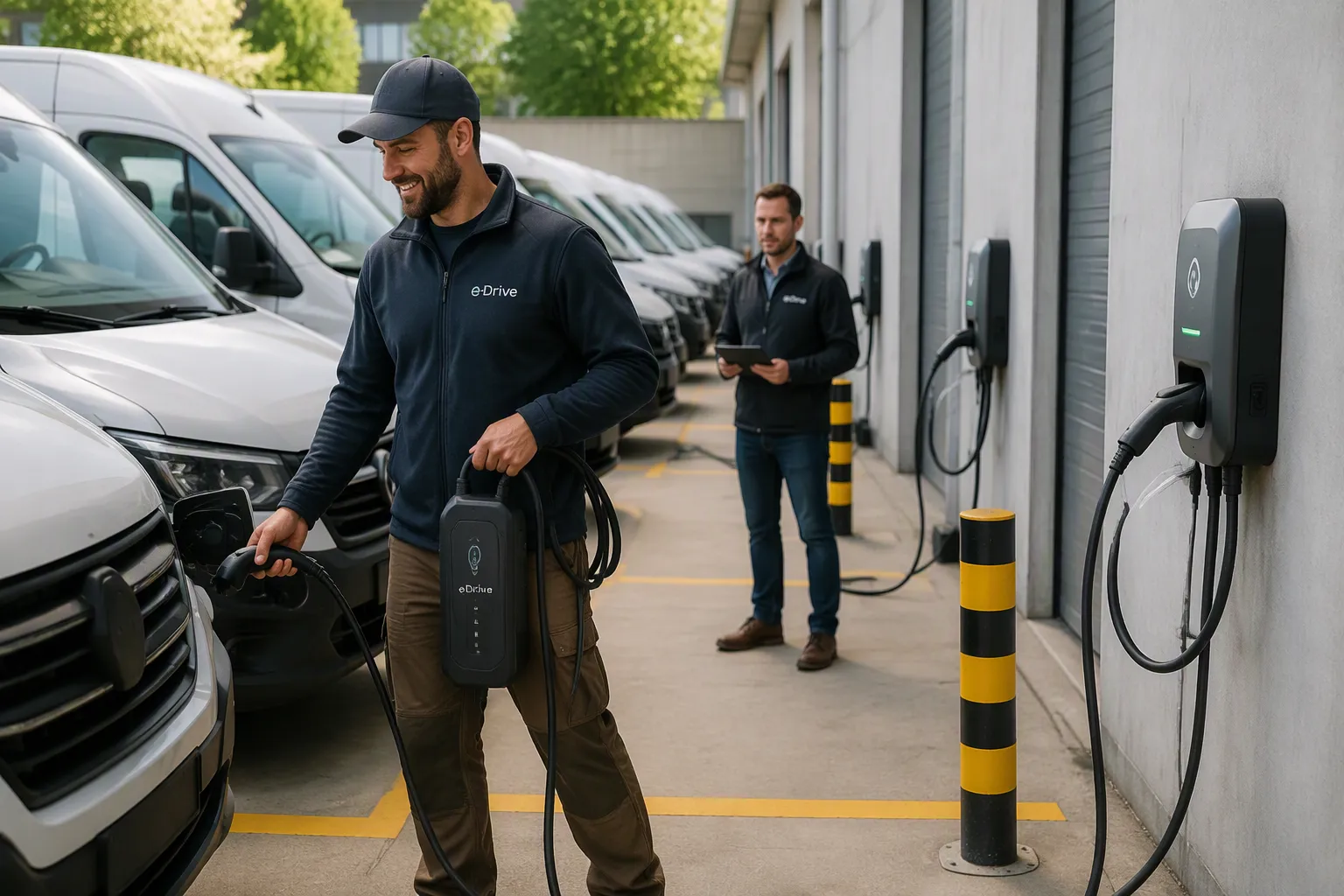
Mode 3 cables work best for depot charging. Portable EVSE works best for drivers who charge at home. A Mode 3 cable is a fixed charging cable attached to a wall box. Portable EVSE is a self-contained unit that plugs into a standard outlet. The right choice also depends on charging levels (Level 1, Level 2, DC fast). It depends on whether vehicles stay overnight or need a short turnaround. This comparison of mode 3 cable vs portable evse weighs performance, application fit, compliance, and cost. It gives a clear recommendation for each use case. Fleet managers can then match equipment to duty cycles with confidence.
Key Takeaways
Mode 3 cables give steady high power for depot charging.
Portable EVSE gives drivers flexible charging at home.
Look for certifications like UL and CE before you buy any charger.
Fixed depot chargers cost more at first but save money over time.
A mixed setup gives most fleets a good balance of cost and performance.
Mode 3 Cable vs Portable EVSE Performance
Charging Speed and Power Output
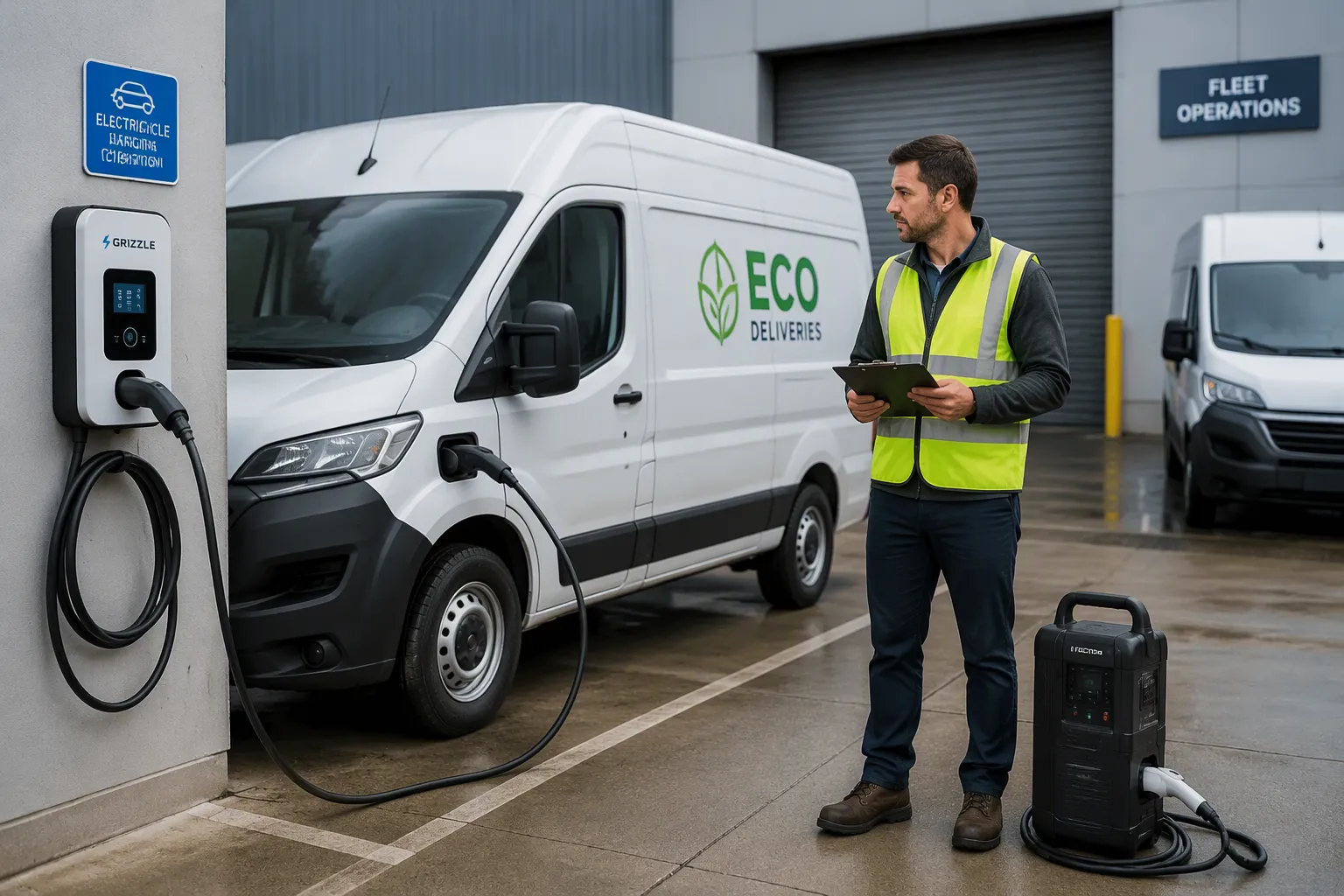
Charging levels set the top limit for any equipment you pick. Level 1 portable cords plug into normal home outlets and give the slowest charge. Level 2 managed AC works well for overnight parking and fits most depot and home cases. DC fast charging handles short turnaround jobs, and fleets only pay for it when vehicles must get back on the road fast.
Power output is where the two options differ most. A Mode 3 cable with a wall box uses fixed building wiring and keeps a higher, steadier output. Three-phase wall box setups reach 22–43 kW, while single-phase setups give about 3.6 kW. Common Mode 3 models show the range: a Type 2 to Type 2 three-phase 32A ev charging cable hits 22 kW at 400V, a single-phase 32A version hits 7.4 kW at 230V, and a Type 1 to Type 2 16A version hits 3.6 kW. Portable EVSE lists 3.6–22 kW on paper, but normal outlet safety limits most units to 16A or 32A, which gives about 3.8–7.6 kW. A NEMA 14-50 adapter maxes out near 32A, or 7.6 kW.
Charging Setup | Typical Power Levels (kW) |
|---|---|
Mode 3 cable + wall box (three-phase AC) | 22–43 kW; single-phase ~3.6 kW |
Portable EVSE (Mode 2) | 3.6–22 kW; commonly capped at 16A/32A → ~3.8–7.6 kW |
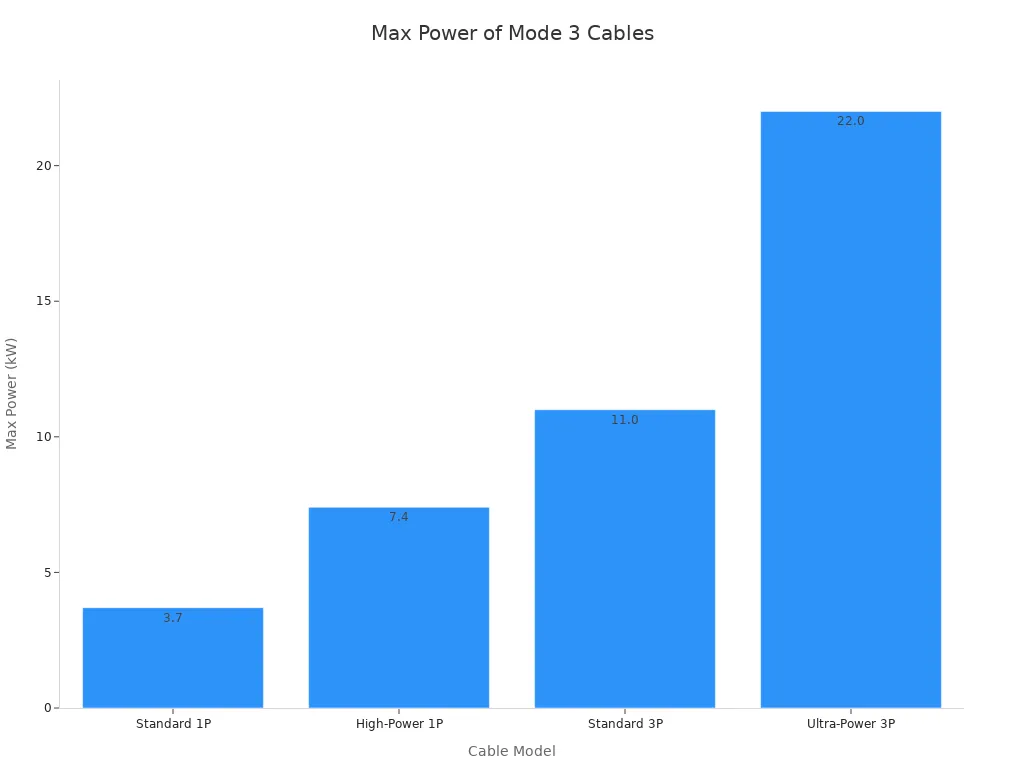
The verdict for each use case follows the numbers. Depots benefit from higher, steady power, so Mode 3 wins there. Drivers who take vehicles home benefit from outlet fit and portability, so portable EVSE wins there.
Safety and Durability
A fixed setup changes the safety picture. A tethered wall box keeps its charging cable in place, safe from daily handling, and checked as part of the building electrical system. A portable charger cable rides in the trunk, coils and uncoils at each stop, and depends on the outlet it finds. That daily wear makes fixed equipment the better pick for high-cycle depot use.
Certification matters for both. North American buyers should look for UL 2594 on AC EVSE, UL 2251 on plugs and couplers, and UL 2231 personnel protection. ETL certification from Intertek works as a known alternative, using the same ANSI/UL steps. European units need the CE mark plus IEC 62196 connectors and IEC 61851-1 communication and thermal management. Portable Mode 2 units also fall under IEC 62752 for in-cable protection. An untethered portable unit carries its protection onboard, so check that rating before you buy.
For depots, ask for fixed Mode 3 hardware with full certification and scheduled inspection. For take-home use, pick portable EVSE with valid in-cable protection and check outlet condition at each driver's home. This mode 3 cable vs portable evse split keeps safety risk matched to the setting.
EV Fleet Charging: Depot vs Take-Home Fit
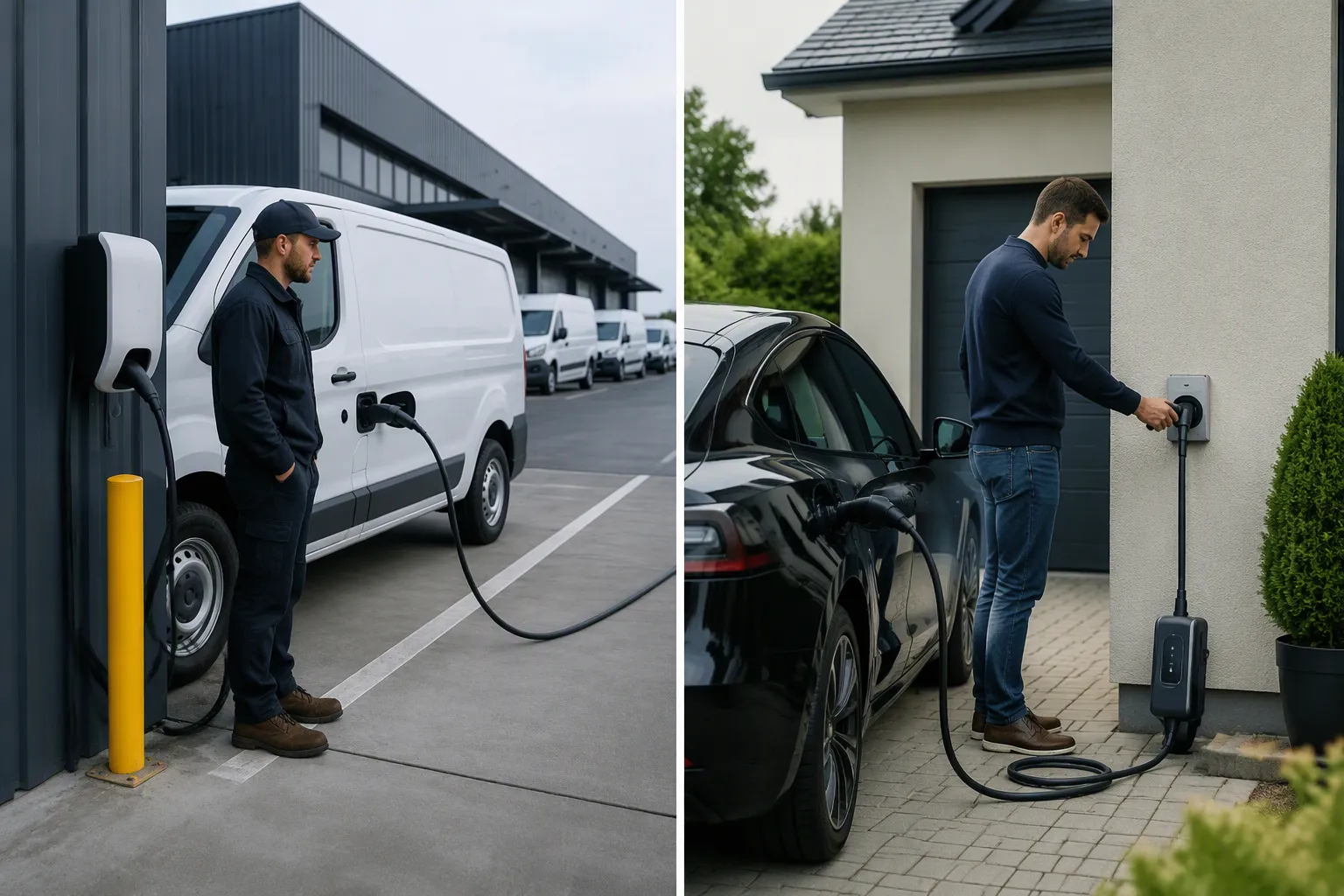
A depot handles the steady, expected load. Vehicles come back to the same bays, park for the same time, and use the same energy each night. Portable or mobile chargers add capacity when demand is higher than the depot can handle. They cover busy weeks, temporary sites, and drivers who park at home. This split shapes every equipment choice in ev fleet charging.
Mode 3 Cables for Depot Charging
Vehicles that stay parked a long time work best with managed AC Level 2 at the depot. The numbers back up that match:
Level 2 charging takes 4–10 hours to reach 80 percent, which fits long overnight parking periods.
Most depot parking lasts 6–12 hours, so light-duty fleet batteries can fully recharge within that window.
Level 2 charging is easier on batteries, which suits daily depot use.
Level 2 chargers can charge a BEV to 80 percent from empty in 4-10 hours and a PHEV in 1-2 hours.
Higher-power charging is for quick-turnaround cases. DC fast reaches 80 percent in 20–60 minutes, and a fleet should save that speed for vehicles that must get back on the road fast. A Mode 3 charging cable attached to a wall box gives steady output through fixed building wiring, and that steady power pays off at a site with repeated daily cycles.
Small operations can start simple. A fleet of 6–8 EVs can charge overnight on dual-port Level 2 units fed by a single 200A service. That setup keeps installation small and still covers the overnight window.
For depot bays, the recommendation is fixed Mode 3 hardware on managed Level 2, with DC fast saved for quick-turnaround duty. For extra demand, mobile chargers fill the gap without new construction.
Portable EVSE for Driver Take-Home Use
Take-home use follows a different pattern. The vehicle parks at a driver's home, often on a standard outlet, and stays there for many hours. A portable unit travels with the car, plugs into the outlet available, and needs no site work at the depot. That flexibility makes portable EVSE the practical choice for drivers who take vehicles home.
Drivers should check outlet condition and circuit capacity before the first charge. A portable charging cable pulls steady current for hours, so a worn outlet becomes a weak point. Fleets can pair each take-home unit with a short outlet check at handover.
For take-home drivers, the recommendation is a certified portable EVSE matched to the outlet at each home. For depot baseline load, the recommendation stays with fixed Mode 3 infrastructure. Together, the two cover the full duty cycle of most ev fleets.
Compliance for Tethered and Untethered EV Chargers
The tethered versus untethered split shapes the compliance checklist. Tethered ev chargers keep the charging cable fixed to a wall box. Untethered ev chargers hold the cable and protection inside a portable unit. Each type faces different standards and inspection duties.
Tethered EV Chargers: What to Verify
Tethered ev chargers in North America should carry UL 2251 on the plug and coupler. The connector itself follows SAE J1772, which sets the physical, electrical, communication protocol, and performance rules for the EV conductive charge system and coupler. That 5-pin standard covers single-phase AC charging, from a household NEMA 5-15 outlet at 1.44 kW, 12 A at 120 V, up to hardwired equipment that delivers 19.2 kW, 80 A at 240 V. A tethered ev charging cable on a fixed wall box also needs UL 2594 on the EVSE and UL 2231 personnel protection. European tethered level 2 chargers need the CE mark plus IEC 62196 connectors. The Mennekes Type 2 connector, standardized in IEC 62196, allows up to 63 A and 43.6 kW. Fixed equipment also needs a permit, a dedicated circuit, and a scheduled inspection.
Untethered EV Chargers: What to Verify
Untethered ev chargers carry their protection onboard, so the in-cable safety rating matters most. Portable Mode 2 units fall under IEC 62752 for in-cable protection. Untethered level 2 chargers sold in North America still need UL 2594 and UL 2231 listings. A separate charging cable that ships with the unit should meet UL 2251 at the coupler. Buyers should confirm the ev charging connectors match the vehicle inlet, since level 2 charging connectors vary by region. The table below sums up the main connector standards.
Connector / Standard | Certification | Region | Phase | Max Rating |
|---|---|---|---|---|
Type 1 — SAE J1772 | UL 2251 | North America & Japan | Single-phase | up to 80 A / 240 V (19.2 kW) |
Type 2 — IEC 62196 | TÜV | Europe, India, SE Asia & Australia | Three-phase | up to 63 A / 480 V (43 kW) |
NACS AC | UL | US & Canada | Single-phase | 32 / 50 / 80 A |
Plug-in equipment needs no building permit in most cases, but drivers should check the outlet and circuit at each home.
For depots, the recommendation is certified tethered hardware with documented inspection. For take-home use, the recommendation is certified untethered ev chargers with valid in-cable protection. This split keeps ev charging compliance matched to each setting.
Charging Cost by Use Case
Equipment, Installation, and Maintenance
Fixed Mode 3 setups cost more at the start. A wall box needs its own circuit, a permit, and an inspection. Hardwired units often need conduit runs and panel upgrades. Installation costs go up with distance from the panel and with site work like trenching or bollards. Maintenance stays predictable, though. Crews inspect fixed equipment on a schedule, and the tethered charging cable never leaves the bay.
Portable EVSE turns that cost picture around. The unit costs less than a wall box plus wiring, and it plugs into an outlet you already have. No permit, no conduit, and no panel work in most cases. Drivers handle the charging cable themselves, so wear and replacement costs move to the vehicle. Fleets also avoid stranded assets when a driver leaves or a route changes.
A mixed approach balances both sides. Fixed depot infrastructure covers the baseline load at the lowest long-run cost per vehicle. Portable units for take-home drivers avoid building work at each home. This mix keeps ev charging infrastructure spending focused on the depot, where utilization is highest.
Cost Recommendation per Scenario
For depot charging, the recommendation is fixed Mode 3 hardware on managed level 2 ev charging. Higher utilization spreads the upfront cost across more sessions, and steady power keeps energy costs predictable. DUOSIDA is a strong candidate here. The company holds UL, CSA, TUV, BS, CE, PSE, and 16949 certifications, and it supplies mainstream domestic and overseas car companies plus top charging pile companies. That record supports a depot build with documented compliance.
For driver take-home use, the recommendation is certified portable EVSE. Fleets avoid site work at each home and keep ev charging costs tied to the vehicle rather than the property. DUOSIDA also fits this case, since its certification set covers the major regional markets where drivers park. Fleet managers should audit dwell times and outlet conditions before buying, then split spending between fixed and portable equipment to match actual duty cycles.
Mode 3 cables work well for depot charging, and portable EVSE works well for drivers who charge at home. Fixed power at the depot gives better performance, while a portable unit at home is the better fit. Compliance differs: tethered hardware follows one set of rules, and untethered units with in-cable protection follow another. Cost works out better with fixed infrastructure when use is high, and with portable gear when drivers are spread across many homes. A mixed approach works best: fixed Mode 3 infrastructure at the depot plus portable EVSE for take-home drivers. Fleet managers should match each choice to duty cycles, dwell times, and site conditions. Before buying, they should audit every charging scenario, since the mode 3 cable vs portable evse decision starts with real fleet data, not a catalog.
FAQ
Which option suits a depot with overnight dwell times?
A Mode 3 cable on a managed Level 2 wall box is the best fit for overnight depot dwell. Fixed wiring gives steady power through repeated daily cycles. A fleet of 6–8 EVs can charge overnight on dual-port Level 2 units fed by a single 200A service.
Can drivers use portable EVSE on a standard household outlet?
Yes. Portable EVSE plugs into a standard outlet and goes with the vehicle. Normal outlet safety limits most units to 16A or 32A, which gives about 3.8–7.6 kW. Drivers should check the outlet condition and circuit capacity before the first charging session.
What certifications should a fleet verify before purchase?
North American buyers should look for UL 2594 on AC EVSE, UL 2251 on plugs and couplers, and UL 2231 personnel protection. European units need the CE mark plus IEC 62196 connectors. Duosida holds UL, CSA, TUV, CE, and IATF 16949 certifications across its product lines.
Does a mixed setup make sense for a fleet?
Yes. Fixed Mode 3 infrastructure covers the depot baseline load at the lowest long-run cost per vehicle. Portable units serve drivers who park at home and avoid site work at each property. This split keeps ev charging spending focused where use is highest.
How does a fleet decide between the two options?
The mode 3 cable vs portable evse decision starts with real fleet data. Managers should audit dwell times, duty cycles, and outlet conditions at each parking site. High-use bays favor fixed hardware. Spread-out home parking favors a portable charging cable for each driver.