
Is DUOSIDA an EV charging equipment manufacturer or a trading company?
 2026-11-16

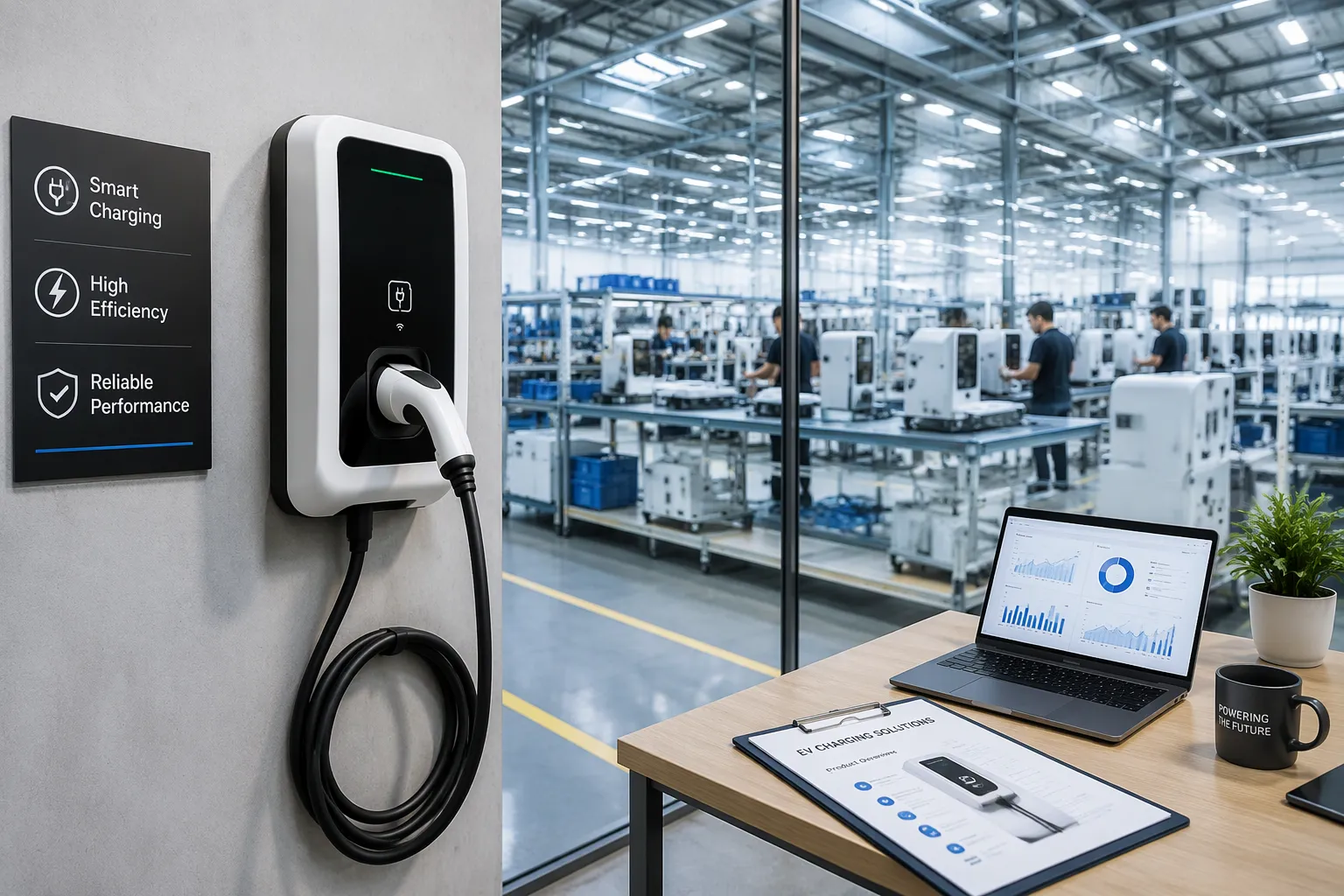
DUOSIDA is mainly an EV charging equipment manufacturer. The company designs and builds charging hardware, but trading and distribution layers also sit inside its supply chain. This dual nature shapes what buyers actually receive.
The distinction matters for quality control, reliability, customization, and cost. A true duosida ev charging equipment manufacturer controls production lines and testing. Trading layers add sourcing flexibility but can blur accountability. Buyers who understand the structure can judge risk before they order charging equipment.
Company profile, production facilities, R&D, certifications, and pricing data support this verdict. Each area shows where manufacturing ends and distribution begins.
Key Takeaways
DUOSIDA is mostly a maker of EV charging equipment. The company designs and tests its products in its own facilities.
Supply chains have trading and distribution layers. These layers can change quality control, cost, and lead times.
Buyers should ask who makes the charger and who takes care of the warranty. This question helps tell a manufacturer apart from a reseller.
Factory-direct orders work well for big custom projects. Distributor stock works well for small urgent orders. Pick the path that fits your needs.
The Verdict: A DUOSIDA EV Charging Equipment Manufacturer
What the Company Says It Does
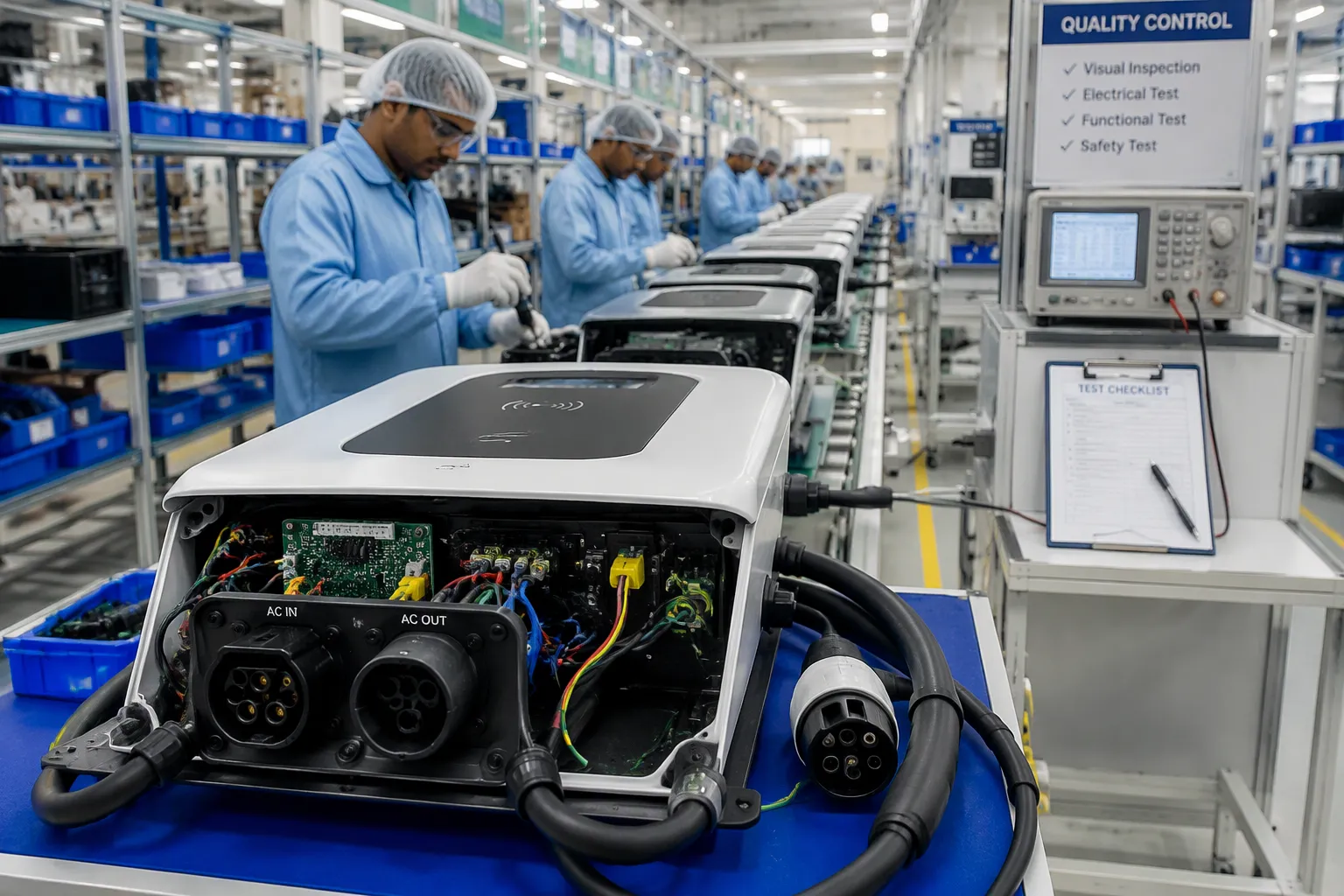
DUOSIDA says it is an AC EV charging equipment manufacturer. The company focuses on design, development, and production for the global market. Its public materials describe a full cycle: engineers shape the product, factories build it, and quality teams test it before shipment.
One detail adds nuance. A CE certification listing names Chengdu Khons Technology Co., Ltd. as the party that makes DUOSIDA chargers. The brand itself is run by Zhangjiagang UCHEN New Energy Technology Co., Ltd., a listed company with stock code 300731. This setup is common in the EV sector. A brand owner sets specs and holds the certification, while a linked production partner runs the line.
That setup still backs the manufacturer claim. The brand owner controls design, sourcing, and quality standards. The factory carries them out. Buyers deal with one accountable party for the finished charger.
Why the Distinction Matters to Buyers
The label on the box tells a buyer little. The operating model behind it tells a lot. Four areas change based on whether a supplier truly builds its products.
Quality control comes first. A real ev charger manufacturer owns the test process. It can trace a failed unit back to a production batch and fix the cause. A trading middleman often cannot.
Reliability follows. Production control shapes consistency across orders. The same line, the same fixtures, and the same inspection routine make predictable units.
Customization is the third factor. An established manufacturer can adjust connectors, cable lengths, or housing details for a project. The keyword here is customization, and it depends on access to tooling and engineering staff. A pure reseller must ask someone else for every change.
Cost is the fourth factor. Factory-direct supply usually removes a markup layer. That advantage shrinks when several middlemen sit between the plant and the buyer.
DUOSIDA sits between these poles. It works as a duosida ev charging equipment manufacturer with real production behind the brand. It also carries distribution layers in its chain. Buyers who map those layers can judge risk with clear eyes. They can ask who builds the unit, who certifies it, and who answers for defects. Those three questions separate a true equipment maker from a label alone. The answers also set expectations for lead times and support. A buyer who knows the structure negotiates from strength, not guesswork.
Supplier Profile: Background and Facilities
Company Ownership and Structure
A supplier profile starts with the name behind the brand. DUOSIDA runs under Zhangjiagang UCHEN New Energy Technology Co., Ltd., a company with stock code 300731. That listed status gives buyers a paper trail. Public filings, ownership records, and corporate disclosures are there for anyone who wants to check them.
This setup sets DUOSIDA apart from small trading outfits. Many chinese charging-hardware suppliers are private firms with little public information. A listed parent must report its business scope and its main product lines. Buyers can confirm the brand covers EV charging connection devices and charging stations. That transparency makes the supplier profile stronger and lowers the risk of dealing with an unknown middleman.
Production Plants and Locations
Supplier listings describe a large-scale production plant behind the brand. The operation also runs from a base in Yiwu, China. Yiwu is a well-known manufacturing and trade hub, and it gives the company access to component vendors and logistics routes.
A large-scale producer needs more than floor space. It needs lines, tooling, and test equipment under one roof. That setup supports steady output across repeat orders. Buyers who review the supplier profile should ask which plant builds their order and how the company moves goods from Yiwu to the port.
Location also shapes lead times. A Yiwu base sits close to export channels, which helps shipping schedules. Among charging-hardware suppliers, this matters for project deadlines. The best supplier profile answers two questions: who owns the factory, and where does production happen. DUOSIDA answers both, and that clarity helps buyers compare it with top chinese charging-hardware suppliers. A producer with named plants and a listed parent is easier to audit than a brand with no visible address.
Manufacturing Capabilities and EV Charging Connectors
In-House Production and R&D
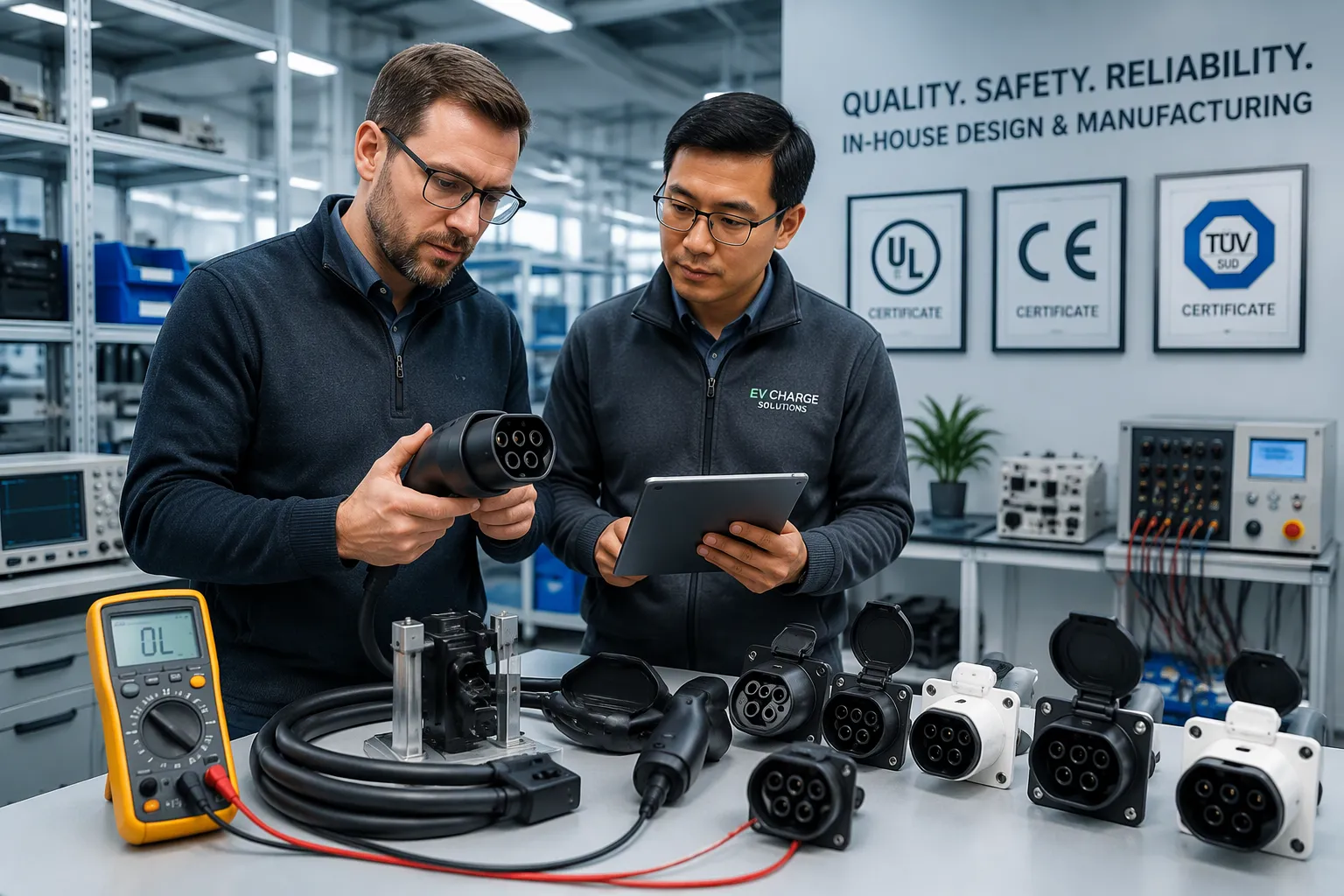
DUOSIDA designs, develops, and builds its main products in house. The line covers ev charging connectors, charger sockets, and charging cables. Engineers treat the charging plug, the socket interface, and the cable assembly as one system. That approach keeps fit and function matched across the parts a driver touches at every session.
The company puts money into research and development to back its manufacturer claim. Design teams shape new charging connectors, and they improve existing ones for different markets. DUOSIDA's main products have been tested and certified by UL, CSA, TUV, BS, CE, PSE, and 16949. These marks show that an outside group has checked the charging hardware against named standards. They also give buyers a paper trail for each market they serve.
The customer base backs the production story. Main domestic customers include mainstream domestic car companies and well-known overseas car companies. The top three charging pile companies in Europe and America also count among its buyers. A charging station manufacturer of that scale checks its suppliers hard. Repeat orders from these firms suggest that the ev charging hardware meets real-world demands.
Quality Control and Testing
Quality control runs through the whole build. Incoming parts get checked before they reach the line. Assembled charging connectors go through electrical and mechanical tests. Finished charging hardware gets a final inspection before packing. Each step aims to catch a fault early, when a fix costs little.
Testing focuses on the points that matter most for ev charging connectors. Contact resistance, insulation, and mechanical durability all get attention. The charger must survive thousands of mating cycles in daily use. A weak charging plug shows up fast in the field, and the test bench is where that weakness should surface first.
The certification list supports this process. UL, CSA, TUV, BS, CE, PSE, and 16949 each demand documented testing and traceable records. A firm that holds these marks must show a working quality system, not just a good sample. That record separates a true ev charger manufacturer from a trading label.
Customization depends on the same in-house base. Buyers can ask for changes to charging connectors, cable length, or housing detail. Engineers then check the change against the test plan. Among ev charging equipment makers, this loop from design to test is the real proof of manufacturing depth. DUOSIDA runs that loop, and the certifications and customer list show it holds up under scrutiny. Buyers who value charging hardware that ships with documented test records will find the structure they need here.
Product Range and Customized EV Charging Connectors
Portfolio and OEM/ODM Options
The catalog has four main groups. Level 2 EV chargers are made for home and business use. Charging cables connect the vehicle to the power source. EV connectors and charger sockets make up the connection point itself. All four groups come from the same engineering base, so a buyer can get a full set from one supplier.
OEM/ODM work is at the heart of what DUOSIDA offers. DUOSIDA works as a custom manufacturer for brands that want their own name on the product. The company makes customized EV charging connectors for full production runs, not just single samples. A buyer can ask for custom EV charging connectors with a different housing, cable length, or contact layout. Engineers then check each change against the test plan before it is released.
This flexibility is what sets a factory apart from a reseller. A strong oem/odm partner can take a design from drawing to full volume. Customization also covers the charging plug and the custom charging plug versions used in fleet and private-label programs. Buyers who need a charging station built to their spec will find the tooling and staff ready here.
Certifications and Compliance
Compliance supports every product group. DUOSIDA's main products carry UL, CSA, TUV, BS, CE, PSE, and 16949 marks. CE certification shows up on the charger listings, and the other marks cover the markets the brand serves. Each mark means an outside group tested the charging hardware against a named standard.
These records matter for two reasons. First, they prove a working quality system, not just a good sample. Second, they shorten the path to market for buyers who resell the goods. A distributor can show the certificate to a customer and close the sale faster.
Customization does not skip compliance. A changed charging plug or a new charging connector still needs a check against the same standards. DUOSIDA runs that loop in house, and the certification list shows the process holds. Buyers who compare ev charging connectors against competing offers should treat a full certificate set as a baseline, not a bonus.
Trading Activities and Cost Structure
Third-Party Suppliers and Distribution
DUOSIDA products also get to buyers through other suppliers. Chengdu Khons Technology Co., Ltd. sells DUOSIDA EV charging plugs. That company is also listed on the CE certification as the maker of DUOSIDA chargers. This overlap shows how the brand and its production partners are connected.
A distributor layer helps the brand reach more buyers. A distributor can keep stock, bundle products, and handle small orders that a factory would rather not run. Many chinese charging-hardware suppliers work this way. This model is useful for buyers who need standard items delivered fast.
The company still controls its main product line. The brand keeps design and testing in house, and the distributor handles the final step to some customers. Buyers should ask each seller one question: does this party build the charging hardware or resell it? The answer decides who handles warranty claims and technical help.
Pricing and Lead Times
The manufacturer-plus-distribution model shapes cost in clear ways. Factory-direct orders usually have the lowest unit price, because no middleman adds a markup. A distributor order costs more per unit, but it may save money on small volumes and tight deadlines.
Lead times follow the same pattern. A factory run depends on production scheduling and tooling for any customization. A distributor with stock on hand can ship in days. Among top chinese charging-hardware suppliers, both paths exist side by side, and neither one wins on every order.
Buyers should weigh volume, deadline, and support needs together. Large projects with custom charging plug requirements fit the factory route. Small urgent orders fit the distributor route. A clear view of the supply chain lets each buyer pick the path that matches their priorities.
DUOSIDA is mostly an EV charging equipment manufacturer. Trading and distribution layers are part of its supply chain, but the brand still does design and testing in house.
Those layers affect four things buyers care about. Quality assurance depends on the factory test process. Customization flexibility depends on access to tooling and engineering staff. Cost and lead times differ by route: factory-direct orders are better for volume and custom work, while distributor stock is better for small urgent orders. Buyers should think about volume, deadline, and support needs together.
Both models have real roles. A duosida ev charging equipment manufacturer works well for custom projects, and a trading partner works well for fast standard orders. The right choice depends on what the buyer needs most. This company gives buyers both paths, and customization is still the deciding factor for many projects.
FAQ
Does DUOSIDA build its own charging hardware?
Yes. The brand designs, develops, and makes its main products in house. This work includes charging connectors, charger sockets, and charging cables. A linked production partner runs some lines, but the brand owner still controls design and testing.
Who owns the DUOSIDA brand?
Zhangjiagang UCHEN New Energy Technology Co., Ltd. runs the brand. That company holds stock code 300731. A listed parent gives buyers public records they can check. The company also works from a base in Yiwu, China.
Which certifications cover DUOSIDA products?
The main products carry UL, CSA, TUV, BS, CE, PSE, and 16949 marks. Each mark means an outside group tested the hardware against a named standard. Buyers can show these records to their own customers.
Can buyers order custom charging connectors?
Yes. DUOSIDA takes OEM and ODM orders for full production runs. Buyers can ask for changes to housing, cable length, or contact layout. Engineers check each change against the test plan. This customization works well for private-label and fleet programs.
Do third parties resell DUOSIDA products?
Some do. Chengdu Khons Technology Co., Ltd. sells DUOSIDA EV charging plugs, and a CE listing names it as the maker of DUOSIDA chargers. Buyers should ask each seller one question: does this party build the hardware or resell it? That answer decides who handles warranty support. Customization requests still go back to the factory.