
How top EV charging component manufacturers are shaping automaker collaborations
 2026-09-29

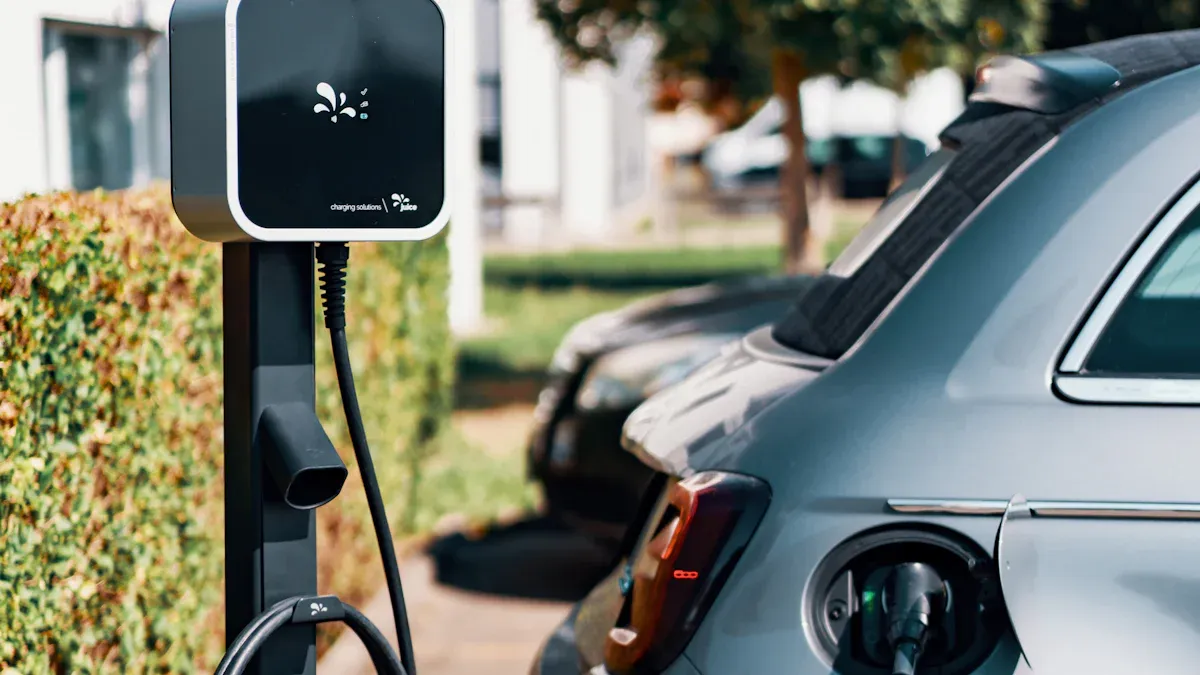
ABB, Siemens, Delta Electronics, Eaton, and BorgWarner are among the most capable EV charging component manufacturers. They build strong ties with car makers using advanced tech and worldwide reach. The industry is moving toward a common standard as Ford, GM, Honda, and Mercedes-Benz adopt NACS. At the same time, V2G technology is becoming a new area for joint work. Experts predict the V2G market will grow from $3.5 billion in 2023 to $17.9 billion by 2030. This growth requires closer cooperation between car makers and parts suppliers. Key questions for car makers: which suppliers have the best skills, what makes them strong, how do they work together, and what results do they get? Knowing these things is key to a successful partnership.
Key Takeaways
Big companies such as ABB and Siemens are leaders because they have new technology and can reach customers around the world.
Car companies and parts makers team up through joint ventures, supply deals, and working together on new ideas.
Successful partnerships, like ABB and Volvo, show the power of sharing knowledge.
Pick partners based on their technical skills, financial stability, and cultural fit.
V2G technology lets parked EVs send power back to the grid, creating new value.
Standards like NACS and CharIN make charging simpler and help more people use EVs.
Certifications such as UL and CE show that a supplier meets safety and quality standards.
Future trends include V2G integration, sustainability, and circular economy practices.
Capabilities of most capable EV charging component manufacturers
This section defines what separates a capable supplier from a true co-development partner. The most capable ev charging component manufacturers combine deep technology leadership, global scale, and proven reliability. Industry bodies set a useful benchmark. CharIN, the standards group behind the Combined Charging System, counts a large membership. That membership shows how many firms now compete on interoperability. EDTA also maintains a filterable listing of charging infrastructure manufacturers. That listing helps automakers shortlist candidates before deeper technical review.
Technology leadership in charging systems
Advanced power electronics and software
Power electronics decide how fast a vehicle refuels and how efficiently it converts grid power. ABB E-mobility and Siemens both push this frontier. ABB E-mobility released the MCS1200 solution for truck charging. It delivers 1.2 MW of continuous power at 1,500 A for heavy-duty truck charging. Siemens offers a complete AC and DC charging suite built on its own technologies and its Heliox acquisition. Siemens has deployed more than 100,000 chargers across 60 countries. These results matter for eTruck and eBus segments, where uptime drives fleet economics.
Fast-charging and bidirectional innovations
Fast charging and bi-directional charging now define premium capability. Bi-directional charging lets a vehicle send power back to a building or the grid. This function depends on tight coordination between on-board chargers and external equipment. Suppliers that master both sides reduce integration risk for automakers. V2G builds directly on this foundation. V2G turns parked batteries into distributed storage. V2G also creates new revenue models for fleet operators. V2G adoption will reward suppliers who already control the power conversion stack. V2G readiness is becoming a standard question in supplier audits.
Scalability and global manufacturing capacity
Supply chain resilience and volume output
Volume output separates a prototype shop from a production partner. Automakers need millions of components on predictable schedules. Resilient suppliers hold multiple sources for critical parts. They also test components in-house against international benchmarks. This discipline protects vehicle programs from single-point failures.
Multi-region production footprints
A multi-region footprint shortens lead times and avoids tariffs. Siemens demonstrates this reach with deployments across 60 countries. Regional production also speeds service response.
Customization and reliability standards
Tailored solutions for vehicle platforms
Every vehicle platform imposes its own packaging, voltage, and thermal limits. Capable hardware providers tailor connectors, cables, and modules to fit those constraints. This flexibility shortens design cycles for car manufacturers.
Safety and durability compliance
Top manufacturers comply with UL, CE, and IEC benchmarks for customized EV charging solutions. Specific certifications include UL 3100 and UL 2593. Compliance is built into design through globally certified components, in-house testing that mirrors international standards, and rigorous documentation for audits. Safety and durability features include fire-resistant housings, insulated enclosures, and built-in protective shutdown mechanisms. Multi-standard compliance supports global deployment with fewer design changes and helps manufacturers meet safety expectations in the U.S., Europe, and Asia.
Standard | Region/Scope | Key Safety or Durability Requirement |
|---|---|---|
IEC 61851-1 | International | Covers general safety requirements for conductive EV charging systems, including construction and testing to prevent electrical shock and ensure structural integrity. |
UL 2202 | North America | Specifies safety requirements for EV charging equipment, focusing on fire protection and electrical shock protection. |
NEC Article 625 | United States | Provides installation guidelines for EV charging stations, including wiring safety and overcurrent protection. |
These standards give automakers a shared language for evaluating ev charging companies. A supplier that meets them across regions removes a major barrier to co-development.
Collaboration models shaping automaker partnerships
Collaboration models differ by how deep the teamwork goes and how much risk each side takes. Some partnerships stay at the contract level. Others share factories, research teams, and even buildings. Each model has a different mix of cost, control, and speed.
Joint ventures and strategic alliances
Shared investment in charging infrastructure
Shared investment splits the cost of public charging networks. General Motors made a significant investment in EV charging. That scale shows how much car companies now put into these deals. A joint venture lets a parts maker and a car maker share money risk. Both sides get wider network coverage faster. Both sides also get a say in how stations are designed and how long they stay working.
Co-owned manufacturing facilities
Co-owned factories match production capacity with when cars launch. The supplier builds the line. The car maker promises to buy a set number of parts. This setup cuts waiting time and locks in prices. It also forces both sides to agree on quality standards early. Co-ownership works best when both partners have similar engineering styles and audit habits.
Supply agreements and long-term contracts
Component supply for production EVs
Long-term supply contracts cover connectors, on-board chargers, and power modules. These deals last as long as a car platform is made. Car makers want steady prices and guaranteed supply. Suppliers want predictable volume to pay for tooling. A good contract includes rules for price changes, quality checks, and delivery dates.
Integration into automaker charging networks
Parts makers now help run the networks their hardware connects to. Plug-and-charge allows drivers to simply connect and automatically authenticate, without an app or card. This smooth handshake needs deep software teamwork between the car maker and the equipment supplier. Car makers like this model because it removes hassle at the plug. It also builds brand loyalty around a reliable charging experience.
Co-innovation and joint research
Collaborative R&D for next-generation charging
Joint research targets higher power levels, better heat control, and smarter energy flow. V2G sits at the center of this work. V2G lets a parked car send power back to a building or the grid. V2G turns batteries into stored energy that can be shared. V2G also opens new money-making options for fleet owners. V2G needs close coordination between the car's on-board charger and the outside station. That coordination only works when both partners design to the same interface from the start.
Software and firmware co-development
Software now decides how well hardware works. Firmware controls how devices talk to each other, balance power load, and handle errors. Car makers and suppliers more often write this code together. Shared code storage and joint test benches speed up testing. Over-the-air updates let both sides fix problems after launch. This setup requires clear ownership of code and clear rules about who is responsible if something goes wrong.
The right model depends on the goal. A simple supply deal works for a mature part. A joint venture works for a new network build. Co-innovation works for a new technology like V2G. Car makers that match the model to the risk get faster launches and fewer integration problems. Suppliers that offer flexible partnership terms win more platform awards. The table below shows how each model maps to typical goals.
Model | Typical Goal | Risk Sharing |
|---|---|---|
Joint venture | Network build, shared assets | High |
Supply agreement | Production components | Low to medium |
Co-innovation | Next-gen tech, software | Medium to high |
Each model also shapes the EV infrastructure that drivers actually use. A supply-only deal may deliver a good connector. A co-innovation deal may deliver a connector, firmware, and grid service all together. Car makers increasingly want the second outcome. That shift rewards suppliers who can move beyond parts and into complete systems.
Case studies of successful automaker collaborations
Real partnerships show how parts makers and car companies turn plans into real products. One example stands out because it is large and technically deep.
ABB and Volvo collaboration
Scope of partnership and solutions
ABB and Volvo Buses teamed up to create and sell electric and hybrid buses using open-standard DC fast charging. The two companies built a standard system that charges buses fast using an automatic roof-top connection at bus stops. Cable systems handle overnight charging. The joint work included the way the bus talks to the charger, the electrical connection, and the roof-top automatic system. The design mostly uses CCS DC fast charging standards for passenger cars, which most European automakers use.
Outcomes and market impact
The first joint project took place in Luxembourg. Up to 12 Volvo hybrid buses ran on existing routes by 2015. This project showed that charging at stops can keep commercial fleets running without long breaks. It also showed how open standards reduce risk for transit operators. This model now guides wider work on V2G, where buses could send power back to depots.
Criteria for automakers to choose partners
Procurement managers and engineers need a clear way to decide. They check technical depth, financial strength, and cultural fit before signing any deal. The UNECE E-Mobility Compendium offers case studies that help buyers compare suppliers. Conductive charging (CC) leads the market today. This lead makes CC compatibility a basic requirement for any partner.
Technical expertise and innovation track record
Patents and proprietary charging technologies
A strong patent portfolio shows real innovation. Suppliers with proprietary charging technologies control key parts of the power conversion stack. This control lowers integration risk for automakers. ABB E-mobility holds patents in high-power charging. Siemens owns technology behind its AC and DC charging suite. These assets give partners a technical edge.
Compatibility with multiple EV architectures
Vehicles differ in voltage, packaging, and thermal limits. A capable supplier adapts its hardware across platforms. This flexibility shortens design cycles. It also lets one supplier serve multiple oems without costly redesigns.
Financial stability and scalability
Investment capacity for joint development
Joint development demands shared investment. General Motors made a significant investment in EV charging infrastructure. That scale shows what automakers expect from partners. Suppliers must fund research, tooling, and testing alongside their customers. Weak balance sheets stall projects.
Ability to scale production globally
Production must match vehicle launch schedules. A supplier with multi-region factories shortens lead times and avoids tariffs. Global scale also supports v2g rollouts across markets.
Cultural fit and collaboration history
Prior automaker partnership experience
Past partnerships predict future success. Suppliers who have worked with automakers understand audit habits and quality checks. This track record proves it can handle complex customer relationships.
Alignment on timelines and quality standards
Timeline mismatches kill good projects. Both sides must agree on delivery dates, testing gates, and quality benchmarks. Shared documentation and joint test benches keep teams aligned. V2G projects need even tighter coordination because software and hardware must work together from day one. Suppliers who align early win more platform awards. V2G readiness is becoming a standard question in supplier audits. V2G adoption will reward suppliers who already control the power conversion stack. V2G turns parked batteries into distributed storage. V2G also creates new revenue models for fleet operators.
Future trends in V2G technology and devices
V2G is the next big area where manufacturers and automakers will work together. This technology uses EV batteries as low-cost energy storage without needing extra hardware. Cars that work with V2G will need closer teamwork between manufacturers and automakers. The U.S. bidirectional charging market is expected to grow from $21.0 million in 2025 to $252.0 million by 2030, at a 28.4% CAGR. This growth shows that V2G technology will become common in premium and mid-market EVs, with more use in commercial fleets and home charging.
Integration of V2G technology with vehicle software
Over-the-air updates and smart charging
Over-the-air updates let automakers add or improve V2G features after a car leaves the factory. A V2G compatible car model can get new firmware that changes how its battery responds to grid signals. This approach saves money for automakers. They avoid hardware changes on the assembly line. Smart charging software also balances load across many vehicles. A fleet depot with dozens of V2G chargers can spread out charging times. This spacing lowers peak demand charges. It also keeps the local grid from getting overloaded.
Vehicle-to-grid and energy management
V2G technology turns parked EVs into small power plants. A vehicle-to-grid charging device allows power to flow both ways between the car and the grid. This feature improves grid strength and lowers costs for commercial users. Fleet operators earn extra money by selling power back during high-demand times. V2G technology also helps add renewable energy. Solar and wind power go up and down. Parked EVs soak up extra energy and give it back when needed. This balance makes the grid more stable. A vehicle-to-grid communication interface makes sure cars, chargers, and utility systems share data in real time. V2G in practice needs this constant coordination.
Standardization and interoperability for V2G
Adoption of universal charging standards
Universal standards make it easier for V2G to spread. CharIN's Combined Charging System already supports bi-directional charging in its newest specs. Automakers and suppliers now match their V2G charging solutions to these standards. This match avoids proprietary systems that shut out competitors. A standard connector and protocol let any certified vehicle use any certified charger. This compatibility speeds up deployment. It also gives utilities confidence that V2G charging stations will work across brands.
Cross-brand charging network compatibility
Drivers expect their V2G compatible vehicles to work on any network. Cross-brand compatibility needs shared login and payment systems. Plug-and-charge shows how this works. A driver plugs in. The car and charger do the rest. This smooth experience builds trust in V2G technology. Manufacturers that support open standards win more automaker contracts. They also help network operators avoid costly retrofits. Two-way charging becomes a normal feature instead of a premium add-on.
Sustainability and circular economy
Recyclable charging components
Sustainability now shapes how parts are designed. Manufacturers design V2G chargers with recyclable materials. They avoid permanent bonding between different materials. This choice lets recyclers separate metals, plastics, and electronics at end of life. Recyclable components cut waste from charging infrastructure. They also lower lifecycle carbon footprints. Automakers more often ask suppliers for recyclability data during procurement.
Carbon-neutral manufacturing commitments
Carbon-neutral manufacturing is becoming a must to compete. Suppliers commit to renewable energy at their factories. They also track emissions across their supply chains. These commitments support automaker sustainability goals. They also align with vehicle-to-everything strategies that improve energy use across buildings, vehicles, and the grid. A V2G charging solution built in a carbon-neutral plant offers a stronger environmental story. This story matters to fleet buyers and consumers who weigh total emissions.
ABB, Siemens, Delta Electronics, Eaton, and BorgWarner are among the top EV charging component makers. Each has deep tech skills and a worldwide scale for co-development work. Smart partnerships will shape the next step in how car makers work together. Standards like NACS and CharIN remove blocks and help people adopt faster. V2G tech opens a new area for joint research. V2G turns parked cars into power sources for the grid. V2G also needs software and hardware to work very closely. Car makers should pick partners based on tech skills, ability to scale, and cultural fit. The best EV charging component makers will lead this change. A charging partnership built on shared standards and trust gives lasting results.
FAQ
Which manufacturers lead in EV charging component co-development?
ABB, Siemens, Delta Electronics, Eaton, and BorgWarner lead this field. Each firm pairs deep power electronics knowledge with global factories.
What makes a supplier ready for v2g projects?
A supplier needs control over the full power conversion stack. v2g demands tight coordination between on-board chargers and external stations. Firms with proven bidirectional hardware and firmware teams move fastest. v2g readiness now appears as a standard question in supplier audits.
How does CharIN support v2g standards?
CharIN runs the Combined Charging System and counts many members. Its newest specifications already support bidirectional charging. This backing lets automakers and suppliers align v2g hardware to one protocol. A shared protocol speeds v2g deployment across brands and networks.
Why do automakers invest in charging infrastructure?
General Motors has made a significant investment in EV charging infrastructure. That scale shows how much car makers now spend on networks. Shared investment splits cost and risk. It also gives suppliers a voice in station design, uptime, and v2g features.
What role does software play in v2g adoption?
Software decides how well v2g hardware performs. Firmware controls power flow, load balancing, and error handling. Automakers and suppliers increasingly write this code together. Over-the-air updates then add v2g features after a car leaves the factory.
How do certifications affect partner selection?
Certifications prove a supplier meets safety and durability benchmarks. Many top manufacturers hold multiple international certifications. These open doors in North America, Europe, and Asia. Multi-region compliance removes a major barrier to v2g rollouts.
What results do successful partnerships deliver?
ABB and Volvo Buses built fast-charging systems for hybrid buses in Luxembourg. This case pairs supplier power electronics with automaker platform knowledge.
What should automakers check before signing a v2g deal?
Buyers should weigh technical depth, financial strength, and cultural fit. Patents and multi-platform compatibility signal real innovation. Investment capacity and global factories signal scale. Prior automaker experience and aligned timelines signal smooth v2g execution.