
Wall-Mounted vs. Pedestal EV Chargers: Which Mode 3 Design Fits Your Project?
 2026-11-06

Choosing an AC EV charging station involves more than deciding how much charging power to provide. The installation method can affect parking space, cable accessibility, electrical routing, maintenance and the way drivers use the equipment.
Wall-mounted and pedestal EV chargers are two common installation options for Mode 3 AC charging systems. Both can support residential, workplace and commercial charging, but they are designed for different site conditions.
A wall-mounted charger generally suits locations with a suitable supporting wall close to the parking space. A pedestal charger provides more flexibility where charging equipment needs to stand independently in an open parking area.
Neither installation method is automatically better. The right choice depends on the physical layout, available electrical infrastructure, vehicle access and long-term operating requirements.
Start with the Parking Layout, Not the Charger
Consider two typical projects.
The first is an office building with parking spaces arranged along an interior wall. Electrical distribution equipment is nearby, and drivers park in clearly marked spaces. In this case, a wall-mounted charging station may provide a straightforward installation arrangement.
The second project is an outdoor parking facility with two rows of vehicles separated by a pedestrian or service area. There may be no suitable wall near the parking spaces. Installing chargers on dedicated pedestals could provide more practical access.
Both projects may require similar AC charging power, but their mounting arrangements are different.
Before selecting equipment, project engineers should review:
Available wall or ground installation positions
Distance from the electrical distribution system
Vehicle parking orientation
Charging connector accessibility
Cable routing and storage
Pedestrian movement and equipment protection
Future expansion requirements
These details help determine whether a wall-mounted or pedestal configuration is more suitable.
Wall-Mounted Mode 3 EV Chargers: Making Use of Existing Structures
Wall-mounted charging stations are installed on a suitable wall or supporting structure close to the intended charging position.
They are often considered for residential garages, office buildings, covered parking facilities and other locations where structural support is already available.
Advantages in Suitable Installations
Efficient use of parking space
A wall-mounted charger does not require a separate floor-standing support. This can be useful in garages and parking areas where equipment placement needs to avoid vehicle circulation routes.
Convenient positioning
When the wall is close to the vehicle charging inlet, the charging connector can be positioned for regular use without unnecessarily long cable runs.
Integration with existing buildings
Building-mounted charging equipment may be easier to incorporate into some existing parking layouts, especially where electrical infrastructure is already installed nearby.
However, wall-mounted equipment still requires suitable structural support, proper electrical installation and adequate clearance.
Installation Limitations
Wall-mounted chargers are not suitable for every site.
A wall may be too far from the parking position, obstructed by other equipment or unsuitable for supporting the installation.
Cable accessibility also needs attention. A charger installed too far from the vehicle may require an inconvenient cable route.
For commercial installations, engineers should check whether the selected position allows drivers to connect and disconnect the equipment without obstructing adjacent spaces.
Pedestal EV Chargers: Flexible Positioning for Open Parking Areas
Pedestal EV chargers are installed on dedicated floor-standing supports. They are particularly useful where suitable walls are unavailable or where the charger needs to be positioned between parking spaces.
Typical applications include outdoor parking areas, workplace car parks, commercial properties and designated charging facilities.
A pedestal installation allows the charger to be placed according to the parking arrangement rather than being restricted to an existing wall.
Where Pedestal Installation Works Well
Open parking facilities
In a large parking area, the charging equipment can be positioned near the designated parking spaces without relying on nearby buildings.
Shared charging locations
Depending on the charger configuration and site design, a centrally positioned pedestal may offer convenient access from different parking positions.
Outdoor charging projects
A pedestal installation can provide a practical mounting solution for outdoor projects when the equipment and supporting infrastructure are suitable for the operating environment.
However, a pedestal installation also requires additional planning.
The foundation, cable routing, mounting height and protection from vehicle impact should be addressed during the design stage.
Where underground electrical cables are required, installation work may involve excavation and restoration of the surrounding surface.
These requirements should be reviewed before confirming the final equipment location.
Wall-Mounted vs. Pedestal EV Chargers: A Project Comparison
| Selection factor | Wall-mounted charger | Pedestal charger |
|---|---|---|
| Installation position | Suitable wall or structure | Dedicated ground-mounted support |
| Typical environment | Garage, building-side parking | Open or outdoor parking area |
| Structural requirement | Wall strength and fixing points | Foundation and pedestal support |
| Electrical routing | May use nearby building routes | May require underground cable routing |
| Parking layout | Best when spaces are near walls | Flexible positioning between spaces |
| Maintenance access | Depends on wall clearance | Depends on pedestal placement |
| Future expansion | Limited by available wall positions | Requires planned support and electrical capacity |
The table describes general installation considerations. Actual requirements depend on the charger model, site conditions and applicable electrical regulations.
Charging Power: 7kW, 11kW or 22kW?
Once the installation method is selected, the next question is whether the charging equipment matches the available electrical supply and operational requirements.
DUOSIDA offers Mode 3 AC charging station configurations with published power ratings of 7kW, 11kW and 22kW.
The company's V3-SES charging station series lists the following electrical configurations:
| Charging power | Published electrical configuration |
|---|---|
| 7kW | 230V AC, 32A, single-phase |
| 11kW | 400V AC, 16A, three-phase |
| 22kW | 400V AC, 32A, three-phase |
The product information identifies both wall-mounted and pedestal-type installation options.
For project planning, power selection should consider the available electrical supply, the vehicle's onboard AC charging capability and the expected parking duration.
A 22kW station does not guarantee that every vehicle will charge at 22kW. Actual charging power depends on the vehicle, charging equipment and electrical supply.
For workplaces where vehicles remain parked for several hours, a lower-power AC configuration may be appropriate. Locations requiring greater energy delivery during shorter parking periods may benefit from higher-power equipment, provided the site and vehicles support it.
The mounting method itself does not determine charging speed.
Connector Compatibility: Why Type 1 and Type 2 Matter
After choosing the mounting arrangement and charging power, buyers must confirm connector compatibility.
Mode 3 charging equipment establishes a controlled electrical connection between the charging station and the vehicle. The vehicle connector and cable assembly must match the intended vehicle inlet and electrical specifications.
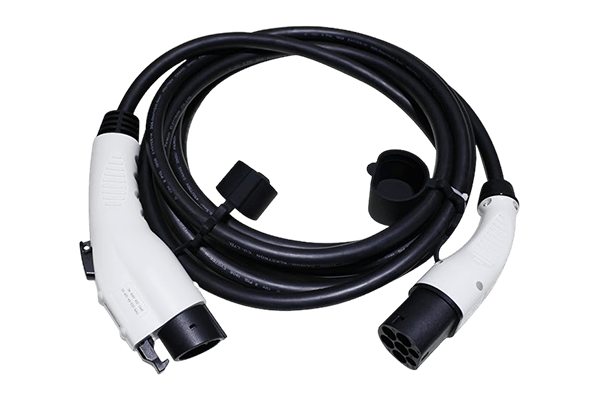
DUOSIDA provides Type 1 and Type 2 Mode 3 charging connection products.
Type 2 Charging Connections
DUOSIDA's Type 2 B2 charging connection product is listed with 16A and 32A current options and 250V/415V AC operating voltage configurations.
Its published features include:
Design references to IEC 62196-2
Mode 3 product assembly requirements under IEC 61851-1
IP55 protection in working conditions
Copper alloy contacts with silver plating
Operating temperature from -30°C to +50°C
Type 2 charging connections are widely used in European AC charging applications.
The available single-phase and three-phase cable configurations allow buyers to evaluate different electrical requirements when selecting charging connections.
Type 1 Charging Connections
DUOSIDA also supplies Type 1 B2 charging connection products rated at 16A or 32A, with the referenced model operating at 250V.
The product page specifies IP44 protection in working conditions, thermoplastic housing materials and silver-plated copper alloy contacts.
Type 1 connectors are relevant to vehicles equipped with compatible Type 1 AC charging inlets.
For international projects, the connector selection should be based on the actual vehicle population and applicable charging interface requirements, not simply the installation country.
The complete DUOSIDA Charging Mode 3 product range includes Type 1 and Type 2 connection options for different AC charging applications.
Smart Charging Features for Commercial Projects
For workplaces and commercial parking facilities, charging management can be just as important as installation design.
DUOSIDA's V3-SES series lists several operating features that may be relevant to these applications:
Multiple charging start methods
The product information lists plug-and-charge, RFID card and APP-based starting options.
These methods can support different approaches to charger access and operation.
Communication interfaces
The listed communication options include 4G, WiFi, LAN and Bluetooth.
When considering connected charging equipment, operators should verify the communication configuration and software compatibility of the selected model.
Charging status and fault information
Charging indication, fault indication and self-test functions are included in the published product features.
These functions can help users and maintenance personnel understand equipment status.
Electrical protection
The series lists leakage detection, emergency stop protection, overcurrent protection, voltage protection and temperature protection.
Its published outdoor protection rating is IP55.
For commercial projects, these features should be evaluated alongside local installation requirements, maintenance procedures and the selected charger configuration.
Three Practical Project Scenarios
Scenario A: Office Parking Along a Building Wall
A workplace plans to install AC charging points along a row of parking spaces next to a building.
A wall-mounted charger may be the practical option because the installation position is close to the parking spaces and electrical distribution routes.
The design team should confirm mounting height, cable reach, electrical capacity and access for maintenance.
Scenario B: Outdoor Parking Without Nearby Walls
A commercial parking facility has charging spaces in the middle of an open parking area.
A pedestal charger may be more suitable because it can be installed close to the vehicles without relying on a building structure.
The project will require suitable foundation design, electrical cable routing and protection against accidental vehicle contact.
Scenario C: A Mixed-Use Commercial Property
A property includes an enclosed garage, outdoor visitor parking and designated staff spaces.
Rather than selecting one mounting method for the entire site, the project team may use wall-mounted chargers in the garage and pedestal chargers in the outdoor area.
This approach allows the charging equipment to match the actual conditions of each location.
In all three scenarios, the charger power, connector type and electrical protection requirements still need to be confirmed separately.
Working with DUOSIDA on Mode 3 Charging Projects
Zhangjiagang UCHEN New Energy Technology Co., Ltd., also known as Youcheng Technology (stock code: 873087), focuses on the development and market promotion of high-performance charging products for new energy vehicles.
Through the DUOSIDA brand, the company offers EV charging equipment and related connection products for various applications.
Its product portfolio covers Mode 3 charging connections, AC charging stations, charging plugs, sockets and other charging components.
For equipment distributors, charging infrastructure contractors and commercial project buyers, this product coverage provides a basis for discussing both charging stations and compatible connection components.
The V3-SES charging station series provides wall-mounted and pedestal installation options, while DUOSIDA's Type 1 and Type 2 connection products cover different vehicle interface requirements.
These products address separate but related decisions in an AC charging project: where the station will be installed, how it will connect to the electrical supply and which vehicles it must support.
More information about the manufacturer and its EV charging product portfolio is available on the DUOSIDA official website.
Conclusion: Choose the Installation That Fits the Site
Wall-mounted and pedestal Mode 3 EV chargers serve the same fundamental purpose, but their installation requirements differ.
Wall-mounted designs are practical where suitable building structures are close to the parking spaces. Pedestal chargers offer greater placement flexibility in open parking areas and locations without convenient wall access.
For commercial AC charging projects, the final decision should account for electrical capacity, parking layout, vehicle connector compatibility, cable accessibility and maintenance requirements.
DUOSIDA provides Mode 3 charging connection products and AC charging station options that can be evaluated against these project needs.
The most effective approach is to begin with the site's operating conditions, then select a suitable installation arrangement, charging power and connection configuration.