
EV Charging Adapter Wholesale: A Sourcing Guide for Distributors and OEM Buyers
 2026-11-09

For EV charging equipment distributors and OEM buyers, sourcing charging adapters requires more than finding a product with the right connector shape. Electrical ratings, charging standards, material construction, environmental protection and supplier documentation all affect whether an adapter is suitable for its intended application.
This becomes especially important when purchasing adapters in volume. A specification mismatch in a single product can affect an entire shipment, while unclear compatibility information may create problems for distributors serving different vehicle markets.
China has become an important manufacturing and sourcing location for EV charging components. However, buyers should evaluate products based on verified specifications and manufacturing capabilities rather than relying solely on supplier descriptions.
This guide explains how to approach EV charging adapter wholesale sourcing, using examples from DUOSIDA's AC and DC adapter product range.
Start with the Charging Interface, Not the Current Rating
One common purchasing mistake is selecting an EV charging adapter based on its rated current before confirming connector compatibility.
An adapter connects two specified charging interfaces, but this does not mean it can convert between every charging standard or electrical system.
Before requesting a quotation, distributors should identify three basic requirements:
Vehicle-side interface: Which charging inlet does the vehicle use?
Charging equipment interface: Which connector is provided by the charging station?
Charging system: Is the application AC charging or DC charging?
These details determine which adapter configuration may be appropriate.
For example, a CCS2-to-CCS1 adapter is intended to address a particular DC charging interface combination. It should not be treated as a universal adapter for unrelated AC or DC charging systems.
Electrical compatibility also involves control communication, connector locking and other interface requirements. Matching the physical connector shape alone does not establish full charging compatibility.
For wholesale buyers, a clear application description is essential before evaluating individual product models.
Understanding the DUOSIDA EV Charging Adapter Range
DUOSIDA supplies EV charging adapters with different current and voltage specifications.
The company's published adapter range includes several AC configurations and high-voltage DC products.
| Adapter product | Published electrical rating | Application consideration |
|---|---|---|
| 32A AC Adapter | 32A, 250V AC | AC charging interface requirements |
| 50A AC Adapter | 50A, 250V AC | Higher-current AC adapter applications |
| 60A AC Adapter | 60A, 250V AC | AC charging configurations requiring the specified rating |
| 150A DC Adapter | 150A, 1000V DC | High-voltage DC charging interface applications |
These published ratings help buyers identify potential product categories, but they do not establish compatibility with a particular vehicle or charging station.
For example, a 60A adapter should not automatically be considered suitable for every AC charging system with a lower operating current. Connector standards, mechanical design and electrical requirements must also be verified.
Buyers can review the available configurations in the DUOSIDA EV Charging Adapter product range before discussing specific applications with the manufacturer.
Product Example: 150A 1000V DC Charging Adapter
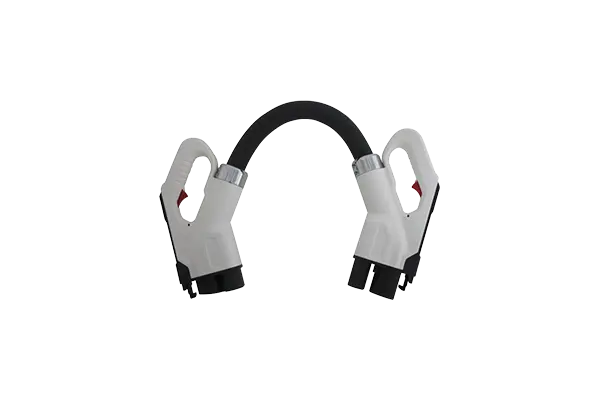
A useful example for evaluating product specifications is DUOSIDA's 150A 1000V DC adapter, listed under model 35125.
This product is designed for a CCS2-to-CCS1 charging interface configuration and is described as meeting IEC 62196-3 Sheet 3-IVa requirements.
Its published technical information provides several useful reference points for wholesale buyers.
Electrical Specifications
| Parameter | Published specification |
|---|---|
| Rated current | 150A |
| Operating voltage | 1000V DC |
| Insulation resistance | Greater than 100 MΩ at DC 1000V |
| Contact resistance | Maximum 0.5 mΩ |
| Terminal temperature rise | Less than 50K |
| Withstand voltage | 2000V AC for 1 minute |
These specifications describe important electrical characteristics of the adapter.
Contact resistance is particularly relevant because excessive resistance at an electrical connection can contribute to unwanted heat generation.
Insulation resistance and withstand-voltage performance are also important indicators when assessing electrical insulation under specified test conditions.
However, published test values should not replace verification of the complete adapter's suitability for a particular charging application.
Materials and Mechanical Design
The product information identifies a thermoplastic housing, silver-plated copper alloy terminals and a thermoplastic inner core.
Silver-plated copper alloy contacts are used in electrical connectors because contact material and surface treatment can influence electrical performance and connection reliability.
The adapter also lists a mechanical lifespan exceeding 10,000 no-load insertion and withdrawal cycles.
This provides a reference for mechanical durability under the stated test conditions. It should not be interpreted as a guarantee of unlimited service life under all operating environments.
Environmental Performance
The 150A DC adapter lists IP55 protection in working conditions and an operating temperature range of -30°C to +50°C.
These specifications can be relevant to outdoor charging equipment applications.
Buyers should still confirm operating restrictions, environmental protection conditions and the documentation applicable to the exact product configuration.
Why Sample Evaluation Matters Before Wholesale Orders
Product specifications are the starting point of procurement, not the end of the evaluation process.
For distributors planning repeat purchases, samples allow the purchasing and technical teams to examine the product before confirming a larger order.
A practical sample evaluation should include the following checks.
1. Connector Fit and Handling
Check whether the adapter connects correctly to the intended mating interfaces. The connection should be evaluated for proper engagement, locking behavior and normal handling.
2. Product Markings
Verify that the product markings and supplied documentation clearly identify the relevant ratings, model information and operating limitations.
3. Material and Assembly Quality
Inspect the housing, contact arrangement and visible assembly details for consistency with the approved product specification.
4. Electrical Documentation
Request relevant electrical test information, including insulation and contact resistance data where applicable.
5. Application Compatibility
Confirm whether the adapter has been evaluated for the intended vehicle and charging equipment combination.
For high-voltage DC adapters, functional and electrical evaluations should be performed by qualified personnel using appropriate equipment and procedures.
A sample should not be connected to a charging system simply to test whether the physical interfaces fit.
Questions Distributors Should Ask an EV Charging Adapter Manufacturer
When communicating with a supplier, a structured technical inquiry can reduce misunderstandings.
Instead of asking only whether an adapter is available, provide the intended charging application and request confirmation of its technical suitability.
The following questions are useful:
Which charging interface combination does the adapter support?
What are the rated current and operating voltage?
Which standards and technical requirements apply to the exact model?
What electrical and mechanical test information can be supplied?
What are the operating temperature and enclosure protection ratings?
Are product drawings and specification documents available for technical review?
What product identification and packaging arrangements can be discussed?
What is the process for confirming repeat-order specifications?
For OEM purchasing projects, additional questions may concern product markings, documentation, packaging and other agreed commercial requirements.
Any customization should be confirmed with the manufacturer before it is included in a purchasing specification.
The Importance of Consistent Specifications in Repeat Orders
Wholesale purchasing is different from buying a single adapter for an individual vehicle.
Distributors often need to supply the same product configuration across multiple orders. This makes specification consistency particularly important.
A change in connector geometry, materials, electrical ratings or product labeling may affect the distributor's product documentation and customer expectations.
A practical procurement process should therefore establish an approved product specification before repeat orders begin.
This specification may include:
Product model and interface configuration
Rated current and voltage
Material requirements
Applicable standards and test documentation
Product identification
Packaging and inspection requirements
It is also useful to agree on how technical changes will be communicated.
For example, if a supplier proposes a change to an electrical contact material or component specification, the distributor should assess whether the change requires further technical review.
Clear documentation supports communication between the manufacturer, purchasing team and downstream customers.
Evaluating a China EV Charging Adapter Manufacturer
For international distributors and OEM buyers, the manufacturer's product development and technical communication capabilities are important considerations.
Zhangjiagang UCHEN New Energy Technology Co., Ltd., also known as Youcheng Technology (stock code: 873087), focuses on the development and market promotion of high-performance charging products for new energy vehicles.
Through its DUOSIDA product portfolio, the company supplies charging adapters and other EV charging connection products.
Its broader range includes charging stations, Mode 2 and Mode 3 charging products, charging plugs, charging sockets, vehicle outlets and high-voltage connection components.
This range gives buyers access to different product categories when discussing EV charging equipment requirements.
For a distributor developing an EV charging accessory range, working with a supplier that offers multiple related product categories can make technical sourcing discussions more convenient.
The manufacturer's ability to provide product specifications, clarify compatibility and support application discussions should remain central to the supplier evaluation process.
You can learn more about the company and its EV charging product portfolio through the DUOSIDA official website.
A Practical Wholesale Sourcing Workflow
For an overseas distributor preparing to source EV charging adapters, the procurement process can be organized into five stages.
Stage 1: Define the Application
Identify the charging standard, vehicle inlet, charger interface and expected electrical conditions.
Stage 2: Shortlist Suitable Products
Review available adapter configurations and compare their published electrical and mechanical specifications.
Stage 3: Confirm Technical Documentation
Request product drawings, ratings, applicable test information and compatibility details for the selected model.
Stage 4: Evaluate Samples
Arrange appropriate technical checks before approving the product configuration.
Stage 5: Finalize the Purchase Specification
Confirm the model, technical requirements, documentation, identification and repeat-order expectations with the manufacturer.
This approach helps establish a clearer basis for ongoing supply and avoids relying on incomplete product descriptions.
Conclusion
EV charging adapter wholesale sourcing requires careful attention to connector compatibility, electrical specifications, materials, product testing and supplier communication.
For distributors and OEM buyers, the most important purchasing decision is not simply selecting the adapter with the highest current rating. It is identifying a product that matches the intended charging interface and operating conditions.
DUOSIDA's adapter range includes AC products with different current ratings and a 150A, 1000V DC CCS2-to-CCS1 adapter with published electrical, mechanical and environmental specifications.
These product details provide a useful starting point for technical evaluation.
Before placing a wholesale order, buyers should confirm the exact product configuration, review applicable documentation and establish a consistent specification for future supply.
For EV charging equipment distributors seeking products from a China-based manufacturer, DUOSIDA provides an adapter product range and related charging connection products for further technical discussion.