
Mode 2 EV Charging Cable Design: Key Features and Product Advantages
 2026-11-06

A Mode 2 EV charging cable may look like a simple connection between an electrical outlet and an electric vehicle, but its design involves much more than the cable itself. The connector, conductors, in-cable control box, electrical protection functions and enclosure all influence how the charging assembly operates.
For EV charging equipment distributors, vehicle accessory suppliers and charging solution providers, these details are important when selecting products for different markets. A cable designed for one electrical system may not be suitable for another, even when the vehicle connector appears identical.
This article examines the main design features of Mode 2 EV charging cables and uses DUOSIDA's A BOX and Y BOX products to explain how different configurations address different charging requirements.
Understanding the Design of a Mode 2 EV Charging Cable
Mode 2 charging is a form of AC electric vehicle charging that uses an in-cable control and protection device. Unlike a basic electrical extension cable, the assembly incorporates functions intended to monitor and control the charging connection.
A typical Mode 2 charging assembly consists of four main elements:
Power plug: Connects the charging assembly to a compatible AC power supply.
Charging cable: Carries electrical power and the necessary control signals between components.
In-cable control box: Provides charging control, monitoring and protective functions.
Vehicle connector: Establishes the electrical connection with the vehicle charging inlet.
Each component must be selected according to the intended charging environment, applicable standards and electrical ratings.
A higher-rated control box does not automatically mean the complete cable assembly can operate at that current. The power plug, outlet, conductors, vehicle connector and supply circuit must all be suitable for the selected operating conditions.
This distinction is particularly important for distributors sourcing charging products for multiple regional markets.
Why Cable Construction Matters
The charging cable is one of the most frequently handled parts of a portable EV charging assembly. During normal use, it may be connected, disconnected, carried, coiled and stored repeatedly.
Cable design therefore needs to consider both electrical requirements and everyday handling conditions.
Conductor Selection
The conductor specification should match the intended current rating and the complete charging assembly design. Conductor size affects electrical resistance, voltage drop and heat generation.
For reference, DUOSIDA lists the following standard cable specifications for two Mode 2 products:
| Product | Published rated current | Standard cable specification |
|---|---|---|
| A BOX, model 3030-PSE-32-XC-ES | 32A | 3 × 10 AWG + 1 × 18 AWG |
| Y BOX, model UPSE-40-XC-AS | 40A | 3 × 9 AWG + 1 × 16 AWG |
These specifications illustrate why different charging configurations may require different cable constructions.
However, conductor size alone does not establish the suitability of a charging assembly. Installation conditions, applicable standards, connector ratings and thermal performance must also be considered.
Flexibility and Handling
A charging cable needs to remain practical for regular connection and storage. Cable flexibility, outer sheath construction, length and strain relief can influence how easily the assembly is handled.
For product buyers, these are useful evaluation points alongside the electrical specifications.
A cable that is difficult to manage may be less convenient for drivers, while inadequate mechanical protection can create durability concerns during repeated use.
The Control Box: More Than an On-Off Device
The in-cable control box is a defining feature of Mode 2 charging equipment. It provides the interface for monitoring charging conditions and managing relevant protection functions.
Depending on the product configuration, the control box may include a display, current adjustment, scheduled charging and fault monitoring.
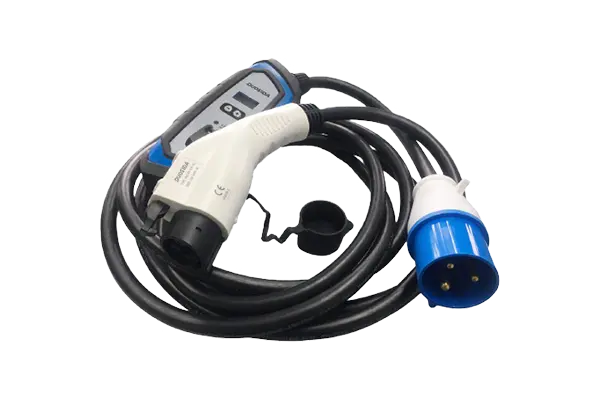
DUOSIDA's Charging Mode 2 A BOX provides a useful example.
The product page identifies several functions:
LCD display for charging status
Adjustable charging current from 6A to 32A
Charging reservation function
Leakage protection
Overvoltage and undervoltage protection
Overload protection
Control box overtemperature protection
Lightning protection
These functions address different operating needs.
For example, current adjustment allows a user to select a supported charging setting. However, the selected current must remain within the limits of the outlet, plug, electrical circuit and complete charging assembly.
A charging status display can also make the equipment easier to monitor during operation, while scheduled charging provides additional control over when a charging session begins.
The presence of these functions should be evaluated together with the product's electrical specifications rather than treated as independent features.
Product Example: DUOSIDA A BOX
DUOSIDA's Charging Mode 2 A BOX is listed with a 32A rated current and 250V operating voltage.
According to its product information, the control box follows IEC 62752 control principles, while the vehicle connector is described as meeting SAE J1772 requirements.
The product also lists IP55 protection under working conditions, a thermoplastic enclosure with a UL94 V-0 flame-retardant grade, and an operating temperature range of -30°C to +50°C.
These details are relevant to buyers evaluating environmental resistance, electrical protection and connector compatibility.
The A BOX is particularly useful as an example of a Mode 2 charging configuration that combines adjustable charging current with status monitoring and multiple protective functions.
One important detail requires verification during procurement: the product information references a NEMA 5-15 power plug alongside a 32A rating. Buyers should confirm the exact plug variant and its permitted operating current with the manufacturer before specifying the product for a particular supply circuit.
The appropriate charging configuration must always match the electrical installation in which it will be used.
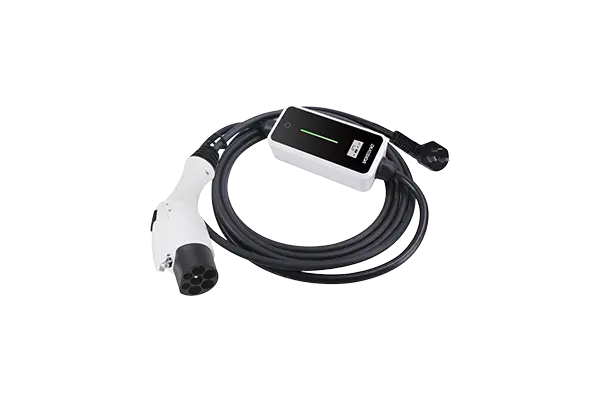
A Different Configuration: DUOSIDA Y BOX
Not every Mode 2 charging application requires the same control box configuration.
DUOSIDA also offers a Y BOX product listed as a 40A, 240V AC charging assembly.
Its published specifications include:
Rated current of 40A
Operating voltage of 240V AC
SAE J1772 vehicle connector requirements
Control box TYPE 4 enclosure protection
Leakage protection
Overvoltage and undervoltage protection
Overload and overtemperature protection
Surge and lightning protection
The product page also references UL2594 and UL2231 requirements.
Compared with the A BOX example, the Y BOX has a different published current rating, cable specification and protection configuration.
This does not mean that one model is automatically preferable. They represent different product configurations that need to be assessed against the intended electrical supply and charging application.
For wholesale buyers or charging equipment integrators, comparing complete technical specifications is more useful than selecting a product based only on its rated current.
Connector Design and Regional Compatibility
Connector compatibility is another important part of Mode 2 EV charging cable design.
The vehicle-side connector must match the vehicle charging inlet and the applicable electrical requirements. The power plug must also be suitable for the intended supply system.
For international distribution, this becomes a practical sourcing consideration.
An EV charging cable intended for one market should not be assumed suitable for another simply because the control box supports a similar voltage or current.
Before selecting a product, buyers should verify the connector interface, plug configuration, electrical supply requirements and applicable product documentation.
DUOSIDA's broader EV charging equipment portfolio covers charging connectors, sockets and related charging components, providing a range of product options for different charging applications.
Mechanical Durability and Environmental Protection
Portable charging equipment is exposed to repeated handling and varying operating environments. Mechanical durability is therefore an important product design consideration.
Both the A BOX and Y BOX product pages list a no-load insertion and withdrawal mechanical life exceeding 10,000 cycles, as well as specified impact resistance.
The two products also list an operating temperature range of -30°C to +50°C.
These published values help buyers understand the mechanical and environmental design targets of the products.
Protection ratings should still be interpreted carefully. For example, the A BOX lists IP55 under working conditions, while the Y BOX specifies TYPE 4 enclosure protection. These designations use different classification systems and should not be treated as interchangeable.
Actual suitability depends on the installation environment, product configuration and applicable documentation.
For outdoor or semi-outdoor charging applications, buyers should also consider cable storage, connection handling and the condition of the electrical supply.
How Manufacturers Support Different Charging Requirements
A Mode 2 charging cable is assembled from several components that must work together electrically and mechanically.
For a manufacturer, product development involves coordinating cable construction, connector selection, control box functions, enclosure design and relevant testing requirements.
Zhangjiagang UCHEN New Energy Technology Co., Ltd., also known as Youcheng Technology (stock code: 873087), focuses on the development and market promotion of charging products for new energy vehicles.
Through the DUOSIDA brand, the company offers charging equipment and related components for different EV charging requirements.
Its Mode 2 product range includes A BOX, Y BOX, U BOX MINI and other configurations with different published electrical ratings and functions.
For overseas distributors and equipment buyers, this product variety allows technical discussions to begin with the intended application rather than a single standard product.
The DUOSIDA Charging Mode 2 product range provides an overview of available configurations.
A Practical Checklist for Mode 2 EV Charging Cable Buyers
Before choosing a Mode 2 charging assembly, it is useful to confirm the following information with the manufacturer:
Supply requirements: What voltage, outlet type and circuit capacity are available?
Connector compatibility: Does the vehicle connector match the intended vehicle inlet?
Operating current: Is the selected charging current within the ratings of every relevant component?
Control functions: Are current adjustment, charging status display or scheduled charging required?
Protection features: What electrical and environmental protection functions are included?
Cable construction: What conductor specification, cable length and mechanical requirements apply?
Documentation: Which standards, reports and approvals apply to the exact model and configuration being purchased?
These questions help buyers compare products more accurately and reduce the risk of specifying an unsuitable configuration.
Conclusion
Good Mode 2 EV charging cable design requires coordination between the power connection, conductors, vehicle connector and in-cable control box.
Features such as current adjustment, charging status monitoring, electrical protection and enclosure design can improve the usability and suitability of a charging assembly when they are correctly matched to the intended application.
DUOSIDA's A BOX and Y BOX products illustrate how different Mode 2 configurations can address different electrical and operating requirements.
For distributors, vehicle accessory suppliers and charging equipment integrators, the most practical approach is to review the complete technical configuration and confirm compatibility before procurement.
To explore the manufacturer's broader EV charging equipment portfolio and discuss specific product requirements, visit the DUOSIDA official website.