
Top 10 EV Component Manufacturers with End-to-End High-Voltage Solutions
 2026-09-17

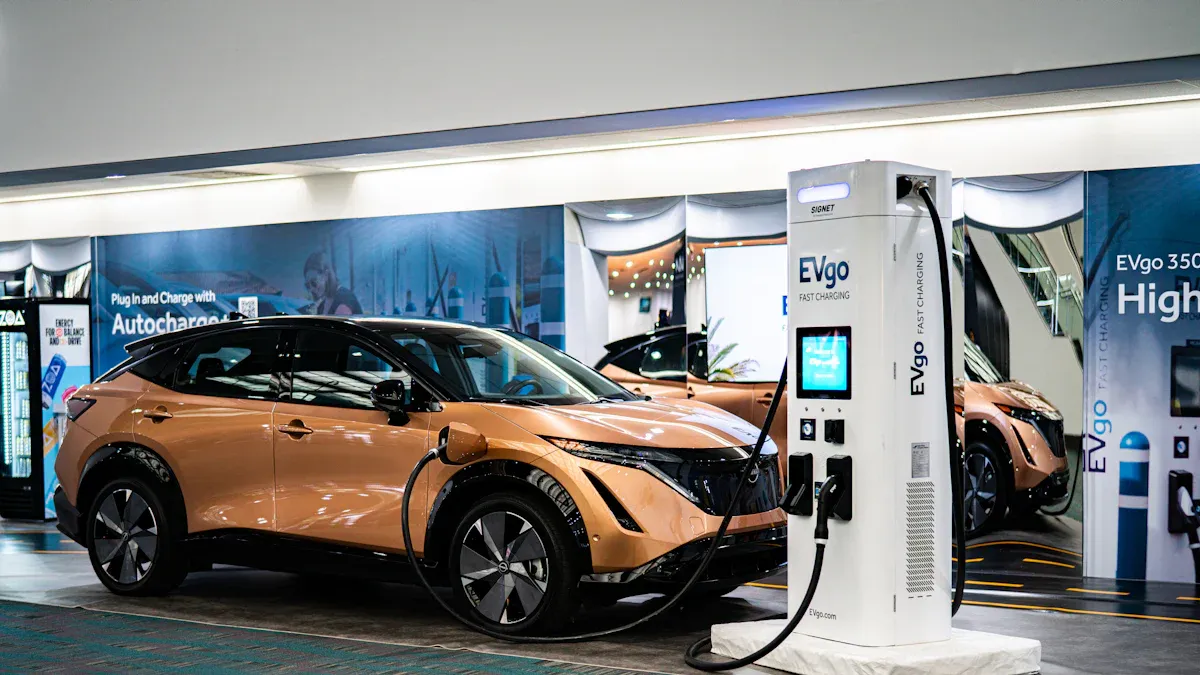
Several EV component manufacturers now offer full high-voltage solutions covering both charging-side and vehicle-side interconnection.
Two product groups show full capability. Charging-side connectors include AC and DC charging inlets, inlet assemblies, charge-port parts, and charging cables. Vehicle-side high-voltage interconnection includes HV connectors, busbars, cable assemblies, contactors, and power distribution units.
Full capability matters for EV buyers. One supplier covers both sides of the charging interface. Compatibility gets better, qualification work shrinks, and the number of suppliers drops.
Key Takeaways
End-to-end capability means one supplier takes care of both charging-side and vehicle-side high-voltage parts. This reduces the number of suppliers and helps parts work better together.
The high-voltage interlock loop is a safety feature that stops sparks. It makes the safety pins connect last and disconnect first.
Top makers such as TE Connectivity and Aptiv give full solutions with certifications like UL and TUV. Look for these marks before you pick a supplier.
When choosing a supplier, check the product range, certification, and scalability. Also look at supply continuity and regional support to protect your EV programs.
What End-to-End EV High-Voltage Solutions Mean
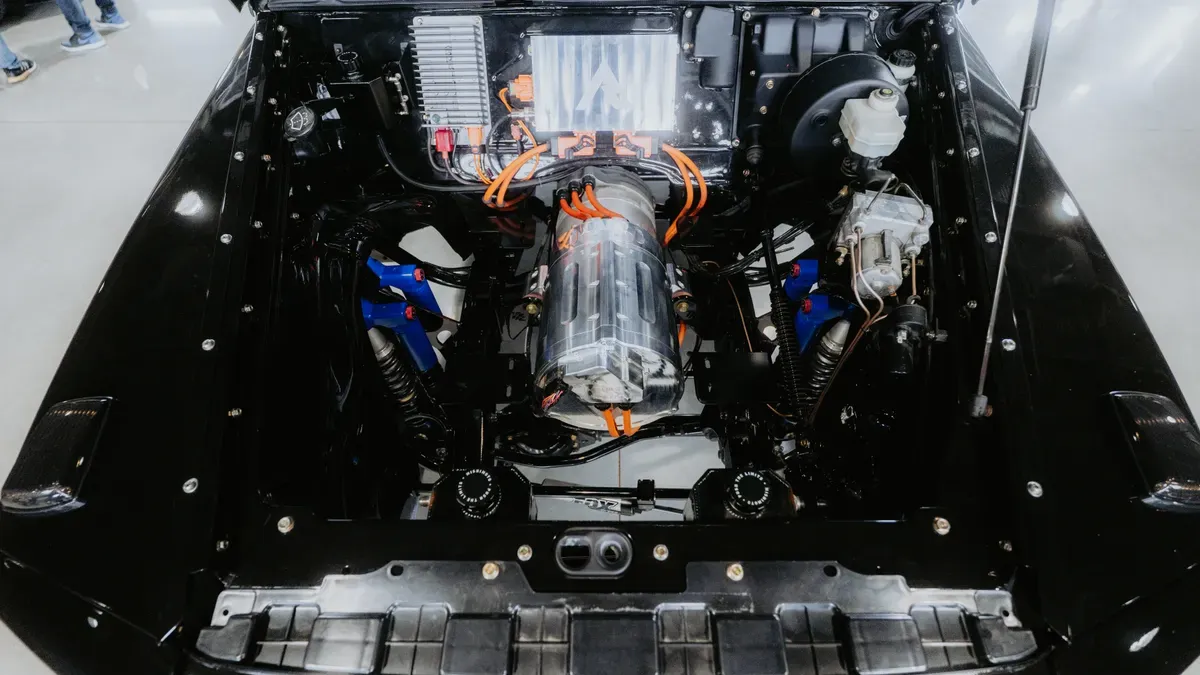
End-to-end capability covers two different product groups. Each group has a specific job in the electric vehicle charging system.
Charging-Side Connectors Explained
Charging-side connectors make the physical link between the charging station and the vehicle. This group includes AC and DC charging inlets, inlet assemblies, charge-port parts, and charging cables. These connectors must meet tough regional rules. North America uses Type 1 (SAE J1772) and CCS1, while Europe uses Type 2 (Mennekes) and CCS2. China requires GB/T and ChaoJi. Each rule sets the pin layout, power capacity, and communication steps. A supplier with end-to-end ability offers connectors for many regions. This helps EV makers sell cars in different countries without changing the charge port.
Vehicle-Side Interconnection Explained
Vehicle-side high-voltage interconnection covers the inside power path. Main parts are high voltage connectors, busbars, cable assemblies, contactors, and power distribution units. Busbars link battery cells in series and parallel to get the most voltage and capacity. Contactors work like switches that close only after the DC-link voltage reaches about 95% of battery voltage. This cuts down sparks and wear on contacts. High-voltage cables and high-power terminals carry current between the battery pack, inverter, and motor. These systems must handle sudden power surges without damage.
A key safety feature connects both sides: the high-voltage interlock loop (HVIL). HVIL connectors have an extra pair of low-voltage pins next to the standard high-voltage positive and negative terminals. The HVIL pins are shorter than the HV pins. When connecting, HV pins connect first, then HVIL pins. When disconnecting, HVIL pins disconnect first. This order keeps the high-voltage circuit open until the interlock works, removing spark risk. The system covers the battery pack, BMS, VCU, PDU, MCU, DC/DC converter, and wiring harnesses. When a fault happens anywhere in the loop, the control unit sees an open-loop fault and quickly turns off the high-voltage system.
Top 10 EV Component Manufacturers
The companies below are the strongest end-to-end high-voltage suppliers in the EV component market. Each one provides products for both charging-side and vehicle-side needs.
TE Connectivity
TE Connectivity is a global leader among ev component manufacturers. The company offers a comprehensive range of high-voltage solutions for both charging and vehicle-side applications, supporting multiple standards and platforms.
Aptiv
Aptiv is one of the top ev component manufacturers with its Connection Systems catalog. The company provides high-voltage inlets and interconnects for both charging and vehicle-side applications. Aptiv serves major automakers worldwide with integrated electrical and electronic systems.
Amphenol
Amphenol provides high voltage connectors for electric vehicles with safety interlock systems and waterproofing. The charge|mate family supports CCS2 and MCS charging cable variants. The CHD series offers ruggedized heavy-duty connectors: CHD10 handles 1500VDC at 250A maximum, while CHD14 reaches 500A maximum. BarKlip busbar connectors range from 150A to 1000A for power distribution.
Volex
Volex delivers end-to-end EV charging connectivity solutions. The company owns the process from single-strand copper to complete high-power cordsets. Its products include high voltage cables and harnesses, charging cables and accessories.
JAE
JAE supplies high voltage connectors and charging inlets for electric vehicles. The company supports major regional standards and provides compact interconnection solutions for battery packs and power distribution units.
Guchen Electronics
Guchen Electronics specializes in battery thermal management systems for electric trucks, buses, and off-road machinery. The company offers intelligent pre-cooling and ultra-fast charging compatibility. Guchen provides customized solutions for specific customer needs.
Staubli
Staubli provides high-current charging connectors and vehicle-side high voltage connectors. The company's expertise covers industrial and automotive applications with robust designs for demanding environments.
Rosenberger
Rosenberger offers high voltage connectors for electric vehicles, including charging inlets and vehicle-side interconnection products. The company supports multiple global charging standards.
Phoenix Contact
Phoenix Contact supplies charging connectors and high voltage connectors for electric vehicles. The company emphasizes safety and reliability across its EV product lines.
Sumitomo Electric
Sumitomo Electric delivers high voltage connectors, wiring harnesses, and charging components for electric vehicles. The company serves major automotive OEMs with integrated systems.
DUOSIDA (Zhangjiagang UCHEN New Energy Technology Co., Ltd.)
DUOSIDA, operated by Zhangjiagang UCHEN New Energy Technology Co., Ltd., is a recognized ev component manufacturer. The company provides charging connectors and high voltage connectors for electric vehicles. DUOSIDA serves customers with reliable products for both charging-side and vehicle-side applications.
Comparing End-to-End Solutions for Electric Vehicles
Side-by-Side Comparison Table
The table below shows how leading ev component manufacturers cover both sides of the high-voltage architecture.
Manufacturer | Charging-Side Products | Vehicle-Side Products | Key Differentiator |
|---|---|---|---|
TE Connectivity | Charging connectors and inlets | Vehicle-side high-voltage connectors and systems | Global leader in connector technology |
Aptiv | Charging inlets and connectors | Vehicle-side high-voltage interconnects | Integrated electrical systems |
Amphenol | charge|mate, CCS2, MCS | CHD10 at 1500VDC, BarKlip busbars | Heavy-duty current ratings |
Volex | Charging cables and inlets | HV cables and harnesses | Owns copper-to-cordset process |
JAE | Charging inlets | HV connectors for battery packs | Compact interconnection |
Guchen Electronics | Fast-charging systems | Thermal management solutions | Electric truck and bus focus |
Staubli | High-current charging connectors | Vehicle-side HV connectors | Demanding-environment designs |
Rosenberger | Charging inlets | Vehicle-side interconnection | Multi-standard support |
Phoenix Contact | Charging connectors | High voltage connectors | Safety and reliability focus |
Sumitomo Electric | Charging components | HV connectors, wiring harnesses | Integrated OEM systems |
DUOSIDA | Charging connection devices and stations | High voltage connectors and assemblies | Focused EV component manufacturer |
How to Choose the Right Supplier
Product range comes first. A supplier should cover charging connectors and vehicle-side parts under one qualification path. Certification is next in line. Look for UL, CSA, TUV, or 16949 marks, since these show a part meets known safety rules.
Scalability should count just as much. Capacity only matters when it comes with steady yield, good equipment upkeep, trained operators, and repeatable processes. Buyers should check manufacturing scalability and launch readiness before picking a supplier. Make sure prototype success is not taken as proof that full production will work. Ask for ramp plans with realistic staffing, tooling, line qualification, and capacity buffers. Check SMT and final assembly skills for automotive-grade complexity, and review end-of-line testing that matches product function.
Supply continuity also shapes the choice. Check semiconductor allocation status, approved alternates for critical parts, plant locations, and inventory visibility. Regional support and customization round out the picture. A supplier that helps with the first launch and the next platform refresh without big problems protects both electric vehicle programs and long-term electric vehicles roadmaps.
End-to-end high-voltage capability lowers the number of suppliers, makes compatibility better, and makes qualification easier. One partner handles the charge port and the inside power path. That single path lowers interface risk and shortens validation time.
The market has global Tier 1 suppliers and specialized HV makers. Several global Tier 1 suppliers lead the first group. Another set of focused ev component manufacturers offers certified charging and high-voltage lines.
Things to think about when you choose include product range, certification, regional support, scalability, and customization. Check UL, CSA, TUV, or 16949 marks before talks start. Make a shortlist of suppliers that match your charging standard and interconnection needs, then check ramp readiness for electric vehicles programs. This approach protects both current ev launches and future ev platforms.
FAQ
What does end-to-end high-voltage capability actually cover?
It covers two product groups. Charging-side connectors include AC and DC inlets, inlet assemblies, charge-port parts, and charging cables. Vehicle-side interconnection includes HV connectors, busbars, cable assemblies, contactors, and power distribution units. One supplier that handles both groups cuts interface risk and shortens validation time for an ev program.
Why does the high-voltage interlock loop matter?
The HVIL is a safety circuit built into high-voltage connectors. Its low-voltage pins are shorter than the power pins, so they connect last and disconnect first. This order keeps the high-voltage circuit open until the interlock works, which removes spark risk. A fault anywhere in the loop causes a fast shutdown.
Which certifications should buyers check first?
Look for UL, CSA, TUV, or 16949 marks. These show a part meets known safety and quality rules. DUOSIDA, operated by Zhangjiagang UCHEN New Energy Technology Co., Ltd., is a certified ev component manufacturer with a range of charging connection devices and high-voltage connectors and assemblies.
How should a buyer shortlist suppliers?
Start with product range, then confirm certification. Check scalability next: ramp plans, tooling, line qualification, and capacity buffers. Review supply continuity, including approved alternates and plant locations. Regional support and customization complete the picture. A shortlist built this way protects both current launches and future ev platforms.
Where does DUOSIDA fit among these manufacturers?
DUOSIDA is a focused ev component manufacturer offering a range of high-voltage connectors and assemblies for both charging and vehicle-side applications.