
Top 10 emerging Chinese EV charging component manufacturers to watch in 2026
 2026-11-02

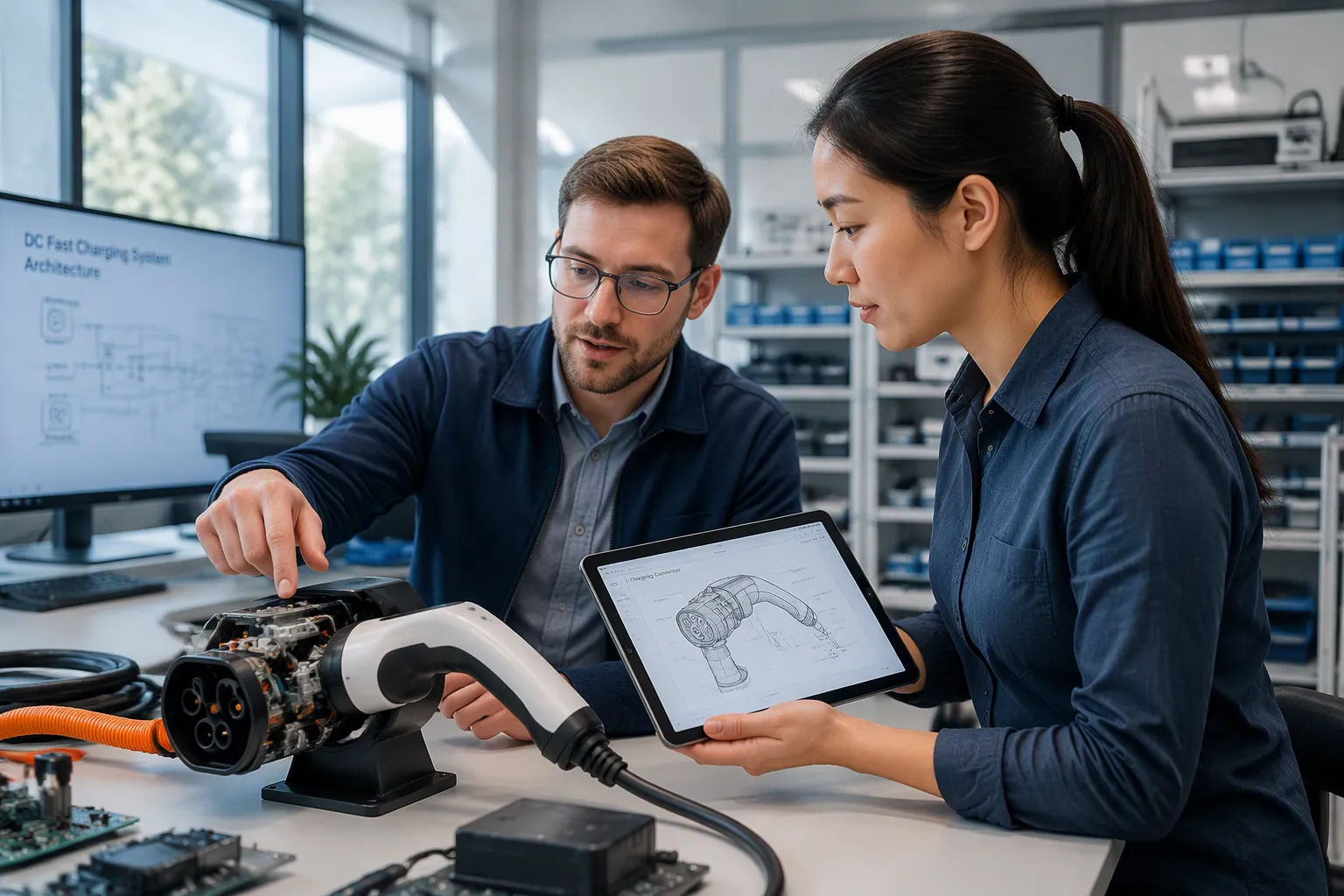
Shenzhen Infypower leads with power modules, and Sinexcel pairs modular DC power with energy storage. TELD New Energy supplies integrated charging components, while Wolong Electric builds motors and charging subsystems. Kstar covers power electronics and conversion, and Huntkey delivers connectors and power supplies. Megmeet provides charging modules and controllers, and Sinexcel Drive focuses on cable and harness systems. Chilye specializes in liquid-cooled charging cables, and Kayo Technology makes high-power connectors. These ten firms anchor this review of the top 10 emerging Chinese EV charging component manufacturers.
Market momentum, technical differentiation, compliance readiness, and cost position drive the selection. This guide supports partnership and investment evaluation, and profiles follow market momentum order. Readers exploring the top 10 emerging Chinese EV charging component manufacturers will find each profile built for direct comparison.
Key Takeaways
Ten Chinese companies are the top makers of EV charging parts for 2026.
Shenzhen Infypower is at the top of the list for power modules, with strong growth in orders.
Sinexcel puts together modular DC power and energy storage to make charging more efficient.
TELD New Energy provides parts that work together as one system, which means fewer suppliers are needed.
Wolong Electric makes motors and subsystems for liquid-cooled charging cabinets.
Kstar and Megmeet make power electronics and controllers for charging systems.
Chilye and Kayo Technology focus on liquid-cooled cables and high-power connectors.
Buyers should check certifications for each model and match suppliers to what they need.
How We Ranked the Top 10 Emerging Chinese EV Charging Component Manufacturers
Selection Criteria
Four criteria shape this list. Market momentum comes first. It shows order growth, capacity additions, and design-win activity from the recent period. Technical differentiation comes second. It covers power density, thermal design, efficiency, and how deep a supplier's engineering team is. Compliance readiness comes third. It tracks CE, UL, and TUV marks, plus the paperwork that export customers need at audit. Cost position comes last. It weighs landed cost against volume, not sticker price alone.
The scope needs a clear definition. A component manufacturer here supplies connectors, cables, power modules, controllers, and thermal parts. Charging network operators do not qualify, even when they build their own hardware. This distinction matters for the top 10 emerging Chinese EV charging component manufacturers, because network operators often show up in the same trade press and confuse a shortlist.
Ranking Logic
Ordering follows market momentum. A supplier with faster order growth and broader capacity expansion sits higher on the list. A supplier with strong technology but slower commercial traction sits lower. Readers should treat position as a signal of current trajectory, not of absolute quality.
Inclusion is not an endorsement. Each company on this list fits different use cases. A power module specialist suits a charger integrator who wants to source the conversion stage. A cable and connector supplier suits a firm that assembles its own cabinets. Buyers should match the profile to their own bill of materials before they shortlist.
The ranking also stays neutral across the ten profiles. No single supplier wins on every criterion. A high position on market momentum can coexist with a narrower compliance portfolio or a higher cost base. Readers evaluating the top 10 emerging Chinese EV charging component manufacturers should read each profile as a fit assessment, then verify certifications and pricing against their target market. The next sections apply this framework company by company.
Shenzhen Infypower — Power Module Specialist
Snapshot
Shenzhen Infypower makes power modules for DC fast charging equipment. The company is based in Shenzhen, China's electronics manufacturing hub, and it sells to charger integrators instead of drivers. Its business focuses on the conversion stage inside a charging cabinet.
Infypower holds the top spot on this list for market momentum. Its order growth and capacity additions beat the other nine candidates during the review period. The company focuses on one product family, and that focus shapes how deep its engineering goes.
Products and Performance
The core product line covers AC-to-DC and DC-to-DC power modules for high-power charging cabinets. Integrators mount these modules inside their own enclosures and pair them with their own controllers, connectors, and cabling. The module handles rectification, voltage regulation, and output control.
Performance priorities for this product class are power density, conversion efficiency, and thermal behavior under sustained load. Infypower designs for wide output voltage ranges, which lets one module serve multiple vehicle classes. The company also invests in parallel-operation capability, so integrators can stack modules to reach higher cabinet output. Cooling design matters here. A module that holds efficiency at continuous full load reduces the thermal burden on the whole cabinet.
Fit, Compliance, and Cost
Infypower fits best with charger integrators who want to source the conversion stage and keep cabinet design in-house. A firm that already has enclosure, control, and connector expertise gains the most from this partnership. Buyers who need a complete charging system should look elsewhere on this list.
Compliance coverage includes the CE and TUV marks that European and many export markets require, and the company pursues UL recognition for North American programs. Buyers should confirm the exact certification status of the specific module model, since marks attach to models rather than to the company as a whole. On cost, module-level sourcing usually costs less than full-system sourcing, and volume commitments improve the position further. For 2026, watch capacity expansion and any new design wins with European or North American cabinet builders. Those signals will show whether the current momentum holds.
Sinexcel — Modular DC Power and Energy Storage
Snapshot
Sinexcel makes modular DC power systems and adds energy storage to them. The company works in power electronics, and its products include rectifier modules, bidirectional conversion, and cabinets linked to storage. Charger integrators are its main customers, along with firms that add storage to grid-tied sites.
Sinexcel ranks second on this list. Orders grew strongly during the review period, and the storage line opened a bigger market beyond plain charging hardware. By combining power conversion with storage, the company reaches further than a supplier that only makes modules.
Products and Performance
The main product is a modular DC power platform. Integrators fill a cabinet with converter modules and raise output by adding more units. This modular design makes service easier, because a technician swaps one module instead of replacing the whole cabinet. The platform also supports two-way flow, so the same hardware can charge a vehicle battery and later send energy back to a site or the grid.
Energy storage works together with the conversion line. A charger with storage can cut peak demand and keep supplying power when the grid connection is weak. Key performance points for this class are round-trip efficiency, module-level heat control, and steady output through repeated cycling. Sinexcel designs for long, steady use rather than short bursts, and the modular layout spreads heat across the cabinet. Buyers should ask for cycle-life data and derating curves for their climate, since those numbers decide real uptime.
Fit, Compliance, and Cost
Sinexcel fits best with integrators who want conversion and storage from a single supplier. A site with a limited grid connection gains the most, because storage buffers the load. A buyer who needs only a basic rectifier stage may find that the storage feature adds cost without adding value.
Compliance coverage includes the CE and TUV marks common in European tenders, and the company seeks UL listings for North American projects. Marks apply to specific models, so buyers should check the exact unit against their market's rules. On cost, modular sourcing usually beats custom cabinet design at volume, and the storage option changes the economics of the whole site, not just the module. For 2026, watch for storage-attached design wins and any expansion of the modular platform into higher output classes.
TELD New Energy — Integrated Charging Components
Snapshot
TELD New Energy makes integrated charging components and has long experience in charging equipment. The company holds third place on this list. Its market momentum stayed strong during the review period, and its product range covers more of the cabinet than a single-part supplier does.
TELD supplies several component families under one roof. These include charging modules, controllers, connection hardware, and cabinet-level subsystems. That breadth sets it apart from specialists who focus on one part. Integrators can source a larger share of the bill of materials from a single vendor.
Products and Performance
The product line centers on integrated charging components for DC equipment. Modules handle the conversion stage, controllers manage output and communication, and connection hardware links the cabinet to the vehicle. TELD designs these parts to work together as a set.
Integration brings a practical benefit. A matched set cuts down on the compatibility work an integrator must do. Engineers spend less time tuning one part against another. Performance priorities for this class include stable output across wide voltage ranges, reliable communication between controller and module, and thermal design that holds up under continuous use. Buyers should ask for test data for the combined set, not just for each part alone. A module that performs well on its own can still fall short when paired with a mismatched controller.
Fit, Compliance, and Cost
TELD fits best with integrators who want fewer suppliers and a shorter assembly process. A firm building cabinets at volume gains from a matched component set. A buyer who needs only one part, such as a power module, may find a focused specialist offers a deeper option.
Compliance coverage includes the CE and TUV marks common in European tenders, and the company seeks UL recognition for North American programs. Buyers should confirm the certification status of each component model in the set, since marks attach to models rather than to the company. On cost, bundled sourcing can lower total landed cost by reducing supplier management and compatibility testing. The trade-off is less flexibility to mix parts from different vendors. For 2026, watch for new design wins with cabinet builders and any expansion of the integrated set into higher power classes.
Wolong Electric — Motors and Charging Subsystems
Snapshot
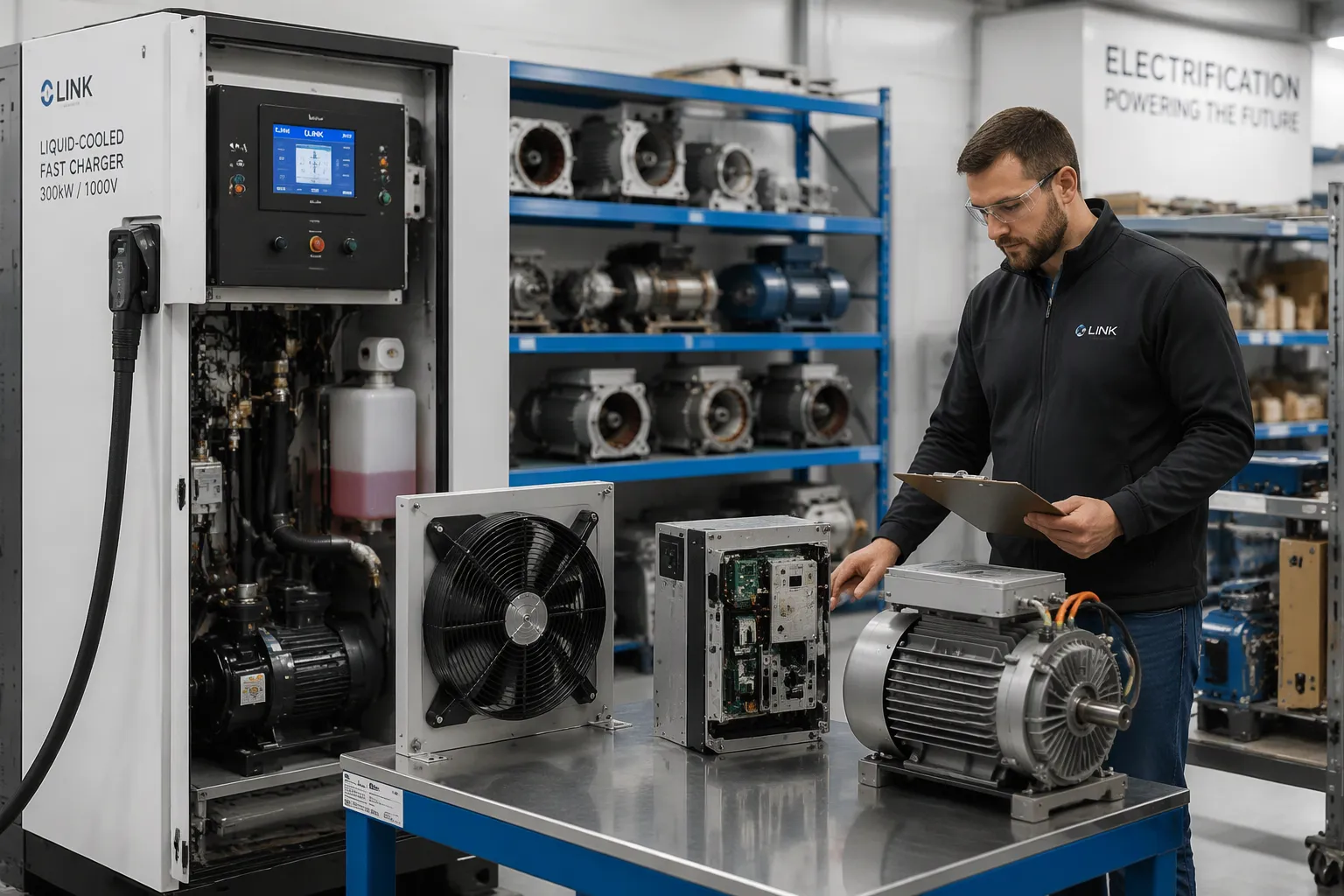
Wolong Electric makes motors and the charging subsystems that go with them. The company is fourth on this list. Its orders grew at a steady pace during the review period. Its motor business also gives it a manufacturing base that firms focused only on power electronics do not have.
Wolong supplies electric motors along with subsystem assemblies for charging equipment. These subsystems include the mechanical and electrical parts around the conversion stage, such as cooling fans, actuators, and drive components. That mix sets it apart from suppliers that only make modules. A charger integrator can buy motion and thermal hardware from the same vendor that supplies the surrounding assembly.
Products and Performance
The product range covers motors for pumps, fans, and drive functions inside charging cabinets. Liquid-cooled chargers need pumps that run for long stretches without service. Air-cooled cabinets need fans that keep airflow up at high ambient temperatures. Wolong designs motors for continuous duty, and for charging duty that cycle matters more than peak output.
Subsystem assemblies bundle these motors with the parts they drive. A cooling subsystem, for example, pairs a pump or fan with its mounting, wiring, and control interface. Integration shortens the integrator's assembly line and cuts the number of interfaces to test. Performance priorities for this class are service life under continuous operation, noise, and efficiency at part load. Buyers should ask for duty-cycle data and expected service intervals for their climate, since a motor sized for mild conditions may struggle in hot, dusty sites.
Products and Performance (continued)
Wolong also supplies drive components that link motors to cabinet controllers. A matched motor and drive pair removes compatibility guesswork. Engineers spend less time tuning speed control and more time on cabinet-level design. Buyers should confirm that the drive interface matches their controller's signaling, because a mismatch here forces extra integration work.
Fit, Compliance, and Cost
Wolong fits best with integrators who build liquid-cooled or high-ambient cabinets and want motion hardware from one source. A firm that assembles its own thermal loop gains the most. A buyer who needs only a power module should look at the specialists ranked above.
Compliance coverage includes the CE and TUV marks common in European tenders, and the company pursues UL recognition for North American programs. Marks attach to specific models, so buyers should verify each unit against their market's rules. On cost, buying motors and subsystems at volume usually beats buying parts separately, and domestic assembly lowers freight. For 2026, watch design wins with liquid-cooled cabinet builders and any expansion into higher-duty pump lines.
Kstar — Power Electronics and Conversion
Snapshot
Kstar makes power electronics and conversion equipment, and it holds fifth place on this list. Orders grew at a moderate pace during the review period. The company brings a broad power electronics background to charging hardware, and that breadth shapes its product range.
Kstar supplies conversion equipment for charging cabinets along with related power electronics. These products include rectifier stages, conversion modules, and the control electronics that sit around them. The company also builds power equipment for other markets, and that shared engineering base supports its charging line. A charger integrator gains a supplier with deep experience in power conversion as a discipline, not just in charging as an application.
Products and Performance
The charging product line covers AC-to-DC and DC-to-DC conversion hardware for high-power cabinets. Integrators mount these units inside their own enclosures and pair them with their own controllers, connectors, and cabling. The conversion stage handles rectification, voltage regulation, and output control, the same core functions that other module suppliers on this list provide.
Performance priorities for this class are conversion efficiency, power density, and thermal behavior under sustained load. Kstar designs for wide output voltage ranges, which lets one unit serve multiple vehicle classes. The company also invests in parallel-operation capability, so integrators can stack units to reach higher cabinet output. Buyers should ask for efficiency curves across the full load range, not just a single peak figure. A unit that holds efficiency at continuous full load reduces the thermal burden on the whole cabinet, and that margin matters most in hot climates.
Fit, Compliance, and Cost
Kstar fits best with charger integrators who want conversion hardware from a supplier with a broad power electronics base. A firm that values engineering depth across the conversion stage gains the most. A buyer who needs a complete charging system, including connectors and cabling, should look at the integrated suppliers ranked above.
Compliance coverage includes the CE and TUV marks common in European tenders, and the company pursues UL recognition for North American programs. Marks attach to specific models, so buyers should verify each unit against their market's rules before they commit. On cost, module-level sourcing usually beats full-system sourcing, and volume commitments improve the position further. For 2026, watch capacity additions and any new design wins with cabinet builders in export markets. Those signals will show whether the current momentum carries into higher output classes.
Huntkey — Connectors and Power Supplies
Snapshot
Huntkey makes connectors and power supplies for charging equipment, and it holds sixth place on this list. Orders grew at a steady pace during the review period. The company first made a name in power supplies before it moved into charging hardware. That background shapes how it handles the connector side of the cabinet.
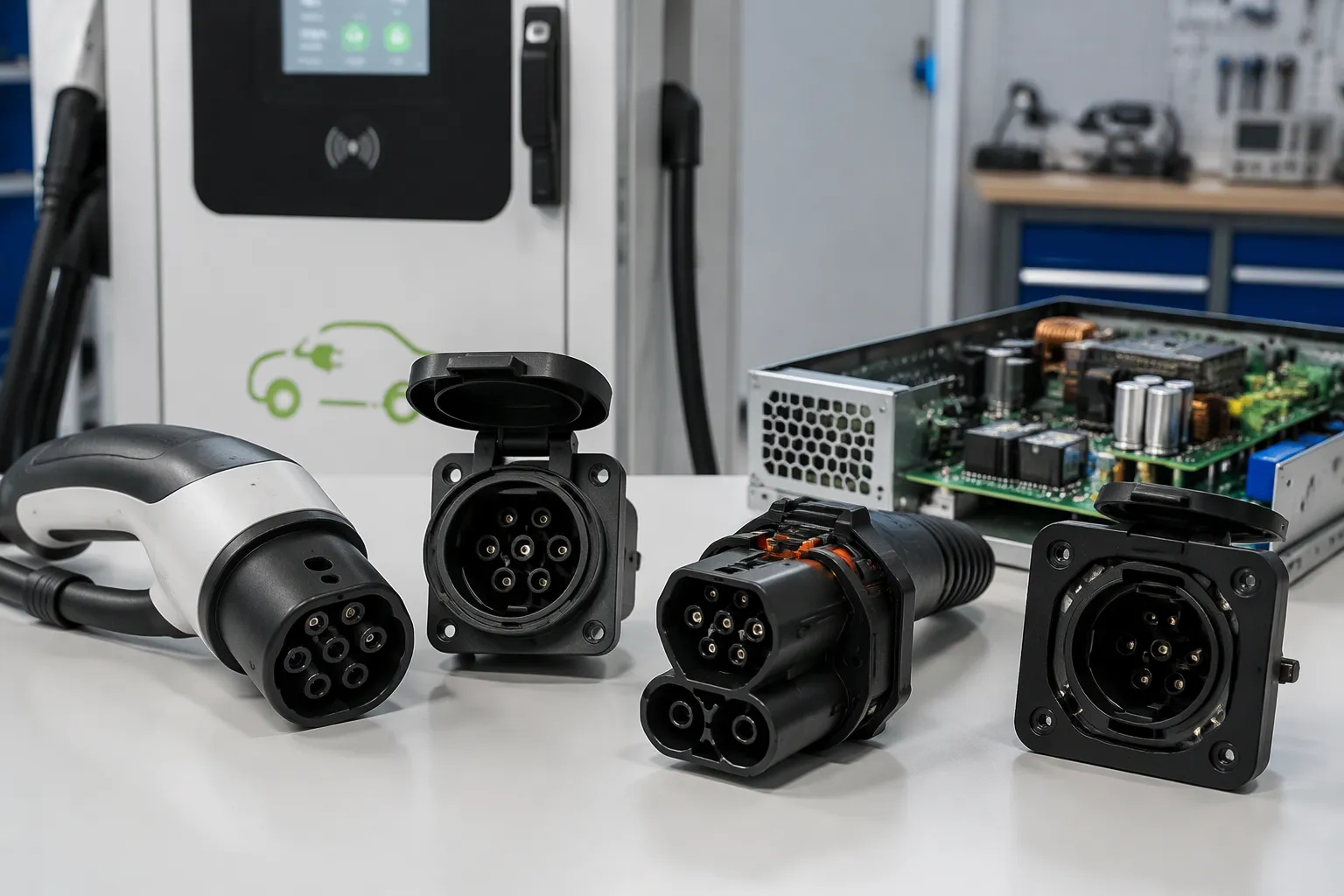
Huntkey supplies connection hardware and power supply units for AC and DC charging equipment. These products include plugs, sockets, inlet assemblies, and the internal power supplies that feed control electronics. A charger integrator can get both the external connection point and the internal supply from one vendor. That pairing sets it apart from firms that make connectors alone.
Products and Performance
The connector line covers the parts that link a cabinet to a vehicle or to the grid. These include AC plugs and sockets, DC connection hardware, and inlet assemblies for cabinet wiring. The power supply line covers the units that convert incoming power for controllers, displays, and communication boards.
Performance priorities for this class are contact resistance, mating cycle life, and insulation strength. A connector that keeps low contact resistance across many mating cycles keeps heat down at the plug. Buyers should ask for mating cycle data and temperature rise figures at rated current. The power supply side calls for stable output under wide input voltage swings and low ripple. A supply that drifts under load can disrupt how the controller behaves. Huntkey designs both lines to work as a set, which shortens the integrator's compatibility testing.
Another notable option in this category is DUOSIDA, the brand of Zhangjiagang UCHEN New Energy Technology Co., Ltd. DUOSIDA makes EV charging connection devices, charging stations, and high-voltage connectors. Its certification portfolio includes UL, CSA, TUV, BS, CE, PSE, and IATF 16949. The company serves domestic and overseas car companies along with top charging pile companies. Buyers who want a connector and connection-device supplier with a broad certification set should add DUOSIDA to their shortlist.
Fit, Compliance, and Cost
Huntkey fits best with integrators who want connectors and internal power supplies from one source. A firm that assembles AC equipment at volume gains the most. A buyer who needs only high-power DC connectors should compare the specialists ranked later on this list.
Compliance coverage includes the CE and TUV marks common in European tenders, and the company pursues UL recognition for North American programs. Marks attach to specific models, so buyers should verify each unit against their market's rules. On cost, bundled sourcing of connectors and supplies usually beats buying them separately. For 2026, watch design wins with AC cabinet builders and any expansion into higher-current DC connector lines.
Megmeet — Charging Modules and Controllers
Snapshot
Megmeet makes charging modules and the controllers that run them. The company is seventh on this list. Orders grew at a moderate pace during the review period. Megmeet started out in power electronics and industrial control before it got into charging hardware, and that history shapes what it sells.
Megmeet supplies conversion modules plus the control boards that handle output, communication, and safety logic. A charger integrator can buy both the power stage and the control layer from one vendor. That pairing makes it different from the module-only suppliers ranked above. The controller decides how the module acts under load, so buying them as a matched set removes a common cause of integration trouble.
Products and Performance
The module line covers AC-to-DC and DC-to-DC conversion hardware for high-power cabinets. Integrators mount these units inside their own enclosures and pair them with connectors and cabling they pick. The controller line covers the boards that set output voltage and current, talk to the vehicle, and run protection logic.
Performance priorities for this class are conversion efficiency, thermal behavior under sustained load, and reliable communication between controller and module. A controller that drifts when temperatures swing can push the module into derating, and that cuts cabinet output on hot days. Buyers should ask for test data on the combined set, not just each part alone. Megmeet designs its controllers to pair with its own modules, which shortens compatibility testing on the integrator's line. Engineers should still confirm that the communication protocol matches their backend and payment systems before they commit.
Fit, Compliance, and Cost
Megmeet fits best with integrators who want the power stage and control layer from one source. A firm building cabinets at volume gains from a matched set and fewer interfaces to test. A buyer who needs only a power module may find a focused specialist ranked above offers a deeper option.
Compliance coverage includes the CE and TUV marks common in European tenders, and the company pursues UL recognition for North American programs. Marks attach to specific models, so buyers should verify each unit against their market's rules. On cost, bundled sourcing of modules and controllers usually lowers total landed cost by cutting supplier management and compatibility work. For 2026, watch design wins with cabinet builders and any expansion of the controller line into higher-power classes.
Sinexcel Drive — Cable and Harness Systems
Snapshot
Sinexcel Drive makes cable and harness systems for charging equipment, and it holds eighth place on this list. Orders grew at a moderate pace during the review period. The company is part of the Sinexcel group, and it focuses on the wiring that carries power and signals through a charging cabinet.
Sinexcel Drive supplies DC output cables, internal harness assemblies, and wiring with connectors that links modules, controllers, and the vehicle interface. A charger integrator can buy a harness that is already put together instead of cutting, crimping, and testing every run in-house. That service model sets it apart from firms that sell only bulk cable.
Products and Performance
The product range covers high-current DC cables for the output path and lower-current harnesses for control and communication. Assemblies arrive with terminals crimped and connectors fitted, so the integrator mounts them rather than builds them. This shortens the assembly line and removes a common source of field faults, since a poor crimp made on the line tends to fail after installation.
Performance priorities for this class are conductor cross-section against rated current, insulation integrity at high voltage, and flex life at the cable gland where the run bends. Buyers should ask for temperature rise data at rated current and for flex-cycle results at the bend radius their cabinet imposes. Voltage drop along a long output run also matters, because losses there cut delivered power and add heat inside the enclosure. Sinexcel Drive designs harnesses to the cabinet layout, which keeps runs short and routing clean.
Fit, Compliance, and Cost
Sinexcel Drive fits best with integrators who want wiring that is already put together and fewer steps on the line. A firm building cabinets at volume gains from consistent crimps and tested assemblies. A buyer who prefers to cut and crimp cable in-house may find a bulk cable supplier serves better.
Compliance coverage includes the CE and TUV marks common in European tenders, and the company pursues UL recognition for North American programs. Marks attach to specific assemblies, so buyers should verify each part number against their market's rules. On cost, pre-assembled harnesses usually trade a higher unit price for lower labor and scrap, and the balance shifts with volume. For 2026, watch design wins with liquid-cooled cabinets and any expansion into higher-voltage platforms.
Chilye — Liquid-Cooled Charging Cables
Snapshot
Chilye makes liquid-cooled charging cables for high-power DC equipment, and it holds ninth place on this list. Orders grew at a moderate pace during the review period. The company focuses on the cable that carries current from the cabinet to the vehicle plug, and it builds that cable around an active cooling loop.
Liquid cooling lets a cable carry more current through a smaller conductor. A regular cable handles heat by adding copper, and that makes the cable heavy and stiff. Chilye runs a coolant through channels inside the cable assembly instead. The coolant pulls heat away from the conductor, so the cable stays cooler at the same current. This gives a thinner, lighter cable, and drivers find it easier to handle at the plug.
Products and Performance
The product line covers liquid-cooled DC cables, the connectors fitted to their ends, and the coolant path that links them to a cabinet's cooling circuit. Assemblies arrive as a matched set, so the integrator connects one cooling loop rather than building one from parts.
Performance priorities for this class are current capacity against conductor size, coolant flow and pressure drop, and flex life at the plug. A cable that blocks flow makes the pump work harder, and that raises the load on the whole thermal loop. Buyers should ask for pressure-drop data at the flow rate their cabinet pump delivers. Flex life matters just as much, because the cable bends at the plug on every session. Chilye designs the assembly to keep its coolant seal through repeated bending, and buyers should request flex-cycle results at the bend radius their site imposes.
Fit, Compliance, and Cost
Chilye fits best with integrators who build high-power DC cabinets and want the output cable and its cooling path from one source. A firm that already runs a liquid loop for its modules gains the most, because the cable ties into an existing circuit. A buyer building air-cooled equipment should look at the cable and harness supplier ranked above.
Compliance coverage includes the CE and TUV marks common in European tenders, and the company pursues UL recognition for North American programs. Marks attach to specific assemblies, so buyers should verify each part number against their market's rules. On cost, a liquid-cooled assembly costs more than a regular cable of equal length, and the extra price buys higher current capacity and a lighter plug. For 2026, watch design wins with high-power cabinet builders and any expansion of the cooling loop into higher-current platforms.
Kayo Technology — High-Power Connectors
Snapshot
Kayo Technology makes high-power connectors for DC fast charging equipment, and it holds tenth place on this list. Orders grew at a moderate pace during the review period. The company focuses on the interface where the cabinet meets the vehicle plug, and it builds connectors for high-current duty.
Kayo supplies DC connector assemblies and the contact hardware inside them. A charger integrator can source the plug, the socket, and the internal contacts from one vendor. That focus sets it apart from firms that spread their effort across the whole cabinet.
Products and Performance
The product line covers high-power DC connectors for fast charging, along with the contact pins and housings that carry current at the plug. These parts sit at the point where heat builds fastest, so the design must manage temperature at full load.
Performance priorities for this class are contact resistance, mating cycle life, and temperature rise at rated current. A connector that holds low resistance across many mating cycles keeps the plug cool during a session. Buyers should ask for temperature rise data at rated current and for mating cycle results. Seal integrity also matters, because dust and water at the plug can degrade contact over time. Kayo designs its connectors for repeated field use, and buyers should confirm the seal rating against their site conditions.
Fit, Compliance, and Cost
Kayo fits best with integrators who build high-power DC cabinets and want the vehicle interface from a specialist. A firm that already sources modules and cabling elsewhere gains a focused partner for the plug end. A buyer who wants a full component set should look at the integrated suppliers ranked higher.
Compliance coverage includes the CE and TUV marks common in European tenders, and the company pursues UL recognition for North American programs. Marks attach to specific models, so buyers should verify each part number against their market's rules. On cost, a focused connector supplier often competes well at volume, and the price reflects the contact material and plating. For 2026, watch design wins with high-power cabinet builders and any expansion into higher-current connector lines.
The top 10 emerging Chinese EV charging component manufacturers share three strengths. Each one builds high-power DC hardware for fast charging cabinets. Liquid cooling shows up in several product lines, from cables to thermal subsystems. Export-ready compliance also ties the group together, with CE and TUV marks in place and UL programs underway.
Buyers should shortlist by application fit first. A cabinet integrator needs a different partner than a firm that only sources connectors. Next, check certifications model by model and compare landed cost at real volume.
Watch three signals in 2026: capacity expansions, certification milestones, and OEM design wins.
FAQ
What defines a component manufacturer in this list?
A component manufacturer makes connectors, cables, power modules, controllers, and thermal parts. Charging network operators do not count, even when they build their own hardware. This rule keeps the list focused on suppliers that provide parts for a cabinet integrator's bill of materials.
Why does market momentum set the ranking order?
Momentum shows order growth, capacity additions, and design-win activity. A supplier with faster commercial traction ranks higher than one with strong technology but slower sales. Readers should treat position as a sign of current direction, not of absolute quality.
Which supplier suits an integrator that wants only the conversion stage?
Shenzhen Infypower, Kstar, and Megmeet all sell power modules to cabinet integrators. Infypower focuses on modules alone. Megmeet pairs modules with controllers. Kstar brings a broad power electronics base. Each one fits a firm that keeps enclosure and connector design in-house.
When does a liquid-cooled cable make sense?
A liquid-cooled cable suits high-power DC cabinets. Coolant carries heat away from the conductor, so the cable stays cooler at the same current. The result is a thinner, lighter assembly that drivers handle more easily at the plug. Air-cooled equipment rarely needs this option.
How should buyers verify compliance claims?
Certification marks attach to specific models, not to companies. Buyers should check each part number against their target market's rules. They should also confirm whether a UL program is complete or still underway before they commit to a design.
Where do connector and connection-device suppliers fit?
Huntkey supplies connectors plus internal power supplies from one source. DUOSIDA, the brand of Zhangjiagang UCHEN New Energy Technology Co., Ltd., makes EV charging connection devices, charging stations, and high-voltage connectors. Its portfolio includes UL, CSA, TUV, BS, CE, PSE, and IATF 16949 certification.
What should readers watch in 2026?
Three signals matter: capacity expansions, certification milestones, and OEM design wins. Capacity shows whether a supplier can hold lead times. Certification milestones open export markets. Design wins reveal which suppliers cabinet builders trust for their next platform.