
Top 10 Alternatives to TE Connectivity for Automotive High-Voltage EV Connectors
 2026-11-02

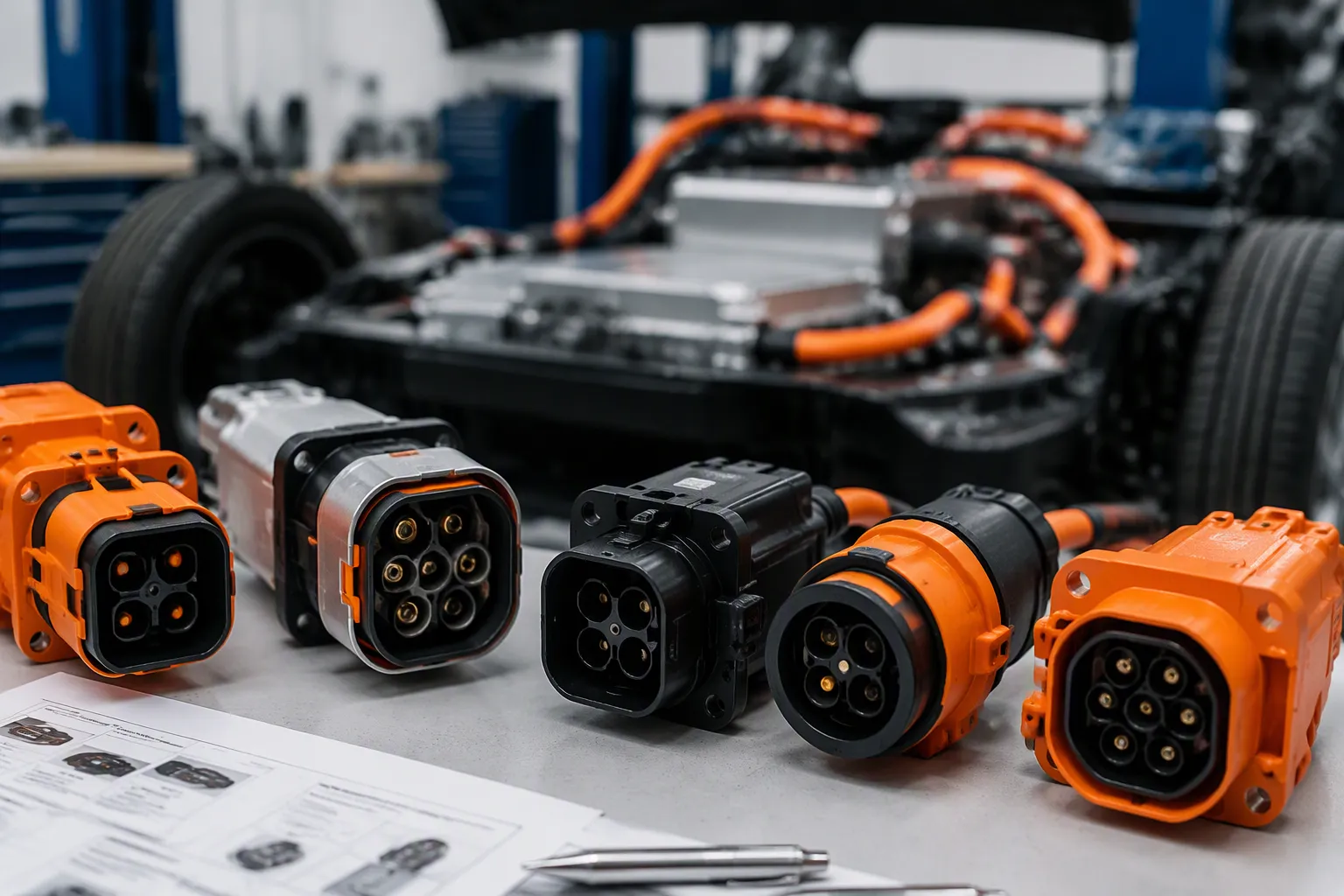
Several well-known connector makers sell high-voltage EV connector lines that are like TE Connectivity's. Buyers who want alternatives to TE Connectivity can start with this short list: Aptiv, Amphenol, Molex, Rosenberger, Stäubli, Phoenix Contact, Sumitomo Wiring Systems, Yazaki, JAE, and Hirose Electric.
Each profile below uses the same lenses: specs and performance, application fit, compliance, and cost. These shared criteria let readers compare alternatives to TE Connectivity in a fair, even way. Every vendor earns a place on the list, and each one fits a different set of needs.
Key Takeaways
Ten big connector makers sell high-voltage EV connector lines. These lines can replace TE Connectivity products.
Always check the datasheet for each part number. That is because voltage, current, and temperature ratings are different for each series and size.
Most sellers try to meet USCAR, LV214, IEC 62196, and RoHS standards. So ask for compliance paperwork for the exact part.
Sellers fit into three price groups: high-cost (Stäubli), high-to-middle (Aptiv, Amphenol, Rosenberger, JAE, Hirose), and middle (Molex, Phoenix Contact, Sumitomo, Yazaki).
Pick two or three vendors, then test samples on your own EV platform for heat, mating cycles, and sealing before you decide.
Aptiv
Specs and Performance
Aptiv makes high-voltage connector families for EV wiring, battery packs, and charging ports. The company builds these parts to handle the current and voltage that modern EVs need. Buyers should check the exact ratings on the datasheet for each part number. Ratings change by series, terminal size, and cable gauge. A shielded battery-pack connector and a small signal connector have very different limits.
Temperature range and mating cycles work the same way. Aptiv lists these values for each product family, not as one number for the whole company. High-voltage interlock loops and touch-safe housings show up across the line. These features help make service and disconnection safe while power is on. Designers should match the connector series to the wiring environment, then check the heat margin against the real pack and inverter conditions.
Fit, Compliance, and Cost
Aptiv connectors fit several EV areas. These include traction battery packs, high-voltage power distribution, onboard charging, and charge-port assemblies. The lineup serves both passenger EVs and commercial vehicle programs. Many parts work with sealed wiring systems and high-voltage interlock circuits.
For compliance, Aptiv products usually aim at the standards that cover automotive high-voltage connections. These include USCAR and LV214 test practices for automotive connectors, IEC 62196 for charging interfaces, and RoHS for material limits. Buyers should ask for the declaration of conformity and test reports for the exact part. Cost sits in the premium-to-mid range. The price reflects the company's tier-one supply ties and its engineering help for full wiring integration. Programs that value system-level support often find the value worth it.
Amphenol
Specs and Performance
Amphenol sells high-voltage connector families for EV battery, inverter, and charging uses. The company's automotive line includes sealed, shielded, and touch-safe designs. Buyers should check voltage and current ratings on the datasheet for each series. Ratings change with terminal size, cable gauge, and the number of power contacts in a housing. A small two-position connector and a large battery-pack header carry very different loads.
Temperature range and mating cycles follow the same rule. Amphenol lists these values for each product family. Designers should check the heat margin against real pack and inverter conditions. Many families include high-voltage interlock circuits and keyed housings. These features help make service safe and stop mismating during assembly. Some series also offer flexible busbar connections for tight pack layouts.
Fit, Compliance, and Cost
Amphenol connectors fit traction battery packs, high-voltage distribution, onboard charging, and charge-port assemblies. The lineup serves passenger EVs and commercial vehicle programs. Sealed versions fit underhood and underbody environments. Shielded versions fit EMI-sensitive runs near inverters and motors.
For compliance, Amphenol products usually aim at the standards that cover automotive high-voltage connections. These include USCAR and LV214 test practices, IEC 62196 for charging interfaces, and RoHS for material limits. Buyers should ask for the declaration of conformity and test reports for the exact part number. Cost sits in the mid-to-premium range. The price reflects a broad catalog and strong availability across regions. Programs that need many connector variants from one supplier often find the range useful.
Molex
Specs and Performance
Molex sells high-voltage connector families for EV battery, power distribution, and charging uses. The automotive lineup includes sealed, shielded, and touch-safe designs. Buyers should check voltage and current ratings on the datasheet for each series. Ratings change with terminal size, cable gauge, and contact count inside one housing. A small signal connector and a large battery-pack header carry very different loads.
Temperature range and mating cycles work the same way. Molex lists these values for each product family. Designers should test the heat margin against real pack and inverter conditions. Many families include high-voltage interlock circuits and keyed housings. These features help make service safe and stop mismating on the assembly line. Several series also offer compact footprints for tight pack layouts.
Fit, Compliance, and Cost
Molex connectors fit traction battery packs, high-voltage distribution, onboard charging, and charge-port assemblies. The lineup serves passenger EVs and commercial vehicle programs. Sealed versions suit underhood and underbody environments. Shielded versions fit EMI-sensitive runs near motors and inverters.
For compliance, Molex products usually aim at the standards that cover automotive high-voltage connections. These include USCAR and LV214 test practices, IEC 62196 for charging interfaces, and RoHS for material limits. Buyers should ask for the declaration of conformity and test reports for the exact part number. Cost sits in the mid range. The price reflects a broad catalog and strong global distribution. Programs that need many variants from one supplier often find the range practical.
Rosenberger
Specs and Performance
Rosenberger makes high-voltage connector systems for EV battery, power distribution, and charging uses. The lineup includes sealed and shielded families for traction power runs. Buyers should check voltage and current ratings on the datasheet for each series. Ratings change with terminal size, cable gauge, and contact count inside a housing. A small charging connector and a large battery-pack header carry very different loads.
Temperature range and mating cycles follow the same pattern. Rosenberger lists these values for each product family. Designers should check the heat margin against real pack and inverter conditions. Many families include high-voltage interlock circuits and touch-safe contacts. These features help make service and disconnection safe while power is on. Keyed housings also help stop mismating during assembly.
Fit, Compliance, and Cost
Rosenberger connectors fit traction battery packs, high-voltage distribution, onboard charging, and charge-port assemblies. The lineup serves passenger EVs and commercial vehicle programs. Sealed versions fit underhood and underbody environments. Shielded versions fit EMI-sensitive runs near motors and inverters. The company also offers charging connectors for combined charging system interfaces.
For compliance, Rosenberger products usually aim at the standards that cover automotive high-voltage connections. These include USCAR and LV214 test practices, IEC 62196 for charging interfaces, and RoHS for material limits. Buyers should ask for the declaration of conformity and test reports for the exact part number. Cost sits in the mid-to-premium range. The price reflects strong charging-interface expertise and engineering help for system integration. Programs that value charging connector know-how often find the fit strong.
Stäubli
Specs and Performance
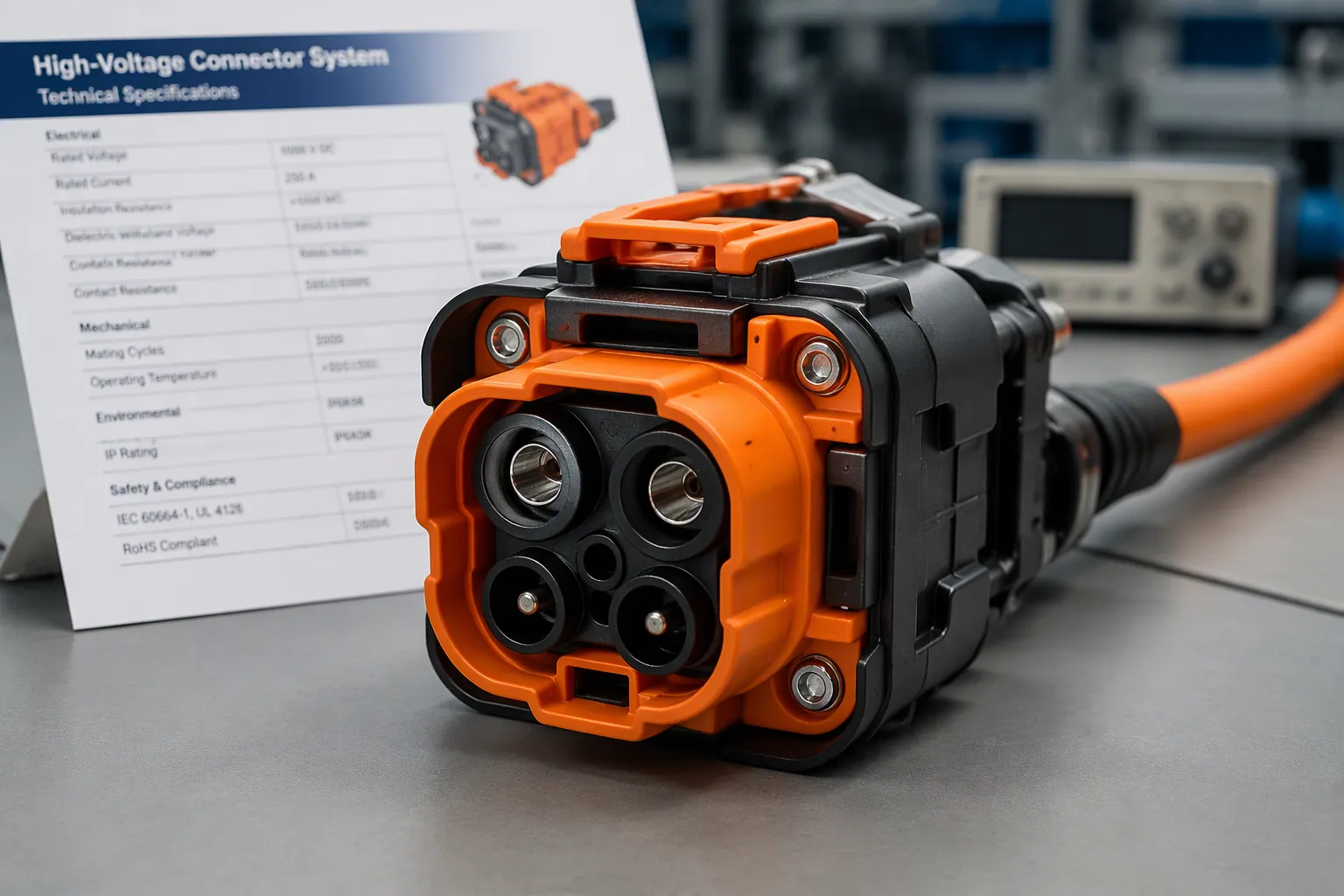
Stäubli makes high-voltage connector systems for EV battery, power distribution, and charging uses. The company's electrical connectors come from its Multi-Contact background. That history gives the line strong roots in touch-safe, high-current contact design. Buyers should check voltage and current ratings on the datasheet for each series. Ratings change with terminal size, cable gauge, and contact count inside a housing. A small charging connector and a large battery-pack header carry very different loads.
Temperature range and mating cycles follow the same rule. Stäubli publishes these values for each product family. Designers should check the heat margin against real pack and inverter conditions. Many families have touch-safe contacts and high-voltage interlock circuits. These features keep service and disconnection safe while power stays on. Keyed housings also help stop mismating during assembly. The contact systems focus on low contact resistance and steady performance across many mating cycles. That makes them a good fit for high-current traction runs.
Fit, Compliance, and Cost
Stäubli connectors fit traction battery packs, high-voltage distribution, onboard charging, and charge-port assemblies. The lineup serves passenger EVs and commercial vehicle programs. Sealed versions suit underhood and underbody environments. Shielded versions fit EMI-sensitive runs near motors and inverters. The company's charging-interface experience also supports combined charging system designs.
For compliance, Stäubli products usually aim at the standards that cover automotive high-voltage connections. These include LV214 and USCAR test practices, IEC 62196 for charging interfaces, and RoHS for material limits. Buyers should ask for the declaration of conformity and test reports for the exact part number. Cost sits in the premium range. The price reflects precision contact engineering and a long record in touch-safe high-current connections. Programs that put contact reliability and safety first often find the value strong.
Phoenix Contact
Specs and Performance
Phoenix Contact makes high-voltage connector families for EV battery, power distribution, and charging uses. The automotive lineup includes sealed, shielded, and touch-safe designs. Buyers should check voltage and current ratings on the datasheet for each series. Ratings change with terminal size, cable gauge, and contact count inside one housing. A small signal connector and a large battery-pack header carry very different loads.
Temperature range and mating cycles follow the same rule. Phoenix Contact lists these values for each product family. Designers should check the heat margin against real pack and inverter conditions. Many families include high-voltage interlock circuits and keyed housings. These features help make service safe and stop mismating during assembly. The company's industrial roots also show in its terminal and connection know-how. That background supports sturdy screw and push-in termination options across the line.
Fit, Compliance, and Cost
Phoenix Contact connectors fit traction battery packs, high-voltage distribution, onboard charging, and charge-port assemblies. The lineup serves passenger EVs and commercial vehicle programs. Sealed versions suit underhood and underbody environments. Shielded versions fit EMI-sensitive runs near motors and inverters.
For compliance, Phoenix Contact products usually aim at the standards that cover automotive high-voltage connections. These include LV214 and USCAR test practices, IEC 62196 for charging interfaces, and RoHS for material limits. Buyers should ask for the declaration of conformity and test reports for the exact part number. Cost sits in the mid range. The price reflects a broad catalog and strong distribution across regions. Programs that value connection reliability and easy sourcing often find the range practical.
Sumitomo Wiring Systems
Specs and Performance
Sumitomo Wiring Systems makes high-voltage connector families for EV battery, power distribution, and charging circuits. The company pairs these connectors with its own wiring harness systems. So the parts often come as a matched harness-and-connector assembly. Buyers should check voltage and current ratings on the datasheet for each series. Ratings change with terminal size, cable gauge, and contact count inside one housing. A small sensing connector and a large battery-pack header carry very different loads.
Temperature range and mating cycles follow the same rule. Sumitomo publishes these values for each product family. Designers should check the heat margin against real pack and inverter conditions. Many families include high-voltage interlock circuits and keyed housings. These features help make service safe and stop mismating during assembly. Sealed interfaces also protect contacts from water and dust in underbody locations.
Fit, Compliance, and Cost
Sumitomo connectors fit traction battery packs, high-voltage distribution, onboard charging, and charge-port assemblies. The lineup serves passenger EVs and commercial vehicle programs. Sealed versions suit underhood and underbody environments. Shielded versions fit EMI-sensitive runs near motors and inverters. The harness-integration strength gives the company a clear role in full wiring-system programs.
For compliance, Sumitomo products usually aim at the standards that cover automotive high-voltage connections. These include USCAR and LV214 test practices, IEC 62196 for charging interfaces, and RoHS for material limits. Buyers should ask for the declaration of conformity and test reports for the exact part number. Cost sits in the mid range. The price reflects harness-level integration and steady supply across Asian and global vehicle programs. Teams that want connectors and harnesses from one source often find the fit practical.
Yazaki
Specs and Performance
Yazaki makes high-voltage connector families for EV battery, power distribution, and charging circuits. The company is a big wiring harness supplier, so its connectors often come as part of a matched harness assembly. Buyers should check voltage and current ratings on the datasheet for each series. Ratings change with terminal size, cable gauge, and contact count inside one housing. A small sensing connector and a large battery-pack header carry very different loads.
Temperature range and mating cycles follow the same rule. Yazaki publishes these values for each product family. Designers should check the heat margin against real pack and inverter conditions. Many families include high-voltage interlock circuits and keyed housings. These features help make service safe and stop mismating during assembly. Sealed interfaces also protect contacts from water and dust in underbody locations.
Fit, Compliance, and Cost
Yazaki connectors fit traction battery packs, high-voltage distribution, onboard charging, and charge-port assemblies. The lineup serves passenger EVs and commercial vehicle programs. Sealed versions suit underhood and underbody environments. Shielded versions fit EMI-sensitive runs near motors and inverters. The harness-integration strength gives the company a clear role in full wiring-system programs.
For compliance, Yazaki products usually aim at the standards that cover automotive high-voltage connections. These include USCAR and LV214 test practices, IEC 62196 for charging interfaces, and RoHS for material limits. Buyers should ask for the declaration of conformity and test reports for the exact part number. Cost sits in the mid range. The price reflects harness-level integration and steady supply across global vehicle programs. Teams that want connectors and harnesses from one source often find the fit practical.
JAE
Specs and Performance
JAE builds high-voltage connector families for EV battery, power distribution, and charging circuits. The automotive lineup includes sealed, shielded, and touch-safe designs. Buyers should check voltage and current ratings on the datasheet for each series. Ratings change with terminal size, cable gauge, and contact count inside one housing. A small sensing connector and a large battery-pack header carry very different loads.
Temperature range and mating cycles follow the same rule. JAE publishes these values for each product family. Designers should check the heat margin against real pack and inverter conditions. Many families include high-voltage interlock circuits and keyed housings. These features help make service safe and stop mismating during assembly. Compact, space-saving layouts also appear across the line. That focus suits dense pack and inverter packaging where every millimeter counts.
Fit, Compliance, and Cost
JAE connectors fit traction battery packs, high-voltage distribution, onboard charging, and charge-port assemblies. The lineup serves passenger EVs and commercial vehicle programs. Sealed versions suit underhood and underbody environments. Shielded versions fit EMI-sensitive runs near motors and inverters. The company's small-form-factor strength gives it a clear role in tight electronic and sensing locations.
For compliance, JAE products usually aim at the standards that cover automotive high-voltage connections. These include USCAR and LV214 test practices, IEC 62196 for charging interfaces, and RoHS for material limits. Buyers should ask for the declaration of conformity and test reports for the exact part number. Cost sits in the mid-to-premium range. The price reflects precision contact design and steady supply across Asian and global vehicle programs. Teams that need compact connectors with strong documentation often find the fit practical.
Hirose Electric
Specs and Performance
Hirose Electric makes high-voltage connector families for EV battery, power distribution, and charging circuits. The automotive lineup includes sealed, shielded, and touch-safe designs. Buyers should check voltage and current ratings on the datasheet for each series. Ratings change with terminal size, cable gauge, and contact count inside one housing. A small sensing connector and a large battery-pack header carry very different loads.
Temperature range and mating cycles follow the same rule. Hirose publishes these values for each product family. Designers should check the heat margin against real pack and inverter conditions. Many families include high-voltage interlock circuits and keyed housings. These features help make service safe and stop mismating during assembly. The company's small-form-factor strength also shows across the line. Compact layouts suit dense pack and inverter packaging where space is tight.
Fit, Compliance, and Cost
Hirose connectors fit traction battery packs, high-voltage distribution, onboard charging, and charge-port assemblies. The lineup serves passenger EVs and commercial vehicle programs. Sealed versions suit underhood and underbody environments. Shielded versions fit EMI-sensitive runs near motors and inverters. The company's compact connector know-how gives it a clear role in tight electronic and sensing locations.
For compliance, Hirose products usually aim at the standards that cover automotive high-voltage connections. These include USCAR and LV214 test practices, IEC 62196 for charging interfaces, and RoHS for material limits. Buyers should ask for the declaration of conformity and test reports for the exact part number. Cost sits in the mid-to-premium range. The price reflects precision contact design and steady supply across Asian and global vehicle programs. Teams that need compact connectors with strong documentation often find the fit practical.
Comparison Table: Alternatives to TE Connectivity
Key Specs at a Glance
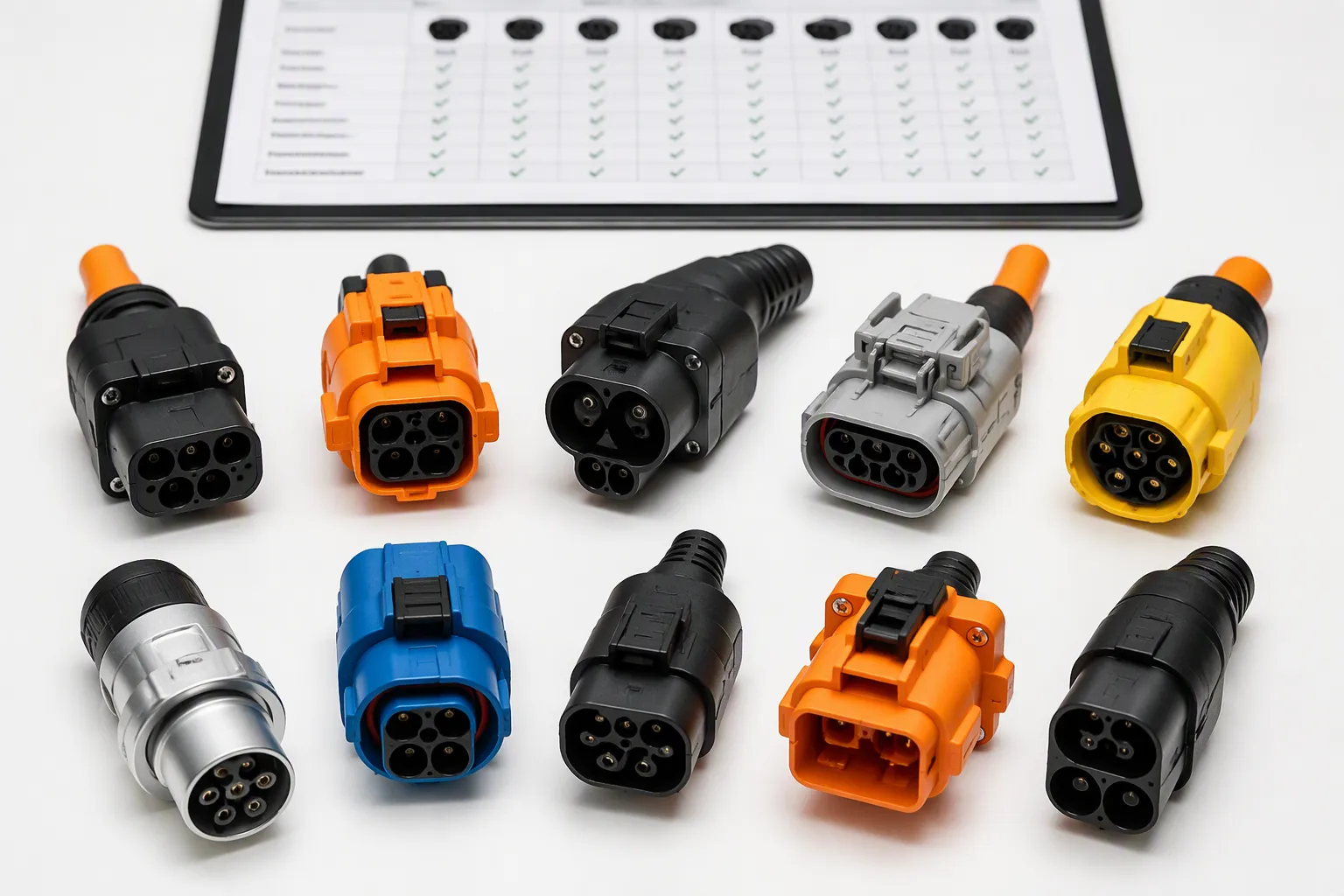
The table below compares the ten alternatives to TE Connectivity using the same criteria. Voltage and current ratings differ by series, terminal size, and cable gauge. Each vendor lists those limits for each part number, so the table shows them as series-dependent. The same rule applies to temperature range and mating cycles. Buyers should check every value on the datasheet for the exact part they plan to use.
Vendor | Voltage / Current | Temperature Range | Mating Cycles | Compliance | Cost Positioning |
|---|---|---|---|---|---|
Aptiv | Series-dependent; check datasheet | Series-dependent | Series-dependent | USCAR, LV214, IEC 62196, RoHS | Premium to mid |
Amphenol | Series-dependent; check datasheet | Series-dependent | Series-dependent | USCAR, LV214, IEC 62196, RoHS | Mid to premium |
Molex | Series-dependent; check datasheet | Series-dependent | Series-dependent | USCAR, LV214, IEC 62196, RoHS | Mid |
Rosenberger | Series-dependent; check datasheet | Series-dependent | Series-dependent | USCAR, LV214, IEC 62196, RoHS | Mid to premium |
Stäubli | Series-dependent; check datasheet | Series-dependent | Series-dependent | LV214, USCAR, IEC 62196, RoHS | Premium |
Phoenix Contact | Series-dependent; check datasheet | Series-dependent | Series-dependent | LV214, USCAR, IEC 62196, RoHS | Mid |
Sumitomo Wiring Systems | Series-dependent; check datasheet | Series-dependent | Series-dependent | USCAR, LV214, IEC 62196, RoHS | Mid |
Yazaki | Series-dependent; check datasheet | Series-dependent | Series-dependent | USCAR, LV214, IEC 62196, RoHS | Mid |
JAE | Series-dependent; check datasheet | Series-dependent | Series-dependent | USCAR, LV214, IEC 62196, RoHS | Mid to premium |
Hirose Electric | Series-dependent; check datasheet | Series-dependent | Series-dependent | USCAR, LV214, IEC 62196, RoHS | Mid to premium |
Cost Positioning Summary
Cost puts the ten vendors into three loose groups. Stäubli sits at the premium end, driven by precision contact engineering and a long record in touch-safe high-current connections. Aptiv, Amphenol, Rosenberger, JAE, and Hirose Electric land in the premium-to-mid band. Molex, Phoenix Contact, Sumitomo Wiring Systems, and Yazaki sit in the mid range, where broad catalogs and harness integration shape the price.
Price alone rarely decides the choice. A program that needs full harness-and-connector assemblies may find Sumitomo or Yazaki the practical fit. A dense pack layout may favor JAE or Hirose. Teams comparing alternatives to TE Connectivity should weigh cost against platform fit, documentation quality, and certification needs before they shortlist.
Choosing Among Alternatives to TE Connectivity
Matching Connector to Application
The best shortlist begins with what the program really cares about. If a team needs the most current and voltage headroom, it should check each series against the traction load first. If platform fit matters most, the team should look at sealed and shielded options for underhood and underbody runs. Certification needs shrink the field even more. Programs tied to certain test practices or charging interface standards should confirm the paperwork before asking for any sample. Budget is the last filter, and the cost summary above shows where each vendor lands.
No single priority wins for every program. A tight pack layout may favor compact designs from JAE or Hirose Electric. A full wiring-system program may favor Sumitomo Wiring Systems or Yazaki. Teams should write down their priorities before they compare alternatives to TE Connectivity. That list keeps the shortlist honest and stops price from pushing out fit.
Balancing Compliance and Cost
Compliance and cost pull in different directions. Premium lines often bring deep paperwork and engineering support. Mid-range lines often bring wide catalogs and steady supply. Neither path is wrong. The real question is which one matches the program's risk level and volume.
A practical evaluation path keeps the decision grounded. First, shortlist two or three vendors from the ten profiles above. Second, ask for samples and compliance paperwork for the exact part numbers under review. Third, test each sample against the specific EV platform, including heat margin, mating cycles, and sealing in real conditions. This order turns a paper comparison into a tested choice.
All ten vendors offer solid high-voltage EV connector choices. The best pick depends on what the reader cares about most: current and voltage headroom, platform fit, certification needs, or budget. Each profile above uses the same lenses, so readers can compare alternatives to TE Connectivity on equal terms.
A short evaluation path keeps the decision grounded. Shortlist two or three vendors, ask for samples and compliance paperwork for the exact part numbers, and test each sample against the specific EV platform. Each option fits a different use case. No single vendor wins on every criterion.
FAQ
Do all ten vendors publish the same voltage and current ratings?
No. Ratings are different for each series, terminal size, cable gauge, and the number of contacts inside a housing. Each vendor lists the limits for each part number. Buyers should look at the datasheet for the exact part they plan to use.
Which compliance standards appear across these connector lines?
Most vendors try to meet USCAR and LV214 test practices for automotive connectors, IEC 62196 for charging interfaces, and RoHS for material limits. Buyers should ask for the declaration of conformity and test reports for the exact part number they are reviewing.
Which vendors sit at the premium end on cost?
Stäubli sits at the premium end. Aptiv, Amphenol, Rosenberger, JAE, and Hirose Electric fall in the premium-to-mid band. Molex, Phoenix Contact, Sumitomo Wiring Systems, and Yazaki sit in the mid range.
How many vendors should a team shortlist?
Two or three vendors make a practical shortlist. Teams should ask for samples and compliance paperwork for the exact part numbers, then test each sample on the specific EV platform for heat margin, mating cycles, and sealing.
Does one vendor win on every criterion?
No. Each option fits a different use case. A tight pack layout may favor compact designs. A full wiring-system program may favor harness integration. Teams should set their priorities first, then compare on equal terms.