
Suppliers Are Recommended for a Single Contract Covering AC Charging, DC Fast-Charging Interfaces and Vehicle High-Voltage Connectors
 2026-08-26

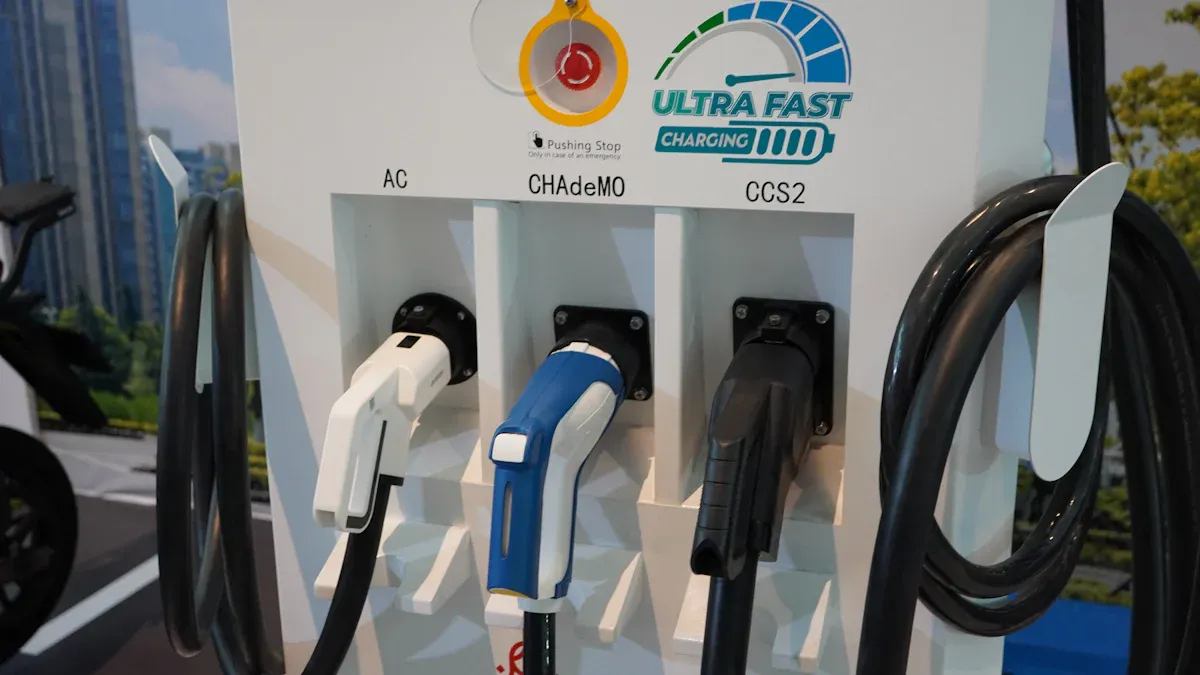
Yes, suppliers are recommended for a single contract. This approach reduces complexity, ensures parts work together, and lowers total cost of ownership. You need AC charging for overnight sessions, DC fast charging for quick stops, and high-voltage connectors linking the vehicle's battery system. Standards like CCS and ISO 15118 now combine these parts into one smooth setup.
Metric | Value |
|---|---|
Global EV sales growth (YoY 2025) | 23% |
Charging infrastructure market (2024) | USD 30.13 billion |
Projected market (2032) | USD 204.92 billion |
Public EV charging sessions fail as much as 25% to 30% of the time, according to industry stakeholders convened by SAE.
Procurement managers increasingly ask whether bundling these parts into one contract makes sense. This post explains why it does.
Key Takeaways
Having one supplier for AC charging, DC fast charging, and high-voltage connectors makes things simpler and makes sure all parts work together.
A single contract reduces total cost by using volume pricing and lowers administrative overhead.
Contract terms, such as performance promises and backup plans, help guard against risks from suppliers.
Pick a supplier that knows global standards well, such as CCS and ISO 15118.
Combining charging interfaces speeds up qualification and improves reliability for EV drivers.
AC Charging, DC Charging, and Connectors
AC Charging and On-Board Charger Interfaces
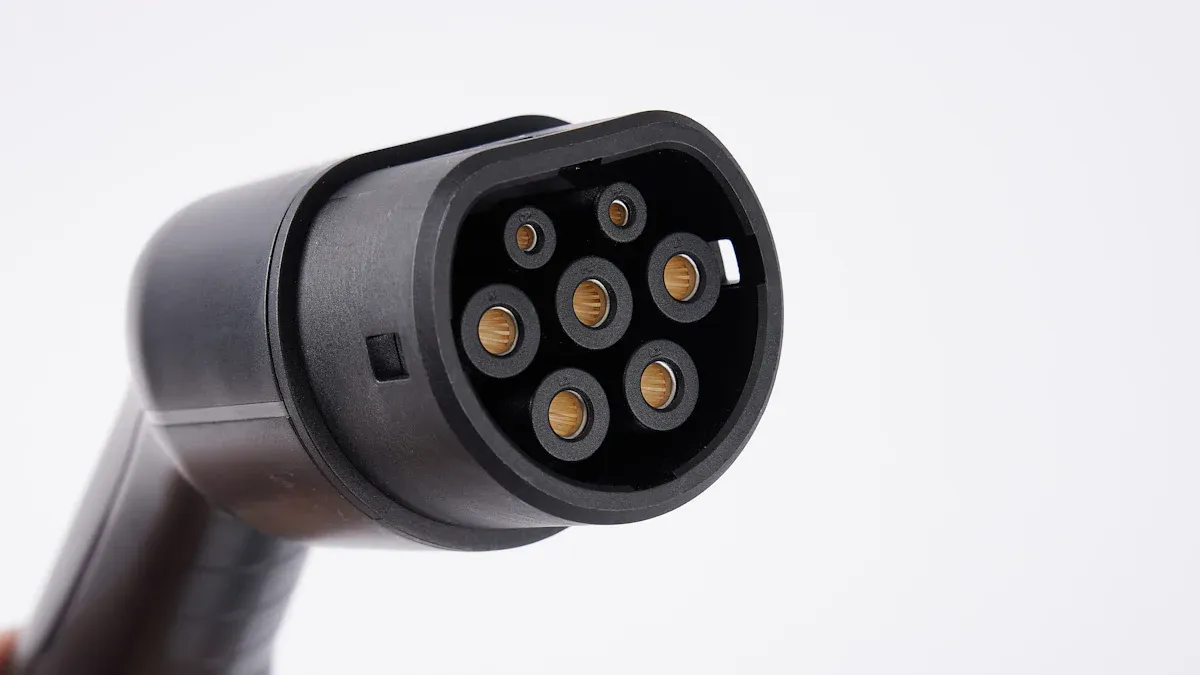
When you park your electric vehicle overnight, you depend on AC charging. This method uses the SAE J1772 standard connector. The Type 1 connector has a 5-pin layout. Three main pins carry power. Two extra pins handle safety and communication. The connector supports power levels from 1.44 kW at 120V up to 19.2 kW at 240V.
The on-board charger inside your vehicle changes AC power to DC power for the battery. Several design factors matter. You need to think about the power rating. Most vehicles use 7.2 kW for single-phase systems. Some support 11 kW or 22 kW for three-phase charging. The charger must handle universal input voltage from 86V to 264V AC. This lets one design work anywhere in the world. Efficiency is important. Higher efficiency means less heat and smaller cooling systems. The power stage uses an EMI filter, a PFC stage, and an isolated DC-DC converter. You also choose between unidirectional and bidirectional designs. Bidirectional capability allows vehicle-to-grid energy flow.
AC charging offers a gentler experience for longer parking sessions. The power conversion happens inside your vehicle. This limits power due to space and cooling constraints. Typical AC charging power ranges from 7.2 kW to 19.2 kW. The charging speed depends on the lower of the charger's output and your vehicle's acceptance rate. For example, a vehicle with a 50 kW acceptance rate charges at 50 kW even on a 100 kW station.
DC Fast Charging and CCS/NACS Standards
When you need a quick stop, you use DC fast charging. This method skips the on-board charger. The charging station changes AC to DC outside the vehicle. It sends DC power straight to your battery. This allows much higher power levels. The Combined Charging System (CCS) supports up to 360 kW. NACS supports up to 250 kW. CCS combines AC charging and DC charging into a single vehicle charging inlet. This inlet accepts both connector types.
The ISO 15118 communication standard enables several features. Plug & Charge provides easy authentication and billing. Secure communication stops unauthorized access. Bidirectional energy flow supports vehicle-to-grid applications. Dynamic power management lets your vehicle ask for specific charging power based on battery state. Smart charging includes scheduling based on grid conditions. Cross-manufacturer compatibility ensures different EVs and charging stations work together.
CCS has a larger global installed base of DC fast chargers compared to NACS. CCS has over 60,000 units globally. NACS has over 45,000 units. When you choose a single supplier for both AC and DC interfaces, you ensure smooth interoperability. The supplier optimizes both systems for your vehicle's high-voltage architecture. This cuts qualification time and ensures compatibility with global charging standards.
Benefits of Consolidating Charging Interfaces
Interoperability and Reduced Qualification Time
When you buy AC charging, DC charging, and high-voltage connectors from different vendors, you take on a hidden cost: compatibility testing. Each supplier follows the same standards, but each one interprets them differently. Field evidence shows that different EV makers implement ISO 15118 with varying levels of completeness and their own quirks. Common failure modes include certificate expiry handling, handshake timing issues, and fall-back logic problems. Lab testing alone cannot catch these edge cases. Real-world testing with multiple vehicle makers has become a necessary step before you can trust your charging interface.
A single contract removes this burden. One supplier designs the AC charging inlet, the DC fast charging port, and the vehicle charging inlet as one integrated system. They test the whole assembly together. They check communication protocols across the entire chain. You skip the painful process of coordinating between three vendors when a handshake fails or a certificate expires. Your qualification timeline shrinks dramatically because the supplier already validated the system as a whole.
The combined charging system standard makes this integration even easier. It merges one-phase AC, three-phase AC, and DC charging into a single vehicle inlet. Your supplier optimizes the entire assembly for your vehicle's high-voltage architecture. They ensure the connector meets SAE J1772 requirements for AC operation and CCS requirements for DC fast charging. You receive one component that works across all charging standards, not three parts that might conflict.
Volume Pricing and Simplified Sourcing
Combining your orders for AC charging, DC charging, and high-voltage connectors into one contract boosts your purchasing power. You focus total demand with a single supplier. This approach mirrors what Japanese automakers learned decades ago: long-term single-source relationships lower transaction costs. Suppliers reduce their market efforts and accept lower prices while staying profitable. You cut administrative overhead because you manage one vendor relationship instead of three.
Real-world automotive data confirms these savings. One manufacturer used single sourcing for specialized electronic components in electric vehicles. By focusing total demand with one supplier, the company achieved 15% cost savings and reduced development times by 20%. These gains came from volume discounts, lower transaction costs, and optimized processes. You can expect similar results when you bundle your charging infrastructure purchases.
Simplified sourcing also means fewer purchase orders, fewer invoices, and fewer quality audits. Your procurement team spends less time managing contracts and more time on strategic work. You gain leverage in negotiations because your combined order volume matters more than three smaller orders spread across vendors. The charging station supplier you choose becomes a true partner rather than a transactional vendor.
This approach also simplifies warranty management. When a connector fails, you contact one supplier. They handle the claim without finger-pointing between vendors. Your service team resolves issues faster, and your customers experience less downtime. The total cost of ownership drops because you eliminate the administrative friction of multi-vendor management.
Suppliers Are Recommended for Integrated Charging Systems
You might worry about relying on just one supplier. That concern is fair. Using one company for AC charging, DC charging, and high-voltage connectors creates a single point of failure. But you can handle this risk with a smart contract. Pick a supplier with a strong history in CCS, SAE J1772, and ISO 15118. You also need safety clauses in your agreement.
Mitigating Single-Point-of-Failure Risks
A good contract protects you from relying too much on one supplier. You should add these clauses:
Performance guarantees hold the supplier responsible for service levels through warranties and service agreements.
Penalty clauses charge the supplier money for delays or bad work, keeping them focused.
Pre-negotiated backup agreements with other suppliers let you switch quickly without paying extra.
Termination clauses allow you to end the deal if the supplier becomes a problem, so you can use backups.
Change control clauses explain how to adjust scope or pricing during the contract, avoiding interruptions.
Audit rights let you check supplier performance and compliance, catching problems early.
Liability caps limit how much money you lose if the supplier fails.
Dispute resolution mechanisms like arbitration or mediation solve conflicts fast without stopping operations.
These clauses turn a risky single-supplier deal into a managed partnership. You get the benefits of combining orders while staying safe from worst-case problems.
Solution to power electronics sourcing risk: Use two or more suppliers for critical power parts. Build joint ventures or alliances with key suppliers to get priority access. Invest in your own R&D to create unique power conversion technology.
You should also check the supplier's production capacity. Ask about their factories, lead times, and ability to grow with your needs. A supplier with multiple plants lowers geographic risk. You want a partner who can keep supplying parts even during market problems.
Ensuring Compliance with Global Standards
One trusted supplier lowers the risk of mismatched performance between AC charging, DC charging, and high-voltage connectors. When one company designs the whole charging chain, communication errors drop sharply. The vehicle charging inlet, the connector, and the protocols all work together smoothly.
You need a supplier familiar with regional charging standards. The combined charging system leads in Europe and North America. NACS is growing in North America. CHAdeMO still matters in Japan. GB/T serves China. Your supplier must know all these standards and their details.
The supplier should also show deep knowledge of ISO 15118. This standard controls communication between your vehicle and the charging station. It enables Plug & Charge, secure login, and smart charging features. A supplier who knows this standard ensures your vehicle charging inlet works with any station worldwide.
Ask suppliers about their testing methods. Do they test with many vehicle types? Do they check compatibility with different charging station brands? Do they run their own certification labs? These answers show whether the supplier truly understands global standards.
You also want a supplier involved in standards development. Active involvement means they learn about changes before they become required. This insight helps you stay ahead of rules. Your vehicles remain compliant as standards evolve.
The right supplier offers global service support. Charging infrastructure spans many regions. Your warranty and service coverage must work everywhere. A single contract with global reach makes this much easier. You handle one warranty process, one service network, and one contact point.
Suppliers are recommended when they show this level of skill. You gain confidence knowing your charging systems meet every standard. You avoid finding compatibility issues after launch. Your customers enjoy reliable charging wherever they go.
Selecting a Qualified Charging Station Supplier
Technical Expertise and Global Service Support
You need a supplier with experience in all three product areas. WorkersBee offers a full line of AC charging, DC fast charging, and high-voltage connectors. This supplier provides:
AC charging: SAE J1772 Type 1 plug, Type 2 AC outlet socket, NACS AC charging plug, Type 2 EV connector with shutter, and GBT AC charging plug
DC fast charging: Liquid-cooled CCS2 DC connector, naturally cooled CCS2 DC connector, NACS DC charging connector, and GB/T DC plug including liquid-cooled GB/T 400A/600A
High-voltage connector: CCS2 socket and GB/T DC connector
This means one supplier can handle your whole charging system. The supplier makes each part to work together. You avoid problems when parts from different companies don't match. The combined charging system standard puts AC and DC into one vehicle inlet. A single supplier makes this inlet work for both types.
Global service support is just as important as product range. Charging stations are in many countries. Your single contract must cover warranty and service everywhere. Look for a supplier with service centers in your target markets. Ask how fast they respond in different regions. Make sure they can ship replacement parts to any place your vehicles go. You need a partner that helps you grow in many markets.
Proven Track Record with High-Voltage Components
You check a track record using certifications and test reports. These certifications show international quality standards:
Certification | What It Verifies | Relevance to High-Voltage Track Record |
|---|---|---|
ISO 9001:2015 | Quality management system with clear processes and final inspection | Shows steady quality and fewer defects |
IEC 60076 Series | Design, testing, insulation, and safety of transformers | Directly tests high-voltage transformer performance |
ISO/IEC 17025 | Independent check of testing lab quality | Confirms test results are correct and reliable |
ISO 14001 / 45001 | Environmental and health safety management | Shows factory-level care and responsible making |
Ask for specific test reports. Routine test reports prove each unit is made consistently. Type test reports check the design with temperature, lightning, and short-circuit tests. Material certificates show raw materials meet specs. Engineering documents like FMEA and quality control plans show careful design.
To check a track record, visit the site and check ESD controls per IEC 61340. Ask for references from similar clients who used the supplier for high-voltage parts. Look at their feedback on delivery and product quality. Test samples to see if they match datasheet specs. Start with small, low-risk orders before buying more. This builds trust before you rely on the supplier for full production.
Suppliers are recommended for a single contract covering AC charging, DC fast charging interfaces, and high-voltage connectors. This delivers the most efficient strategy for your vehicle program. You gain interoperability and reduce qualification time. You save costs through volume pricing. Contract clauses like performance guarantees mitigate supplier risk. Successful charging depends on supplier quality. Evaluate both AC systems.
Now take action. Perform a technical audit. Coordinate with utilities early. Set realistic timelines. A design-build model combines responsibilities. The vehicle charging inlet works across all standards. This ensures compatibility. Your vehicles gain reliable energy. Select a charging station supplier with proven connector expertise. Include dc charging in your RFP. A qualified charging station vendor handles all needs. The upfront effort yields long-term infrastructure gains. Suppliers are recommended.
FAQ
What happens if your single supplier faces production delays?
You can add contract clauses like performance guarantees. A qualified charging station supplier with multiple factories reduces risk during charging. The connector supply stays stable.
Can one contract cover AC and DC fast charging across regions?
Yes, if your charging station supplier knows regional standards. They design the AC charging interfaces as one system. Your vehicle works with existing infrastructure. The charging process runs smoothly.
How do you save energy and money with a single contract?
You get volume pricing. The supplier handles DC charging and AC connections. This saves energy. Your vehicle uses one connector type.