
Best EV charging component factories for buyers prioritizing engineering response speed and customization
 2026-09-01


The global EV charging station market is now worth $18.22 billion. It is growing at a 35% compound annual growth rate. By 2028, it could reach $115 billion. What makes one EV charging product succeed while another gets delayed? The key is how fast a factory's engineering team responds. It also depends on how well the factory can adapt to custom specifications. This post shows the best EV charging component factories for buyers who value quick changes and flexibility. You will also get a framework to check any potential partner. Use these criteria to avoid costly delays and build better EV infrastructure.
Key Takeaways
Top factories like Tritium, Kempower, and DUOSIDA are great at quick engineering replies and deep customization.
You can test how fast a factory responds by sending a detailed RFQ and timing how long it takes to get technical feedback.
Pick a factory that supports open standards like OCPP. This helps you avoid being stuck in a closed system. It also lowers your costs over time.
Match how deep you customize to what your business needs: white-label for quick results, ODM for bigger changes.
Use a checklist: test how fast they answer, ask for design reviews, check their certifications, and look at their manufacturing capacity.
Best EV Charging Component Factories: Our Shortlist

When you look for the best EV charging component factories, three names keep showing up. These factories focus on fast engineering response. They also offer many ways to customize parts. Each factory uses a modular design. This design lets you change power levels, shapes, and connection points without rebuilding the whole system. These factories treat customization as a normal service, not a special request. They show that fast response and deep customization do not have to fight each other. They are core strengths. Here is why they make this list of top EV charging component factories.
Tritium: Modular Design and Rapid Iteration
Tritium builds each charger from modular parts. You can scale and swap these parts in the field. Start with a base setup like 50 kW. Add more power modules to reach higher levels. Each module works on its own. This design improves load balancing and energy efficiency. The modular rectifiers let you boost conversion capacity as demand grows. You do not swap out the whole power conversion system. Field-replaceable cooling modules protect internal electronics. They also keep energy delivery steady. Hot-swappable parts mean you never shut down a whole station for fixes. This design cuts downtime and boosts station availability. Tritium's modular design helps you match your infrastructure spending with real demand. You avoid paying for unused capacity at the start. Tritium's design supports the EV charging infrastructure that operators need to deploy today.
Kempower: Scalable Customization for DC Fast Chargers
Kempower offers a satellite-based system. This system splits power units from dispensers. The design lets you grow your charging capacity step by step. In phase one, you install one 160 kW power unit with four satellites. This setup supports four vehicles. In phase two, you add four more satellites. You do not buy a new power unit. The same 160 kW now serves eight vehicles. In phase three, you add a second 160 kW power unit. Total capacity hits 320 kW. This supports sixteen or more vehicles. This step-by-step approach lowers upfront costs. You match your spending to real usage patterns. Kempower also offers movable chargers with removable wheels. The T500 or T800 model gives plug-and-play setup. You can move the unit as demand changes. These features make Kempower a strong pick for flexible charging solutions. The platform fits well into the fast charging landscape.
DUOSIDA (by UCHEN): Agile Engineering and Global Certifications
DUOSIDA is a brand of UCHEN Technology. The company focuses on fast engineering response and part customization. Its products carry UL, CSA, and TUV certifications. UL covers North American safety rules. CSA handles Canadian requirements. TUV covers European markets. These certifications cut your compliance work across regions. DUOSIDA serves major automakers and EV charging station operators worldwide. The factory answers technical questions quickly. It can adjust parts like power modules, enclosures, and connector interfaces. The factory also supports design-for-manufacturability reviews. This service helps you spot potential issues before production starts. This support helps you avoid costly redesigns later in the development cycle. The company's manufacturing approach mixes agility with certified quality. This mix makes DUOSIDA a reliable partner for projects that need fast turnaround. You get the supplier solutions you need without long delays.
EV Charger Manufacturing: Key Evaluation Criteria
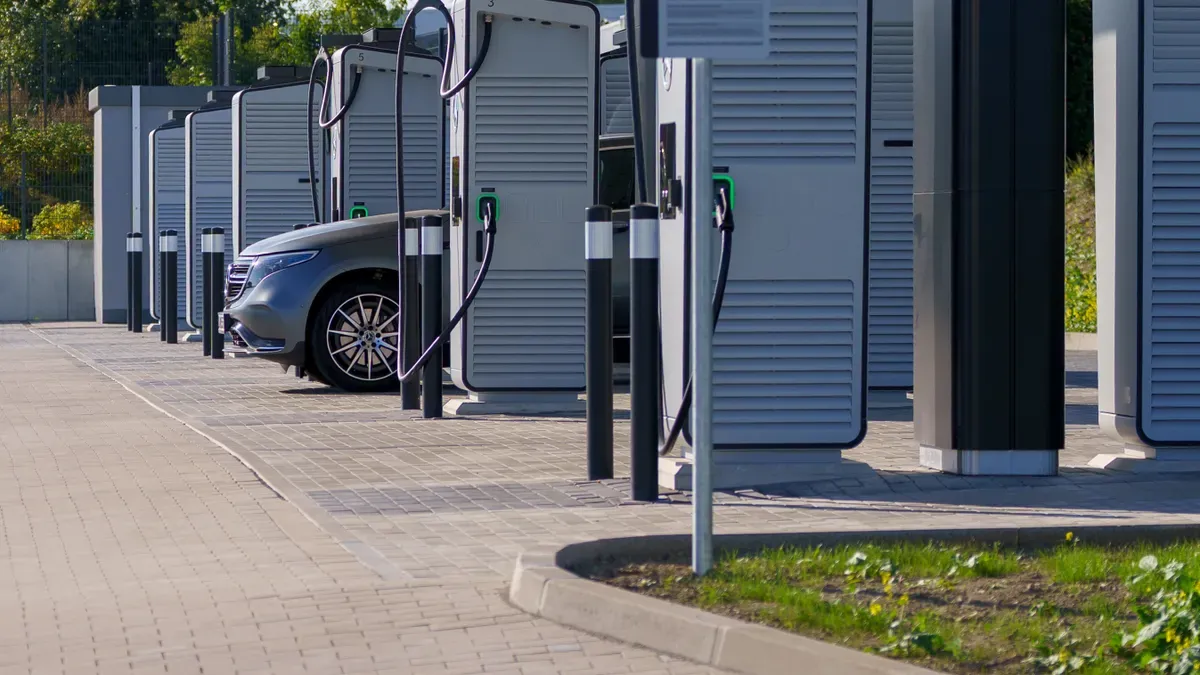
You should focus on reliability, customer service, and flexibility more than raw power specs. A charger can show "available" yet still fail due to software glitches. First-time charge success matters more than uptime numbers. The NEVI program demands 97% uptime, yet many stations miss this target. A Southern California municipality learned this lesson. Their manufacturer ignored service calls, making reliable hardware useless in practice.
Measuring Engineering Response Speed
Time from RFQ to technical feedback reveals a factory's true speed. You want a partner who answers within days, not weeks. Dedicated engineering support matters more than a general customer service line. Ask about their avg. response time for technical questions. A Missouri fleet operator switched suppliers because her calls went unanswered. The new manufacturer provided consistent communication through installation and beyond. That responsiveness during sales predicts post-sale support quality. You should test this early. Send a detailed RFQ and measure the avg. response. Track how long until you receive meaningful technical feedback. A factory that shows up when you need them will support you after purchase. The avg. response time for initial quotes often separates top factories from average ones. The best partners maintain a fast avg. response even during peak seasons.
Assessing Customization Depth and Flexibility
Customization exists on different levels. Brand and configuration changes include logos, colors, labels, and packaging. These offer the fastest route when a proven platform fits your market. Mechanical options cover enclosure details, mounting, cables, connectors, displays, and RFID modules. These require compatibility checks and product validation. Electrical redesign involves PCB layout, component architecture, metering, protection interfaces, and thermal design. This level carries the highest engineering and compliance impact. Firmware integration includes user flows, diagnostics, OCPP configuration, and backend connections. This creates ongoing software ownership obligations.
You should avoid locked ecosystems. Choose manufacturers that support open standards like OCPP. One solar company trained in-house technicians, avoiding expensive service contracts. This flexibility reduced long-term costs significantly. Ask which customization options fit your business model. A distributor launching a new brand may benefit more from controlled branding than a new PCB. An established brand may justify firmware workflows and enclosure tooling. A CPO needs backend interoperability and load-control behavior while keeping hardware close to a certified baseline. Match the factory's capabilities to your strategic goals. Focus on total lifecycle value, not just whether the factory says yes to your initial request.
Detailed Profiles of Top Customization Factories
These three manufacturers demonstrate what real customization looks like in practice. Each one approaches flexibility differently, but all treat engineering response as a core service. You can learn from their real-world projects to understand what they can do for your specific needs.
Tritium: Strengths and Real-World Customization Examples
Tritium excels at adapting its modular DC fast chargers to unusual operating environments. The company's partnership with Stäubli at the Port of Long Beach shows this clearly. Together, they supplied 33 Veefil-PK 175kW chargers for SSA Marine's electric terminal tractors. These chargers feature Stäubli's Quick Charging Connector, which enables automatic, zero-touch charging. Drivers never plug or unplug cables manually. The system operates continuously in a busy port environment. This project received $50 million from the California Air Resources Board's ZANZEFF program. It stands as the largest automated vehicle charging program at any U.S. port. For you, this example shows Tritium's willingness to integrate third-party hardware and design for specific workflows. The company does not force you into a standard configuration. Instead, it adapts its power modules and connector interfaces to match your operational reality.
Kempower: Strengths and Real-World Customization Examples
Kempower's strength lies in dynamic power distribution and scalable system design. Its centralized DC power cabinets connect to multiple satellite posts. The system distributes power in 25 kW increments based on real-time battery needs. You can add satellite posts without replacing cabinets. This approach keeps upfront costs low while allowing room for growth. The company's ChargEye cloud software adds another layer of customization. You can schedule fleet charging sessions and run diagnostics remotely.
Kempower also collaborates on accessory development. The CableGuard case study demonstrates this. Kempower worked with Formula Space to develop a theft-deterrent solution for charging cables. The company provided technical insight, fast-tracked approval, and conducted extensive factory testing. Tests covered cable harmonics, cooling, and structural integrity. This collaboration earned official OEM approval. CableGuard then deployed across hundreds of sites in the UK and Europe. You benefit from this kind of partnership because Kempower treats your custom solution as a shared engineering project.
A concrete installation in Manchester, Kentucky shows the company's site-level flexibility. The location features four Kempower Flex Satellite chargers with both NACS and CCS1 connectors. Total capacity reaches 800 kW. Pull-through spaces accommodate large vehicles and trailers. Covered canopies protect drivers during charging. This site fills a regional gap in public fast charging outside major interstates.
Kempower also supports emerging high-power standards. The table below compares its CCS and MCS modes.
Feature | CCS Mode | MCS Mode |
|---|---|---|
Max Power | 560 kW | 1.2 MW |
Max Current | 700 A | 1,500 A |
Cable Length | 16.4 ft | 8.86 ft |
Customization | Compatible with new 800V cars/vans; supports mixed commercial & passenger use; optional payment terminal; integrates with existing Kempower systems |
DUOSIDA (by UCHEN): Agile Engineering and Global Certifications
DUOSIDA, a brand of UCHEN Technology, brings a different profile to the table. The company started in 2004 and now trades on the NEEQ innovation layer. Its product line covers charging connection devices, charging stations, and high-voltage connectors. DUOSIDA holds UL and TUV certifications, which cover North American and European safety standards. These credentials reduce your compliance burden across multiple regions.
The company serves major domestic automakers and the top three European charging station brands. This client base demands fast engineering response and precise customization. DUOSIDA can adjust charging interfaces, enclosure designs, and connector configurations to match your specifications. For example, the factory can customize a charging connector for a specific vehicle model's inlet geometry. This level of adaptation helps you launch products that fit your market without waiting for standard parts. The company's design-for-manufacturability reviews catch potential issues before production begins. You avoid costly redesigns later in your development cycle.
Comparing Your Options: Trade-Offs and Checklist
Key Metrics: Lead Time, MOQ, and Engineering Cost
Lead time, minimum order quantity (MOQ), and engineering cost set your project's pace. Standard models ship in 25 to 35 days. Custom ODM projects take 45 days or more. MOQ changes with product type. Standard controller boards need 300 units. Custom board designs require 1,000 units. AC chargers have a MOQ of 500 units. DC chargers need 100 units. Charging stacks require only 20 units. The table below shows the trade-off between sourcing models.
Metric | White Label | ODM |
|---|---|---|
Lead Time | Shortest (fastest time to market) | Moderate (engineering time required) |
MOQ | Lower (lower minimum order quantities) | Higher (more project-dependent) |
Engineering Cost | Lowest (minimal upfront cost) | Moderate to higher (NRE and engineering investment) |
A factory like DUOSIDA offers ODM services. This means higher initial cost but deeper customization. A white-label partner gets you to market faster with lower fees. The avg. response time from a factory during the RFQ stage indicates their priority. A fast avg. response signals a white-label approach. A slower avg. response means they evaluate complex ODM requirements carefully.
When to Prioritize Speed Over Cost
Speed matters when you face a tight market deadline. The electric vehicle market demands speed. If you are building a public ev charging network, delays hurt your reputation. Delays postpone your entire infrastructure project. In that case, prioritize a factory with faster lead times, even at a higher cost. For a fast charging hub, you need reliable components quickly. A factory with a proven track record of rapid technical support is worth the premium.
Evaluate the customization options available. Some factories offer deep customization, while others only provide standard modifications. Your ev charging station may require a unique enclosure. Matching the factory's capabilities to your needs is essential. Your infrastructure development depends on timely component delivery.
End with a practical checklist for buyers:
Send a test RFQ and measure the avg. response time.
Ask for a design-for-manufacturability review.
Check certifications like UL and CE.
Review the factory's manufacturing capacity.
The best ev charging component factories treat engineering response speed and customization as core competencies. You should evaluate partners on reliability, customer service, and flexibility. Use the checklist from this guide to vet any factory. Measure the avg. response time from your initial RFQ. Measure the avg. response time for technical feedback. Measure the avg. response time for design reviews. Measure the avg. response time for quotes. A fast avg. response shows a partner who values your project. Their response predicts their support after purchase. Send a detailed RFQ to at least two factories today. You will quickly see who prioritizes your ev charging infrastructure. These solutions support your electric charging network infrastructure goals.
FAQ
What certifications should I check before choosing an EV charging component factory?
Look for UL, CSA, and TUV certifications. These cover safety rules for North America and Europe. DUOSIDA holds all three. These credentials cut your compliance work across regions. Always check that certifications are current before you sign contracts.
How can I measure a factory's engineering response speed?
Send a detailed RFQ and watch how fast they reply. Measure how long it takes to get useful technical feedback. A factory that answers within days cares about your project. A slow reply means poor support after the sale. Test this before you commit.
What is the difference between white-label and ODM charging customization?
White-label means you put your brand on an existing product. It gets you to market fastest with lower costs. ODM means the factory builds custom parts for you. This costs more but allows deeper changes. Pick based on what your business needs.
What lead times should I expect for custom charging components?
Standard models ship in 25 to 35 days. Custom ODM projects take 45 days or more. MOQ changes with product type. DC chargers need at least 100 units. Charging stacks only need 20 units. Plan your timeline around these numbers.
How do I know if a factory supports open standards for fast charging?
Ask about OCPP compatibility. Open standards stop locked ecosystems. They let you run your EV infrastructure with any compatible software. This flexibility lowers long-term costs. Confirm this before you choose a partner.