
Manufacturers of charging plugs, sockets, and cable assemblies with traceable automotive quality control
 2026-08-26

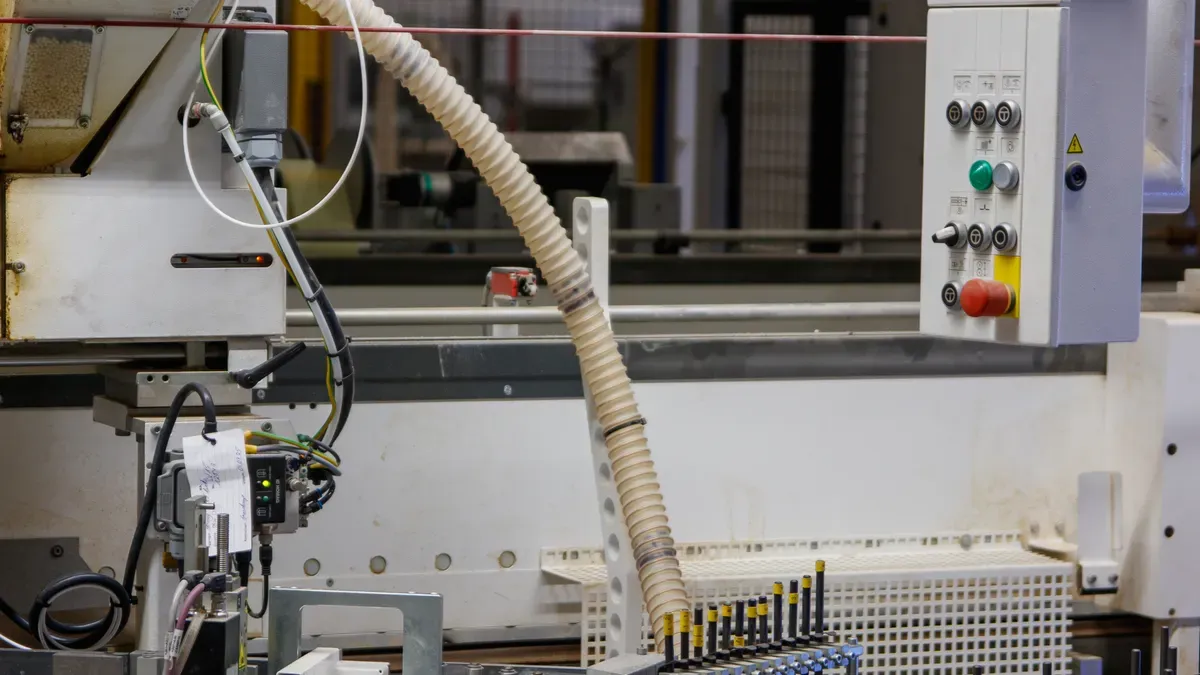
Traceable automotive quality control records every step of making a product, from getting raw materials to putting the final parts together. This full record proves safety, reliability, and meeting rules like IATF 16949. For makers of charging plugs, sockets, and cable assemblies, these documents show how well the parts work in real life.
The market shows people want connectors that are very reliable. In 2025, about 29.8 million EV charging cable units were sold. Experts think this number will go past 57.3 million units by 2035, which means a steady growth of 6.8% each year from 2026 to 2035.
How do makers set up and record these steps to meet car industry rules? This look digs into the exact quality checks, testing steps, and tracking systems that make EV charging parts excellent.
Key Takeaways
Traceability keeps a record of each production step to show safety and meet IATF 16949 standards.
Batch tracking puts parts into groups, so we can recall them quickly. Serialization finds a single failure, so we can fix it exactly.
Digital systems create live logs that connect each unit to its complete production history.
Buyers should look at supplier papers, check inspection logs, and review test build proof to feel confident.
Automotive Quality Control Standards and Traceability

Two key standards form the base of traceable automotive quality control systems. IATF 16949 and ISO 9001 list the rules that manufacturers must follow.
Key Standards: IATF 16949 and ISO 9001
IATF 16949 is the global standard for quality management. It focuses on stopping defects and cutting waste. The standard requires makers to set up identification and traceability steps. Clause 8.5.2.1 explains these rules in full.
Core Mandate (Clause 8.5.2.1): The organization must establish identification and traceability procedures. Traceability must clearly identify starting and ending points for products with potential quality/safety defects. The organization must analyze internal, customer, and regulatory traceability requirements for all automotive products, and develop documented traceability plans based on risk/severity of failure. These plans must specify suitable systems, processes, and methods per product/process/location. The organization must identify and segregate nonconforming products, meet customer/regulatory response times, retain documented information, and apply serialized identification when required. Requirements also extend to externally provided products with safety characteristics. Inspection status cannot be indicated solely by product location unless inherently obvious.
ISO 9001 gives a wider framework for quality management. This standard supports traceability through written processes. A full traceability system keeps products consistent across large orders. It also supports local CE, UL, and FCC certifications.
Component | Description |
|---|---|
Record-Keeping | Protocols for documenting every production stage |
Process Identification | Unique identifiers for products and components |
Supplier Traceability | Suppliers maintain accurate material/process records |
Change Management | Documenting process/material changes for traceability |
Audit Trails | Detailed logs to track compliance and performance |
These parts work together to build a full traceability system. Connector makers use these elements to meet automotive quality control rules for reliability.
Why Traceability is Critical for Charging Components
Charging parts carry serious safety risks. Electrical failures in connectors can cause overheating or fire. Traceability helps makers find bad batches quickly. This supports exact recalls and keeps the system safe.
A full traceability system keeps products consistent across large orders, giving a strong base for local CE, UL, and FCC product certifications.
Meeting industry standards for charging connectors requires written proof of design checks. Industry standards set specific performance rules for plugs, sockets, and cable assemblies. Traceable records show compliance with each rule. Makers must keep proof of testing, material certifications, and process controls. In automotive connectivity, this paperwork satisfies auditors and customers.
Implementing Traceable Quality Control in Manufacturing
Manufacturers use traceable practices at every step of production. The process starts with getting materials and continues through checking them when they arrive, inspecting during production, and final testing. Each step creates written records for parts. This method meets car industry needs for reliability and safety.
Material Sourcing and Incoming Inspection
A traceable manufacturing system begins by checking suppliers. Manufacturers audit material suppliers to make sure they can keep track of material IDs. The audit checks how the supplier keeps heat numbers and lot numbers during processing. A heat number tells which batch of metal came from the mill. A lot number tracks a specific group for non-metallic materials. Both numbers must appear on purchase orders, packing slips, and delivery papers at every transfer point. The mill certificate shows the chemical and physical properties of the raw material. Without this link, a certificate and material cannot be proven to match each other.
Manufacturers write down certification needs clearly in purchase orders. They set up checking steps when goods arrive. Incoming inspection follows a written process. Workers check the quantity and part numbers against the purchase order. They look at appearance, size, function, and technical specs. The inspection report includes the raw material batch or lot number, supplier name, date received, and incoming QC inspection report number. Items get a pass or fail grade. The system links inspection results to the material's batch or lot number. When certificates are missing, manufacturers send materials to third-party ISO 17025-accredited labs for testing.
In-Process Checks and Final Testing
The production process for charging connectors needs strict in-process checks and final tests. Each connector assembly gets a unique configuration identity card. This card links the quote, drawing, sample, and evidence pack. It records the target market, vehicle interface, electrical ratings, cable construction, revision, locking arrangement, temperature-sensing and cooling architecture, labels, and applicable standards. Any change to these fields requires a new check of the supporting evidence.
Manufacturers review five evidence layers during production. Layer one covers interface, mating, and locking. It checks mechanical compatibility, key dimensions, how it goes in and out, retention, and condition after repeated use. Layer two looks at the contact path and temperature behavior. It includes the conductor, crimp, contact pair, internal joints, and thermal sensing. Layer three handles cable construction and handling. It matches conductor, insulation, jacket, and strain relief to written specs. Layer four sets the sensing and cooling boundary. Layer five ensures production repeatability and traceability from controlled drawing through work instructions, in-process checks, final release test, and batch record.
Final tests look at electrical, mechanical, and environmental performance and reliability. Electrical checks include continuity, short and open detection, and Hi-Pot testing for insulation strength. Mechanical checks measure how much force is needed to mate and unmate, and test durability by repeated bending. Environmental checks put assemblies through thermal shock, humidity exposure, salt spray, and vibration. Visual inspection checks connectors for workmanship, markings, and size compliance. Workers certified under IPC/WHMA-A-620 do these inspections.
Documentation is the backbone of traceability. The final test plan states pass or fail criteria for each test. Detailed records include material lots, manufacturing dates, electrical test results, and operator identity. This documentation ensures compliance with automotive quality control standards and supports fast recall management. A manufacturer can trace a field failure back to a specific batch and find the root cause within hours.
Traceability Methods for Automotive Quality

Manufacturers pick between two main tracking ways: batch/lot tracking and serialization. Each method has its own job in the production setting.
Batch Tracking and Serialization Strategies
Batch tracking groups parts that share the same raw material lot, production date, or processing run. This method works well for cable assemblies and standard socket housings where tracking each unit alone adds little value. A batch number links every part to its material certificates, inspection records, and test results. When a defect shows up, the manufacturer isolates the whole batch quickly. This approach cuts down on paperwork while keeping solid traceability for groups of identical parts.
Serialization gives a unique ID to each individual connector. This strategy becomes key for high-risk parts or parts with safety-critical jobs. Charging plugs that handle high currents benefit from serialization because one unit may fail while its batch mates stay fine. Serial numbers allow precise root-cause analysis. The manufacturer can trace one specific plug through every processing step, operator station, and testing cycle. This detail supports targeted recalls that pull only the affected units from the market.
Many manufacturers use both strategies. They track raw materials by lot number, then serialize finished connectors during final assembly. This hybrid approach balances cost with control. The batch number shows material origin, while the serial number records individual unit history.
Digital Records and Data Logging Systems
Modern traceability depends on digital data logging systems that capture information in real time. The SICK Monitoring Box shows this capability. It displays status data through a full dashboard, ensuring secure data transmission and long-term storage. The system tracks each product from raw materials to the finished item, including details about components and manufacturing processes. This full traceability supports quick issue identification, makes recalls easier, and ensures compliance with regulatory rules.
Digital systems work smoothly with PLC, SCADA, and MES platforms. This integration allows continuous data flow and monitoring across the whole production line. Barcode and RFID-based identification links each unit to its production data, enabling end-to-end tracking. Automatic pass/fail checks with full reporting ensure that every product's status and history are recorded in real time. These features strengthen the reliability of the whole quality management system.
Data logging systems also make audit prep easier. The process follows a clear order:
Data capture and serialization: The system connects with manufacturing databases or ERP platforms to automatically assign and check serial numbers, removing manual entry errors and linking each item to its full production record.
Real-time data exchange: Integration with MES and ERP systems allows real-time syncing of serial, batch, and data matrix information, enabling continuous tracking as parts move between facilities or countries.
Inspection and logging: Automated vision systems capture and check each mark after application, looking at contrast, positioning, and code accuracy. These images and data points enter a secure database, creating a digital audit trail that meets ISO and GS1 traceability rules.
Audit readiness: The integrated traceability logs and real-time data checks improve audit readiness, letting manufacturers respond to audits by knowing when, where, and under what conditions each unit was made.
This digital setup changes traceability from a paperwork task into a dynamic quality tool. Manufacturers can spot performance trends, find recurring failure patterns, and improve their design for reliability approach. The data shows which suppliers deliver consistent materials and which processes need changes. For buyers of charging connectors, this depth of documentation gives confidence that every unit meets automotive standards and will work reliably throughout its service life.
Benefits of Quality Control in Connector Manufacturing
Reducing Recalls and Ensuring Compliance
Traceable automotive quality control changes how recalls are handled. Parent-child genealogy links each finished charger to its smaller parts. Operators can trace a failure back to specific component lots or assembly steps. This accuracy avoids costly fixes that cover everything. Full traceability allows targeted recalls that can significantly reduce recall size.
The system gives several clear benefits:
Real-time data logging and MES integration create a permanent audit trail. Server-backed logging stops data loss and speeds up root cause analysis.
Interoperability testing against industry-standard protocols lowers field failures. Vehicle-protocol mismatches cause a lot of charger downtime. Pre-delivery validation catches these issues before deployment.
Clear identification of bad components lets operators fix only affected units. Mass maintenance or full recalls become unnecessary.
This approach protects brand reputation and lowers costs. Manufacturers stay compliant through documented proof of each step. The testing plan covers electrical, mechanical, and environmental performance. All connectors meet set reliability targets before shipment. Safety stays the top priority throughout the process. Each step in the production chain leaves a documented record that proves compliance with industry rules.
Building Trust and Evaluating Suppliers
Suppliers show trustworthiness through checkable documentation. Supplier traceability tracks identities, sourcing locations, production processes, and certifications. This documentation gives real proof of operations. Buyers can confirm material origins and ensure compliance with standards.
Checking a supplier needs a clear plan:
Keep certificates and specifications current. Renewals must be tracked and verified.
Review performance regularly. Issues, complaints, or delivery problems should decide whether a supplier stays approved.
Reassess when something changes. A supplier changing site, ownership, or formulation needs fresh assessment.
Handle problems clearly. A clear approach defines what happens when a supplier fails to meet requirements, including suspension or removal of approval.
Ongoing management practices show that certification is not a one-time event. Supplier certification programs verify traceability abilities before awarding contracts. Complete technical files document product designs, material specs, and manufacturing processes. Digital product passports support data collection and secure storage for European markets. These practices show proactive upkeep of checkable documentation. Connectors from certified suppliers go through strict testing for reliability. Buyers can ask for these records before placing orders to confirm that each unit meets the required specs.
Traceable automotive quality control stands as a non-negotiable requirement for manufacturers of charging plugs, sockets, and cable assemblies. Standards like IATF 16949 and serialization methods ensure safety, reliability, and compliance throughout production. These practices protect against electrical failure and support long-term automotive performance.
Buyers should evaluate suppliers by requesting BOM traceability documentation, inspection records, and pilot build evidence. Batch-level tracking prevents specification drift across SKUs. Digital records demonstrate how nonconforming results close properly.
As the EV market expands, traceability becomes a key differentiator. Manufacturers who document every step build trust through verifiable performance. Connectors with complete histories deliver dependable service and strengthen the entire charging ecosystem.
FAQ
What makes IATF 16949 certification critical for charging connectors?
IATF 16949 forces makers to track every part from start to finish. This certification proves each connector meets car industry rules for safety and dependability. It also allows exact recalls when problems appear.
How do manufacturers verify performance before shipment?
Makers run electrical and mechanical tests on each unit. They also test parts under heat shock, moisture, and salt spray. Written results show they follow industry rules. These checks confirm the product will work as promised.
How does batch tracking support connector quality?
Batch tracking puts parts from the same run into one group. If one part fails, workers can pull the whole group fast. This approach guards the brand's name and keeps quality steady across big orders.