
NACS Charging Connectors: Types, Features and Applications for EVs
 2026-09-10

As EV adoption continues to grow in North America, charging interface selection has become an important consideration for vehicle manufacturers, charging station companies, fleet operators, and EV component distributors. Among the available charging interfaces, NACS has become an important solution for both AC charging and DC fast charging applications.
For businesses developing or sourcing EV charging equipment, a NACS connector is more than a plug with a specific shape. Current rating, voltage, charging type, mechanical design, environmental protection, and compatibility with the target charging system all need to be considered.
For this reason, manufacturers supplying different NACS connector configurations can provide more practical options for OEMs and charging infrastructure companies.
DUOSIDA, operated by Zhangjiagang UCHEN New Energy Technology Co., Ltd. (Youcheng Technology, stock code 873087), focuses on high-performance charging products for new energy vehicles. Its NACS product range covers AC, DC, and liquid-cooled charging applications, giving customers different options for different EV charging projects.
Three Main NACS Connector Options
One of the easiest ways to understand NACS products is to separate them according to their charging application.
NACS charging connectors can generally be divided into:
- NACS AC charging plugs
- NACS DC charging plugs
- Liquid-cooled NACS charging plugs
These three categories serve different charging requirements.
AC charging is generally associated with lower charging power and applications such as residential, workplace, destination, and commercial charging. DC charging is designed for faster energy transfer and is more commonly used in public fast-charging stations and other higher-power applications.
Liquid-cooled NACS connectors are intended for even higher-current applications where thermal management becomes a significant part of the charging system.
DUOSIDA currently offers products across these three areas through its NACS Products category.
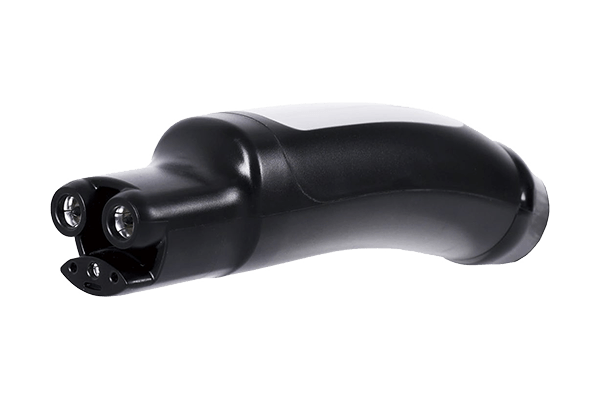
NACS AC Charging Plugs for Everyday EV Charging
Not every EV charging project requires extremely high current.
For many residential, workplace, commercial, and destination charging applications, an AC charging connector is a more practical solution.
DUOSIDA's NACS AC charging plug range includes models with rated current options of 16A, 32A, 40A, 50A, and 80A, with an operating voltage of 300V.
This range gives equipment manufacturers flexibility when developing different AC charging configurations.
The product is designed around practical requirements such as repeated plugging and unplugging, mechanical durability, insulation performance, and environmental protection.
According to the product specifications, the NACS AC charging plug uses a thermoplastic UL94 V-0 housing and copper alloy, silver-plated contact sleeves. The product is designed for operating temperatures from -30°C to +50°C and provides protection rated at 4X/IP55.
The mechanical design is also intended for repeated use, with more than 10,000 no-load plug-in/withdrawal cycles specified for the product.
For B2B buyers, these details are more useful than simply knowing that a connector is “NACS compatible.” The actual electrical and mechanical specifications determine whether the product is suitable for a particular charging system.
NACS DC Charging Plugs for Fast Charging
DC charging changes the requirements considerably.
Instead of converting AC power inside the vehicle, DC charging equipment supplies DC power directly to the vehicle's battery system through the charging interface. This allows charging stations to deliver substantially higher charging power.
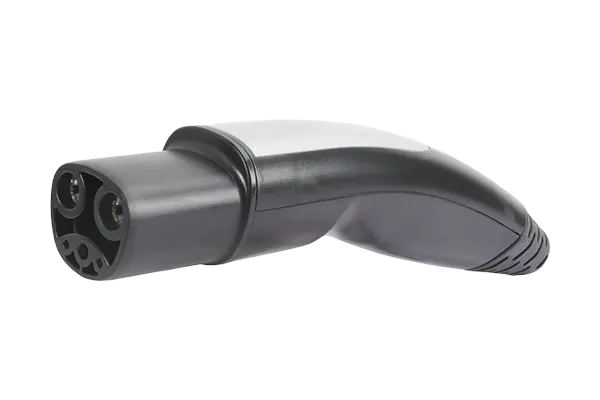
DUOSIDA's NACS DC charging plug range includes 250A and 300A configurations, with an operating voltage of 1000V.
This makes the product suitable for NACS DC fast-charging applications where higher current and voltage are required.
The product is designed to meet North American Charging Standard TS-0023666 and SAE J3400 requirements.
For demanding charging environments, the product specifications also include IP67 internal protection, a UL94 V-0 thermoplastic housing, and copper alloy silver-plated contact sleeves.
The specified mechanical performance includes more than 10,000 no-load plug-in/withdrawal cycles. The connector is also designed to withstand a 1-meter drop and a 2-ton run-over test.
These specifications are particularly relevant for commercial charging equipment manufacturers because charging connectors are handled frequently and may be exposed to mechanical stress during daily operation.
When Does a Liquid-Cooled NACS Connector Make Sense?
The next step in NACS charging technology is high-current charging.
As charging power increases, heat generated within the conductor and contact system becomes more difficult to manage. Simply increasing the conductor size can result in a heavier and less convenient cable.
Liquid cooling provides another approach.
DUOSIDA's NACS liquid-cooled charging plug is rated at 600A and 1000V. It is designed for high-power charging applications where thermal management is an important part of the connector system.
This type of connector is particularly relevant to:
- High-power public charging stations
- Commercial EV charging networks
- Fleet charging facilities
- High-utilization charging sites
- High-performance EV platforms
For these applications, the connector should be considered together with the charging station's cooling system, cable assembly, power electronics, vehicle inlet, and control system.
The goal is not simply to select the highest-current connector available. The goal is to match the connector to the complete charging architecture.
NACS Connector Selection by Application
Different charging projects have different requirements.
A simple comparison can help explain why one NACS product may be more appropriate than another.
| Application | Suitable NACS direction | Key considerations |
|---|---|---|
| Home charging | AC NACS | Current, cable design, safety |
| Workplace charging | AC NACS | Repeated use, installation environment |
| Commercial destination charging | AC NACS | Current rating and durability |
| Public DC fast charging | DC NACS | Current, voltage, thermal performance |
| EV fleet charging | DC NACS | Duty cycle and charging frequency |
| High-power charging | Liquid-cooled NACS | High current and thermal management |
This approach is more useful for equipment manufacturers than selecting products based only on the NACS label.
What Makes a NACS Connector Suitable for OEM Projects?
For an OEM or charging equipment manufacturer, connector selection is usually part of a larger product development project.
The connector needs to fit the mechanical design of the charging equipment and meet the electrical requirements of the system.
Several factors should be checked before sourcing.
Electrical Rating
The first consideration is the required current and voltage.
DUOSIDA's NACS portfolio ranges from lower-current AC products through 250A/300A DC products to a 600A liquid-cooled product.
This allows customers to select according to their system requirements rather than forcing different projects into one connector configuration.
Charging Standard
For products intended for North American applications, compatibility with the relevant NACS and SAE J3400 requirements should be confirmed.
This is especially important for manufacturers developing products for a specific vehicle platform or charging network.
Mechanical Durability
Charging connectors are handled repeatedly.
For commercial equipment, repeated insertion and withdrawal can become a significant part of the product's service conditions. Mechanical strength, insertion force, impact resistance, housing material, and cable assembly should therefore be evaluated during supplier selection.
Environmental Conditions
Outdoor charging stations can be exposed to rain, temperature changes, dust, and mechanical impact.
Protection ratings and operating temperature specifications should be checked against the intended installation environment.
Thermal Management
For high-current DC charging, thermal management becomes increasingly important.
A liquid-cooled connector should be evaluated as part of the complete cooling system rather than as an independent component.
Why a Broad Product Portfolio Matters to EV Manufacturers
EV charging projects often require more than one connector.
An EV manufacturer may need vehicle inlets, charging plugs, high-voltage connectors, and other electrical components. A charging station manufacturer may require charging plugs, sockets, adapters, cable assemblies, and charging equipment.
Working with a supplier that specializes in EV charging components can simplify this process.
Zhangjiagang UCHEN New Energy Technology Co., Ltd., also known as Youcheng Technology, focuses on the development and market promotion of high-performance charging products for new energy vehicles.
Under the DUOSIDA brand, the company provides a broader product portfolio covering charging sockets, charging plugs, Charging Mode 2, Charging Mode 3, HPC products, NACS products, electrical discharge products, vehicle outlet sockets, adapters, electric locks, charging stations, connector holders, and high-voltage connector products.
This product coverage allows customers to look beyond a single NACS plug and evaluate related charging components from the same supplier.
DUOSIDA NACS Products for Different Charging Requirements
For overseas buyers, one advantage of DUOSIDA's current NACS portfolio is the availability of several product configurations.
The NACS AC range addresses lower-current charging requirements with options from 16A through 80A.
The NACS DC range moves into higher-power charging with 250A and 300A configurations at 1000V.
For high-current applications, the liquid-cooled NACS charging plug reaches 600A at 1000V.
This creates a clear product path:
AC charging → DC fast charging → liquid-cooled high-power charging
Rather than treating NACS as one single product, customers can select a configuration based on the actual application.
For the latest product specifications and available models, buyers can review the DUOSIDA NACS product range.
Beyond NACS: A Wider EV Charging Product Platform
NACS is only one part of the EV charging ecosystem.
A complete charging system can involve vehicle inlets, charging sockets, charging plugs, high-voltage connectors, charging stations, communication and protection components, and other accessories.
DUOSIDA's broader product platform reflects this reality.
Its product range includes HPC products for high-power charging, Mode 2 and Mode 3 charging products for different AC charging applications, electrical discharge products for vehicle-to-load applications, as well as high-voltage connector products.
The company's official website also presents full-scenario charging solutions and highlights high-level protection, ultra-fast charging, and safety certification as key areas of its offering.
For an overseas equipment manufacturer, this broader capability can be useful when a project requires several types of EV charging components rather than a single connector.
What Should Importers Ask Before Ordering NACS Products?
Before starting a purchase, it is worth preparing a basic technical specification.
For example:
Target market: North America or another market using NACS-compatible infrastructure.
Charging type: AC, DC fast charging, or high-power liquid-cooled charging.
Required current: 16A, 32A, 40A, 50A, 80A, 250A, 300A, 600A, or another project-specific requirement.
Operating voltage: Depending on the selected product and charging system.
Installation environment: Indoor, outdoor, public charging station, fleet depot, or OEM application.
Vehicle compatibility: Confirm the vehicle-side interface and charging system requirements.
Duty cycle: Occasional charging or repeated daily commercial operation.
Having these details ready helps a manufacturer recommend the correct product faster and reduces unnecessary back-and-forth during the sourcing process.
Choosing a NACS Manufacturer in China
For international buyers, China has become an important sourcing base for EV charging components. However, supplier selection should go beyond checking whether a company has a NACS product on its website.
A suitable supplier should have a product range that matches the project's requirements, technical knowledge of EV charging applications, production capabilities, and the ability to communicate clearly with overseas customers.
DUOSIDA is operated by Zhangjiagang UCHEN New Energy Technology Co., Ltd. and focuses on high-performance charging products for new energy vehicles. The company's website identifies global manufacturing and service coverage and states that professional service is provided within 24 hours after receiving business cooperation or product inquiries.
For B2B customers, this combination of product breadth and service support can be useful when developing or sourcing charging equipment for different markets.
Final Thoughts
NACS charging connectors are not a single standardized product category from a purchasing perspective. AC charging, DC fast charging, and high-power liquid-cooled charging each have different electrical and application requirements.
For lower-current charging, DUOSIDA's NACS AC products provide configurations from 16A to 80A. For DC fast charging, its NACS DC products are available in 250A and 300A configurations at 1000V. For higher-current applications, the liquid-cooled NACS charging plug reaches 600A at 1000V.
This range gives EV manufacturers, charging station companies, fleet operators, and component distributors more flexibility when developing different charging projects.
For companies looking for a China-based NACS charging connector supplier, the practical starting point is to define the target market, charging type, current, voltage, operating environment, and vehicle compatibility first. The supplier can then recommend the appropriate connector rather than simply offering the highest-rated product.
With NACS AC, DC, and liquid-cooled solutions alongside HPC, charging sockets, charging plugs, charging stations, high-voltage connectors, and other EV charging components, DUOSIDA provides a broader product platform for companies building the next generation of EV charging infrastructure.
To explore the company's complete charging product portfolio, visit the DUOSIDA EV official website.