
NACS AC vs. DC Charging: What Is the Difference?
 2026-08-27

As electric vehicle charging infrastructure continues to expand in North America, NACS has become an important charging interface for EV manufacturers, charging station companies, and component suppliers. However, NACS charging is not limited to one type of application.
When sourcing NACS charging components, one of the first questions engineers and procurement teams need to answer is whether the project requires NACS AC charging or NACS DC charging.
The connector may look similar, but AC and DC charging work differently, serve different applications, and have significantly different electrical requirements. Choosing the right NACS charging plug therefore depends on the charging architecture, required power level, vehicle application, and installation environment.
Zhangjiagang UCHEN New Energy Technology Co., Ltd., also known as Youcheng Technology (stock code: 873087), is a China-based charging solution service provider focused on the development and market promotion of high-performance charging products for new energy vehicles. Through the DUOSIDA brand, the company provides NACS charging plugs and other EV charging components for international markets.
NACS AC and DC Charging: The Basic Difference
The simplest way to understand the difference is to look at where the electrical conversion takes place.
With AC charging, alternating current from the electrical grid is supplied to the vehicle. The vehicle's onboard charger converts AC electricity into DC electricity before it is stored in the battery.
With DC charging, the AC-to-DC conversion is handled by the charging station. The charging station delivers DC power directly to the vehicle battery system through the DC charging interface.
This difference has a direct impact on charging speed, equipment architecture, connector design, and typical applications.
| Feature | NACS AC Charging | NACS DC Charging |
|---|---|---|
| Power type delivered to vehicle | AC | DC |
| AC/DC conversion | Inside vehicle | Inside charging station |
| Typical application | Home, workplace, destination charging | Fast charging stations |
| Charging speed | Generally lower | Generally higher |
| Charging equipment | AC EVSE | DC fast charger |
| Connector application | AC charging connection | DC charging connection |
| Typical use case | Longer parking periods | Shorter charging stops |
For businesses developing EV charging equipment, understanding this distinction is essential before selecting an NACS connector.
What Is an NACS AC Charging Plug?
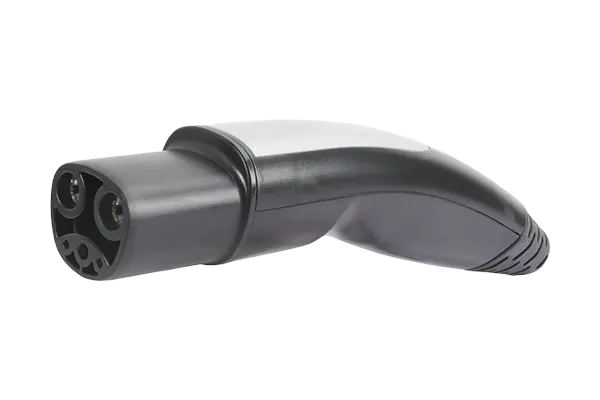
An NACS AC charging plug is designed for AC charging applications using the North American Charging Standard interface.
DUOSIDA's NACS AC Charging Plug is designed for charging station electrical connections and meets North American Charging Standard TS-0023666 and SAE J3400 regulations and requirements. The product is available in several current configurations, including 16A, 32A, 40A, 50A, and 80A, with an operating voltage of 300V.
The product is intended for applications where the EV charging system provides AC power to the vehicle.
This makes NACS AC charging particularly suitable for applications where the vehicle remains parked for a relatively long period.
Typical NACS AC Applications
NACS AC charging plugs can be used in applications such as:
- Residential EV charging
- Workplace charging
- Hotel and destination charging
- Commercial parking facilities
- Fleet parking areas
- AC wallbox systems
- Other low-to-medium power charging applications
For example, a workplace may have vehicles parked for several hours during a normal working day. In this situation, the charging system does not necessarily need the high current associated with DC fast charging.
The focus is instead on reliable daily charging, convenient operation, connector durability, and compatibility with the target vehicle platform.
What Is an NACS DC Charging Plug?
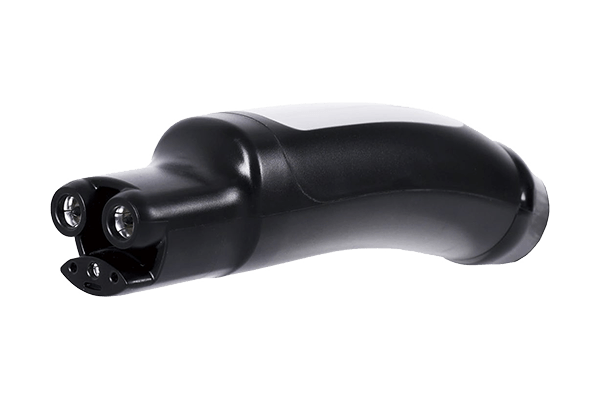
An NACS DC charging plug is designed for direct-current fast-charging applications.
Unlike AC charging, where the vehicle's onboard charger performs the conversion, DC charging equipment converts AC power into DC power before supplying it to the vehicle.
DUOSIDA's NACS DC Charging Plug is designed for charging station electrical connections and complies with North American Charging Standard TS-0023666 and SAE J3400 requirements. The current product is available in 250A and 300A configurations, with an operating voltage of up to 1000V.
These higher electrical ratings make the product suitable for demanding DC charging applications where charging time is an important consideration.
The product also features an IP67 internal protection rating, a mechanical lifespan of more than 10,000 no-load insertion and withdrawal cycles, and an operating temperature range of -30°C to +50°C.
Why DC Charging Is Faster
The main reason DC charging can deliver energy much faster is that the charging station handles the power conversion.
An AC charger must work within the limitations of the vehicle's onboard charger. The onboard charger determines how much AC power can be converted and accepted by the battery system.
With a DC fast charger, the charging station provides DC power directly to the battery system under the vehicle's charging control strategy.
This allows charging equipment to support substantially higher power levels.
For charging station manufacturers, this means the connector is part of a larger system that includes:
- Power conversion equipment
- Cooling systems
- Charging control
- Communication
- Protection systems
- Cable assemblies
- Vehicle interface
- Connector and terminal design
The NACS plug must therefore be selected according to the complete charging system rather than simply according to the connector shape.
NACS AC vs. DC: Which One Should You Choose?
There is no universal answer. The right option depends on the application.
Choose NACS AC for Long-Duration Charging
NACS AC charging is generally a practical choice when vehicles remain connected for extended periods.
Consider AC charging for:
Home charging:
Most residential charging takes place while the vehicle is parked overnight.
Workplace charging:
Employees may leave their vehicles parked for several hours, making moderate charging power suitable for daily energy replenishment.
Destination charging:
Hotels, shopping centers, offices, and other destinations can use AC charging where customers have longer dwell times.
Fleet parking:
Commercial vehicles that remain parked during non-operating hours may not require high-power DC charging for every charging session.
In these situations, an NACS AC charging plug can provide a practical balance between charging performance, equipment requirements, and everyday usability.
Choose NACS DC for Fast Charging
DC charging becomes more relevant when minimizing vehicle downtime is a priority.
Typical applications include:
- Highway charging stations
- Public DC fast-charging networks
- Commercial EV fleets
- Taxi and ride-hailing fleets
- Long-distance EV travel
- Electric delivery vehicles
- High-utilization charging locations
For these applications, a higher-current NACS DC charging plug can support the charging station's fast-charging architecture.
Comparing DUOSIDA NACS AC and DC Charging Plugs
DUOSIDA's current NACS range provides separate AC and DC charging plug solutions rather than treating NACS as a single product type. Its NACS product category also includes a liquid-cooled NACS charging plug rated at 600A/1000V for higher-current charging applications.
| DUOSIDA Product | Rated Current | Operating Voltage | Main Application |
|---|---|---|---|
| NACS AC Charging Plug | 16A/32A/40A/50A/80A | 300V | AC charging stations |
| NACS DC Charging Plug | 250A/300A | 1000V | DC fast charging |
| NACS Liquid-Cooled Charging Plug | Up to 600A | Up to 1000V | High-current DC charging |
This product structure allows charging equipment manufacturers to select an NACS interface according to the actual electrical requirements of their projects.
What Should B2B Buyers Check Before Ordering?
For EVSE manufacturers and charging infrastructure developers, current and voltage ratings are only the starting point.
1. Charging Architecture
First determine whether the equipment is an AC EVSE or a DC fast charger.
This immediately narrows the connector selection.
2. Required Current
Calculate the expected charging current based on the charger output, vehicle battery system, duty cycle, and charging strategy.
A connector with a higher rating is not automatically the better choice. The connector should match the complete electrical design.
3. Voltage
DC charging systems can operate at significantly higher voltages than typical AC charging applications.
For example, DUOSIDA's NACS DC Charging Plug is rated for operation up to 1000V, while its NACS AC Charging Plug is rated at 300V.
4. Mechanical Durability
Public charging stations may be connected and disconnected thousands of times during their service life.
DUOSIDA's NACS AC and DC plugs are both specified for more than 10,000 no-load plug-in/withdrawal cycles.
This type of mechanical specification is particularly relevant for charging network operators and equipment manufacturers planning long-term deployment.
5. Environmental Conditions
Outdoor charging equipment can face rain, dust, temperature changes, impact, and repeated handling.
The NACS AC product has IP55 and 4X protection, while the NACS DC product specifies IP67 internal protection. Both products are designed for an operating temperature range of -30°C to +50°C.
6. Cable Configuration
The cable is an important part of the connector assembly.
Different current levels require different conductor configurations. DUOSIDA provides multiple standard cable configurations for its NACS AC and DC charging plugs, allowing charging equipment manufacturers to select a configuration appropriate to the intended electrical application.
NACS AC, NACS DC, or Liquid-Cooled NACS?
For standard AC charging applications, an NACS AC charging plug is the logical starting point.
For higher-power public charging, an NACS DC charging plug provides the appropriate interface for DC fast charging.
When charging power and current requirements increase further, thermal management becomes a major engineering consideration. DUOSIDA therefore also offers a liquid-cooled NACS charging plug, listed at up to 600A and 1000V.
This three-level product approach is useful for B2B customers because it allows the charging interface to be selected according to the actual project requirements instead of forcing one connector into every application.
Why Choose DUOSIDA for NACS Charging Components?
NACS charging components are not simply accessories attached to a charging station. They form the physical and electrical interface between the EV and charging system.
Zhangjiagang UCHEN New Energy Technology Co., Ltd. focuses on charging solutions and high-performance products for new energy vehicles. Its DUOSIDA product portfolio covers NACS products alongside charging sockets, charging plugs, charging Mode 2 and Mode 3 products, HPC products, vehicle outlet sockets, adapters, charging stations, electric locks, connector holders, and high-voltage connector products.
This broader product portfolio can be useful for OEMs, EVSE manufacturers, system integrators, and charging infrastructure companies that need to source multiple charging components from one experienced supplier.
Final Takeaway
The difference between NACS AC and DC charging comes down to more than the charging connector.
NACS AC charging is suited to applications where vehicles remain parked for longer periods, such as homes, workplaces, destinations, and fleet parking facilities.
NACS DC charging is designed for fast-charging applications where reducing charging downtime is more important, including public fast-charging stations, commercial fleets, and high-utilization charging networks.
For higher-current applications, liquid-cooled NACS technology provides another option when conventional thermal management is no longer sufficient.
For businesses selecting components for a new charging project, the best approach is to start with the charging architecture, required current, operating voltage, vehicle compatibility, environmental conditions, mechanical requirements, and target market.
You can view the complete DUOSIDA NACS Products range to compare NACS AC, NACS DC, and liquid-cooled charging solutions.
For more EV charging components and system solutions, visit the DUOSIDA official website.
You can also review the dedicated NACS DC Charging Plug and NACS AC Charging Plug pages for detailed specifications and model information.