
HPC EV Charging: A Complete Guide to High Power Charging Solutions
 2026-08-26

As electric vehicles move from passenger cars into buses, trucks, logistics fleets, and high-utilization commercial applications, charging infrastructure needs to deliver more than basic charging capability. Charging speed, current capacity, thermal management, connector reliability, and regional standards have all become important considerations when developing high-power EV charging systems.
This is where HPC EV charging, or High Power Charging, plays an increasingly important role.
Unlike conventional charging solutions, HPC systems are designed to support high-current DC charging and reduce charging time for vehicles that need to return to service quickly. For EV manufacturers, charging station manufacturers, fleet operators, and infrastructure developers, selecting the right HPC connector or vehicle inlet is therefore an important part of system design.
Zhangjiagang UCHEN New Energy Technology Co., Ltd., also known as Youcheng Technology (stock code: 873087), is a China-based charging solution service provider focused on the development and market promotion of high-performance charging products for new energy vehicles. Through its DUOSIDA brand, the company provides a broad portfolio of EV charging plugs, sockets, vehicle inlets, HPC products, high-voltage connectors, and other charging components for international markets.
What Is HPC EV Charging?
HPC stands for High Power Charging. In practical EV applications, HPC refers to charging systems capable of delivering substantially higher DC current and power than conventional charging equipment.
The objective is straightforward: deliver more energy to the vehicle battery in less time.
However, high-power charging is not simply a matter of increasing the current. As charging current increases, heat generation within cables, terminals, connectors, and contact points becomes a more important engineering consideration. A suitable HPC solution must therefore address electrical performance, thermal management, insulation, mechanical durability, safety, and compatibility with the vehicle and charging equipment.
For this reason, modern HPC systems increasingly use liquid-cooled cables and connectors for applications requiring sustained high current.
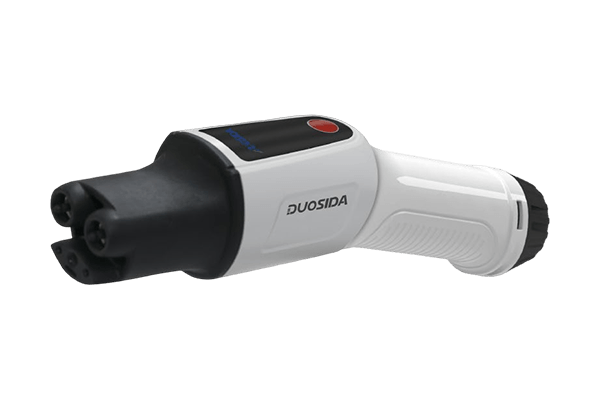
The DUOSIDA HPC Products portfolio includes high-power charging products designed for demanding DC charging applications. Current products listed by DUOSIDA include liquid-cooled solutions with rated current options reaching 400A, 500A, 600A, and 800A, depending on the product configuration. Some solutions are rated up to 1500V DC.
Why Liquid Cooling Matters in High Power Charging
One of the main technical challenges in HPC charging is heat.
When electrical current passes through a conductor, heat is generated. As current increases, thermal management becomes increasingly important. Simply using larger conductors can increase cable size and weight, which may make the charging connector difficult to handle.
Liquid cooling provides another approach.
In a liquid-cooled HPC system, coolant circulates through specially designed channels around the high-current conductors. The cooling system helps control the temperature of the charging cable and connector during high-current operation.
This can provide several practical advantages:
- Support for higher continuous charging current
- Better thermal management
- Reduced cable bulk compared with equivalent air-cooled designs
- Improved handling for charging operators
- Greater suitability for high-utilization charging stations
- More stable performance during sustained high-current charging
For commercial charging stations, electric trucks, buses, and other vehicles with large battery packs, these characteristics can be particularly important.
HPC Products for Different Charging Standards
A major consideration when purchasing HPC charging components is the charging standard used by the target market.
There is no single connector design that fits every EV market. China, North America, Europe, and other regions have developed different charging standards, so charging component manufacturers need to match the connector with the vehicle architecture and charging infrastructure.
DUOSIDA's HPC product category currently provides options associated with several standards, including the China National Standard and American Standard. The company's product system also covers European, Japanese, Thai, and Australian standards.
For international EV projects, this multi-standard approach is useful because the same charging infrastructure developer may need different connector solutions for different markets.
1. China Standard HPC Solutions
China has developed its own EV charging standards and has built a large-scale charging infrastructure ecosystem.
For projects targeting Chinese-market vehicles and charging equipment, HPC components need to be compatible with the applicable China National Standard and the electrical requirements of the vehicle and charger.
DUOSIDA's HPC portfolio includes ChaoJi DC charging products, including a ChaoJi DC vehicle connector and ChaoJi DC vehicle inlet. The current product listing shows a ChaoJi DC vehicle connector with a maximum constant current of 600A and electrical performance of up to 1500V DC.
ChaoJi is particularly relevant when discussing the future development of high-power charging because it is designed around higher charging performance and the requirements of next-generation EV applications.
For vehicle manufacturers and charging equipment companies developing products for the Chinese market, selecting a suitable ChaoJi or other China-standard HPC interface should be considered early in the system development process.
2. American Standard HPC Solutions
The North American market has different charging requirements and connector standards. For high-power DC charging projects targeting the United States and other markets using American charging interfaces, CCS1 remains an important connector configuration.
DUOSIDA provides liquid-cooled CCS1 HPC products for high-current applications. Its product range includes a CCS1 liquid-cooled solution rated up to 500A maximum constant current and up to 1000V DC.
This type of product can be relevant to:
- DC fast charging stations
- Commercial EV charging infrastructure
- Electric vehicle fleets
- Electric buses
- High-utilization charging networks
- EV manufacturers and charging equipment manufacturers
For companies exporting charging equipment into North America, the connector itself is only one part of the selection process. The complete system should also be evaluated for electrical compatibility, thermal performance, certification requirements, installation conditions, and vehicle interface requirements.
China Standard vs. American Standard HPC: What Should Buyers Consider?
When selecting HPC charging products for an international project, buyers should not choose a connector based only on its current rating.
The following factors should be evaluated together:
| Selection Factor | China Standard HPC | American Standard HPC |
|---|---|---|
| Target market | China and compatible EV platforms | North America and compatible EV platforms |
| Typical high-power interface | ChaoJi / applicable China-standard solutions | CCS1 and related configurations |
| Cooling requirements | Air-cooled or liquid-cooled depending on application | Liquid cooling increasingly important for high-current applications |
| Current capacity | Depends on product and system design | Depends on product and system design |
| Voltage requirements | Project-specific | Project-specific |
| Vehicle compatibility | Must match the vehicle inlet | Must match the vehicle inlet |
| Certification | Applicable Chinese and project requirements | Applicable North American requirements |
| Application | Passenger EVs, buses, commercial vehicles and charging infrastructure | Passenger EVs, fleets, commercial vehicles and charging infrastructure |
The most important point is that HPC charging should be treated as a complete interface solution rather than a single connector component.
How to Choose an HPC Charging Product
For procurement teams and engineers, several technical questions should be answered before selecting a product.
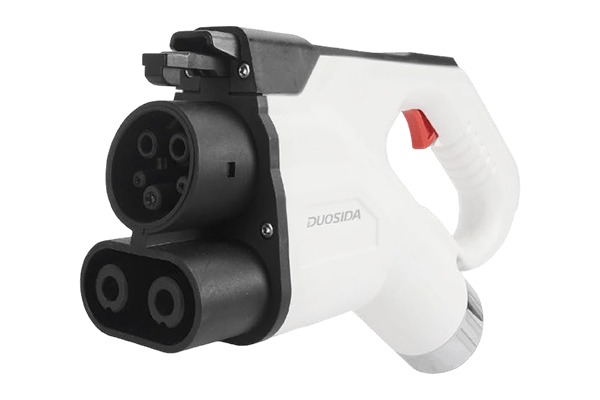
Current and Voltage
Start with the required charging current and voltage.
DUOSIDA's current HPC portfolio includes different current configurations, including products rated at 400A, 500A, 600A, and 800A, while some solutions reach 1500V DC. The correct configuration depends on the charging system, vehicle battery architecture, cable assembly, and intended operating conditions.
Higher ratings should not automatically be considered better. The connector needs to match the actual electrical requirements of the complete charging system.
Cooling Method
For moderate charging requirements, conventional cooling may be sufficient. For sustained high-current applications, liquid cooling can become a practical solution.
A buyer should consider expected charging duration, ambient temperature, duty cycle, installation environment, and maintenance requirements before choosing between different cooling configurations.
Vehicle Interface
The charging connector must match the vehicle inlet.
This is particularly important for projects serving multiple vehicle platforms. A charging station manufacturer may need different connectors for different regional markets or vehicle architectures.
Mechanical Design
An HPC connector needs to withstand frequent insertion and removal, cable movement, environmental exposure, and long-term use.
For commercial charging infrastructure, mechanical durability can directly affect maintenance requirements and system uptime.
Certification and Market Compliance
A product designed for China should not automatically be assumed to meet North American requirements, and vice versa.
For international projects, buyers should confirm the applicable standard, certification, electrical rating, environmental requirements, and installation conditions before finalizing the connector specification.
Where Are HPC Charging Solutions Used?
High Power Charging is particularly valuable where vehicles cannot afford long charging downtime.
Electric Passenger Vehicles
For highway fast-charging networks and urban DC fast-charging stations, HPC can reduce the time required for drivers to recharge.
Electric Buses
Electric buses often operate on fixed schedules. High-power charging can support depot charging, opportunity charging, or other operational models where vehicles need to return to service quickly.
Electric Trucks
Heavy-duty EVs require larger battery packs and can place greater demands on charging infrastructure. High-current liquid-cooled charging solutions can therefore become an important part of commercial EV charging development.
Logistics Fleets
Delivery fleets and logistics vehicles may operate for long hours each day. Reducing charging downtime can improve fleet utilization.
Charging Station Manufacturers
For EVSE manufacturers, an HPC connector is a critical interface between the charging system and the vehicle. Product selection needs to consider not only current capacity but also integration, cable configuration, cooling system, and target-market standards.
Why Work with an Experienced HPC Manufacturer?
High-power charging products require more than basic connector manufacturing. They involve electrical engineering, thermal management, mechanical design, material selection, testing, and compatibility with different EV charging standards.
This is one reason why supplier selection matters.
Zhangjiagang UCHEN New Energy Technology Co., Ltd. focuses on high-performance charging products for new energy vehicles and operates the DUOSIDA product brand. Its product portfolio covers charging sockets, charging plugs, Mode 2 and Mode 3 products, HPC products, NACS products, vehicle outlet sockets, adapters, charging stations, electric locks, connector holders, and high-voltage connector products.
For B2B customers, having access to multiple product categories can simplify supplier coordination when a project requires more than one type of charging component.
The company also promotes customized service for business and product inquiries, supporting customers developing charging solutions for different markets.
Building the Right HPC Charging Solution
The future of EV charging is not simply about achieving higher charging power. A practical HPC solution needs to balance current capacity, voltage, thermal management, connector design, safety, vehicle compatibility, and regional standards.
For Chinese-market projects, ChaoJi and other applicable China-standard solutions provide options for high-power charging development. For North American projects, liquid-cooled CCS1 solutions can address the requirements of high-current DC charging applications.
The right choice ultimately depends on the vehicle platform, charging station architecture, operating environment, target market, and expected charging duty cycle.
For EV manufacturers, charging station developers, fleet operators, and EVSE companies looking for high-power charging components, the DUOSIDA HPC product range provides a practical starting point for comparing high-current and liquid-cooled charging solutions.
To explore DUOSIDA's complete EV charging product portfolio, visit the DUOSIDA official website and review its charging plugs, sockets, vehicle inlets, HPC products, high-voltage connectors, NACS products, and other EV charging components.