
EV Charging Mode 2 and Mode 3: Applications, Benefits and Product Selection
 2026-08-21

As electric vehicles become part of everyday transportation, charging equipment is no longer limited to public fast-charging stations. Home charging, workplace charging, fleet charging, hotels, commercial parking areas, and temporary charging scenarios all require charging solutions with different levels of portability, control, and installation complexity.
Two commonly used AC charging approaches are EV Charging Mode 2 and Mode 3. They are designed for different charging environments and offer distinct advantages in terms of mobility, electrical protection, control, and installation.
For EV manufacturers, charging equipment distributors, fleet operators, and infrastructure developers, understanding these differences can make product selection much easier. Zhangjiagang UCHEN New Energy Technology Co., Ltd., also known as Youcheng Technology, focuses on the development and market promotion of high-performance charging products for new energy vehicles in China. Through its DUOSIDA product portfolio, the company provides charging solutions covering different charging modes, connector standards, and application requirements.
Understanding EV Charging Mode 2
Charging Mode 2 is generally associated with portable EV charging equipment. Unlike a basic charging cable connected directly to a household outlet, a Mode 2 charging system incorporates an in-cable control and protection device.
This makes Mode 2 particularly useful when a permanent EV charging station is not available.
A typical Mode 2 solution includes:
- An AC power plug
- A charging cable
- An in-cable control box
- An EV charging connector
- Safety and control functions
- Communication between the vehicle and charging equipment
The control box is an important part of the system. Depending on the product configuration and applicable standard, it can provide functions such as residual current protection, overcurrent protection, temperature monitoring, and charging-status indication.
For drivers and fleet operators, the main advantage is flexibility. A portable Mode 2 charger can be carried with the vehicle and used in suitable electrical environments without requiring a dedicated wall-mounted charging station.
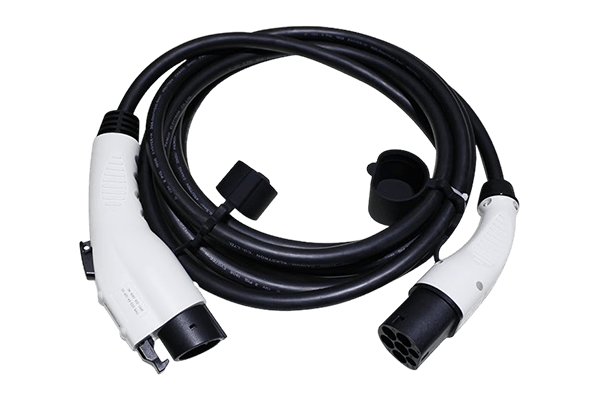
DUOSIDA offers a dedicated range of EV Charging Mode 2 products, covering different connector and plug configurations for various markets.
Where Mode 2 Charging Makes Practical Sense
Mode 2 is not intended to replace every fixed charging station. Its strength is portability.
For example, an EV owner traveling between locations may encounter a parking facility without dedicated EV charging equipment. A portable Mode 2 charger can provide an alternative when a compatible AC power source is available.
It can also be useful for:
- Residential backup charging
- Temporary charging locations
- Small commercial fleets
- Service vehicles
- Travel and mobile applications
- Workshops and vehicle service facilities
- Locations where permanent charging infrastructure is not practical
For businesses selling portable EV charging equipment, connector compatibility is particularly important. The charging plug must match the vehicle, while the power plug and electrical configuration need to match the target market.
This is why a manufacturer serving international markets needs to offer more than one connector configuration.
What Is EV Charging Mode 3?
Mode 3 takes a different approach. Instead of relying primarily on a portable in-cable control device, Mode 3 charging uses dedicated EV supply equipment connected to a fixed AC electrical installation.
The charging station communicates with the electric vehicle and manages the charging process through a dedicated control system.
A typical Mode 3 charging system may include:
- A fixed AC charging station
- EV charging cable or socket
- Control and communication functions
- Electrical protection
- Vehicle charging connector
- User interface or charging controls
This architecture is more suitable for permanent charging installations.
Mode 3 can be found in residential wall-mounted chargers, office parking facilities, commercial properties, public parking areas, hotels, and fleet depots.
DUOSIDA provides a dedicated EV Charging Mode 3 product range, with products designed around different regional charging requirements and connection configurations.
Mode 2 vs Mode 3: A Practical Comparison
Rather than asking which charging mode is universally better, buyers should first determine the application.
| Factor | Mode 2 | Mode 3 |
|---|---|---|
| Main application | Portable and temporary charging | Fixed AC charging |
| Installation | Minimal or no dedicated charger installation | Dedicated electrical installation |
| Portability | High | Low to moderate |
| Control | In-cable control device | Dedicated EVSE control system |
| Typical locations | Home, travel, temporary sites | Homes, workplaces, commercial sites |
| Infrastructure requirement | Suitable compatible AC outlet | Dedicated charging equipment |
| Best suited for | Flexible charging | Regular and managed charging |
The distinction is especially important for B2B buyers. A distributor supplying residential users may need a strong Mode 2 portfolio, while a commercial charging infrastructure provider may place greater emphasis on Mode 3 equipment.
Why Connector Selection Matters
Charging mode is only one part of an EV charging product.
The connector standard is equally important because EVs sold in different regions may use different interfaces.
Depending on the target market, charging products can involve Type 1, Type 2, GB/T, and other connector configurations. A product designed for one market may not be suitable for another without the correct connector and electrical configuration.
For manufacturers and distributors, this creates a need for a product portfolio that can accommodate different charging standards.
DUOSIDA's wider product range includes charging sockets, charging plugs, Charging Mode 2, Charging Mode 3, high-power charging products, NACS products, adapters, electric locks, connector holders, and other EV charging components. The company's product categories can be viewed through its complete EV charging product portfolio.
Product Selection: What Should Buyers Check?
When selecting Mode 2 or Mode 3 equipment, specifications should be evaluated according to the actual application rather than choosing based only on charging current.
1. Charging Standard
Confirm the charging standard required in the target market.
For international distribution, the connector, electrical system, communication requirements, and applicable certification standards should all be checked before placing an order.
2. Rated Current
The rated current should correspond with the vehicle, electrical circuit, cable specification, and intended charging environment.
A higher current rating does not automatically mean a better product. The entire charging system must be designed to safely handle the selected current.
3. Plug and Connector Configuration
The power-side plug and vehicle-side connector need to be compatible with the intended market and vehicle platform.
This is particularly important for Mode 2 products because portability often means the same charger may be offered in multiple plug and connector combinations.
4. Protection Functions
Protection is a critical part of EV charging equipment.
Depending on the product design and applicable standard, buyers may need to evaluate functions such as overcurrent protection, leakage or residual-current protection, overtemperature monitoring, short-circuit protection, and grounding detection.
For permanent Mode 3 installations, protection should also be considered as part of the overall electrical system rather than viewed only as a charger feature.
5. Cable and Mechanical Design
Portable chargers are repeatedly packed, transported, connected, and disconnected. Their cables, connectors, control boxes, and strain-relief structures therefore need to withstand regular handling.
For fixed Mode 3 equipment, mechanical design focuses more on installation, enclosure protection, cable management, connector retention, and long-term operation.
6. Target Environment
The charging environment can influence product selection significantly.
A portable charger used for occasional residential charging has different requirements from equipment installed at a commercial fleet depot. Outdoor installations may also require appropriate enclosure and environmental protection.
Mode 2 and Mode 3 for Different Business Applications
For EV charging product distributors, having both Mode 2 and Mode 3 solutions can make it easier to serve different customer segments.
Residential Charging
Mode 2 can be useful where users need a portable charging option and a suitable AC outlet is available.
Mode 3 is generally more appropriate for customers looking for a dedicated home charging point with permanent installation and more structured charging control.
Workplace Charging
For offices and industrial facilities, Mode 3 can provide a more suitable long-term solution where vehicles remain parked for several hours.
Businesses can install dedicated charging equipment in employee parking areas or company vehicle parking facilities.
Fleet Operations
Fleet operators typically need predictable charging rather than occasional access to power. Dedicated Mode 3 equipment can therefore be useful for depots and parking facilities where vehicles return regularly.
Mode 2 equipment can still serve as a flexible backup or mobile charging solution when vehicles operate across multiple locations.
Commercial Properties
Hotels, shopping centers, parking operators, and other commercial facilities can use Mode 3 charging infrastructure as part of their EV services.
The permanent nature of Mode 3 makes it better suited to locations where charging equipment is expected to remain in place and serve multiple vehicles over an extended period.
Why Work With a China-Based EV Charging Product Manufacturer?
For international EV charging businesses, sourcing from China is not simply about manufacturing capacity. Product consistency, engineering support, connector compatibility, standard compliance, and the ability to develop different product configurations can all affect the success of an EV charging project.
Zhangjiagang UCHEN New Energy Technology Co., Ltd. positions itself as a charging solution service provider in China, focusing on high-performance charging products for new energy vehicles.
Its DUOSIDA product portfolio covers multiple charging categories and regional standards, allowing customers to evaluate Mode 2 and Mode 3 products alongside other charging components.
This broader product approach can be particularly useful for OEMs, distributors, charging infrastructure companies, and project integrators that need different EV charging components for the same market.
How to Choose Between Mode 2 and Mode 3
The decision can be simplified by starting with the charging environment.
Choose Mode 2 when portability, flexibility, and temporary charging are important. It is particularly suitable for drivers or businesses that need a charger that can travel with the vehicle.
Choose Mode 3 when the project involves a dedicated charging location, permanent installation, regular vehicle use, and more structured charging management.
In some cases, businesses may need both. A fleet operator, for example, could use Mode 3 chargers at its main depot while keeping Mode 2 chargers available for mobile or emergency applications.
Conclusion
EV Charging Mode 2 and Mode 3 are designed to solve different charging requirements.
Mode 2 focuses on portable AC charging with integrated control and protection, making it practical for flexible and temporary applications. Mode 3 is built around dedicated AC charging equipment and is better suited to permanent residential, workplace, commercial, and fleet charging installations.
For buyers, the best product depends on the charging environment, connector standard, rated current, protection requirements, installation conditions, and target market.
With its focus on new energy vehicle charging products and a portfolio covering Mode 2, Mode 3, charging sockets, plugs, high-power charging products, adapters, and other components, DUOSIDA provides international customers with a broader platform for EV charging product sourcing.
Businesses looking for suitable products can explore the DUOSIDA official website and review the company's charging product categories before selecting the appropriate solution for their application.