
How to Choose an AC EV Charging Station for Different Applications
 2026-09-21

Choosing an AC EV charging station is not simply a matter of selecting the highest available charging power. A charging station installed at a private property, office parking area, commercial facility, hotel, fleet depot, or public destination may have very different requirements.
The right solution needs to match the vehicle, available electrical supply, charging frequency, installation environment, user management requirements, and future expansion plans.
For businesses and project developers sourcing EV charging equipment from China, understanding these practical differences can make product selection more efficient. Zhangjiagang UCHEN New Energy Technology Co., Ltd., also known as Youcheng Technology (stock code: 873087), is positioned as a first-class charging solution service provider in China, focusing on the development and market promotion of high-performance charging products for new energy vehicles. Through its DUOSIDA brand, the company provides a product portfolio covering EV charging interfaces, charging equipment, high-power charging products, NACS solutions, and high-voltage connection products.
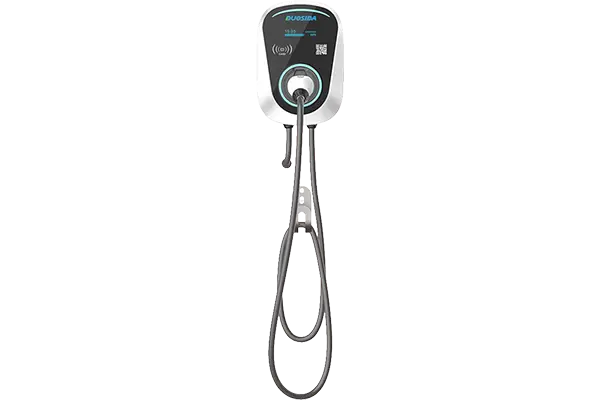
Start With the Charging Scenario
Before selecting an AC EV charging station, define where the equipment will actually be used.
This sounds obvious, but the same vehicle can have completely different charging requirements depending on its daily operating pattern.
A passenger EV parked at an office may remain connected for several hours during the working day. A hotel vehicle may be parked overnight. A commercial fleet may need multiple vehicles to charge during a defined shift. A residential installation may prioritize compact design and straightforward operation.
These scenarios do not necessarily require the same charging station configuration.
For this reason, a practical selection process should begin with four questions:
How long will the vehicle normally remain parked?
How frequently will the charging station be used?
What electrical capacity is available at the installation site?
Does the operator need user identification or charging management?
Once these questions are answered, the appropriate charging power and functionality become easier to determine.
7kW, 11kW or 22kW: Match Power to the Site
Charging power is one of the first specifications buyers usually compare, but higher power is not automatically necessary.
For locations where vehicles remain parked for several hours, moderate AC charging can provide a practical balance between charging time and site electrical requirements.
A lower-power configuration can be suitable for overnight residential charging or locations where the vehicle has a long parking period. An 11kW configuration may be relevant to workplace, residential, hospitality, or commercial installations where three-phase electrical supply is available.
For locations with shorter parking periods or higher daily vehicle utilization, a 22kW AC charging station may be considered when the vehicle and electrical infrastructure support it.
The important point is that the charging station should be selected according to the complete electrical system. The station's rated output, vehicle's onboard AC charger, incoming power supply, cable configuration, and site protection equipment all need to work together.
Residential Charging: Keep the System Practical
For residential applications, the charging pattern is usually predictable.
A vehicle may arrive home in the evening and remain parked until the following morning. In this situation, the charging station does not need to be selected solely around the shortest possible charging time.
Instead, homeowners and residential project developers may focus on:
Available electrical capacity
Installation location
Cable routing
Weather protection
Charging connector compatibility
Ease of daily operation
Basic safety and protection functions
A compact AC charging station can be integrated into a garage, driveway, private parking space, or residential development.
The key is to match the charging equipment with the actual electrical capacity of the property instead of installing a higher-rated station without considering the upstream power system.
Workplace Charging Requires Different Planning
Workplace charging introduces a different usage pattern.
Employees may park their vehicles for several hours, which provides a relatively long charging window. In this environment, charging infrastructure may need to serve multiple users rather than a single vehicle.
The project team therefore needs to think beyond the individual charging station.
For example, the installation may need:
Multiple charging points
User identification
Charging status indication
Load management
Centralized operation
Easy maintenance
Future expansion capability
For workplace projects, the number of charging stations and available electrical capacity can be just as important as the rated power of each unit.
If ten vehicles are expected to use a parking area, the electrical and operational design should consider how many vehicles may charge simultaneously rather than simply multiplying the rated power by the number of stations.
Hotels and Commercial Properties: Charging as a Service
Hotels, shopping centers, restaurants, office buildings, and other commercial properties often have a different objective.
The charging station is not only an electrical device. It can become part of the property's customer service and parking infrastructure.
A hotel, for example, may want guests to charge while staying overnight. A shopping center may provide charging during a customer's visit. An office building may offer charging to employees or tenants.
For these projects, factors such as user authorization, charging status, connector management, outdoor installation, and equipment appearance can become important.
DUOSIDA's product portfolio includes Charging Station as well as Charging Socket, Charging Plug, Charging Mode 2, Charging Mode 3, and related charging products, allowing project teams to consider charging equipment together with the corresponding connection components.
Fleet Depots Need to Look at Daily Vehicle Operations
Fleet charging is another application where charging station selection should start from the operating schedule.
Consider a fleet in which vehicles return to the depot every evening. If most vehicles remain parked overnight, the charging window may be relatively long. If vehicles return at different times or need to leave again quickly, the charging strategy becomes more complicated.
Fleet operators should consider:
Number of vehicles
Daily mileage
Arrival and departure times
Battery capacity
Required state of charge before departure
Number of available charging points
Available site power
Charging management requirements
This information can help determine whether the project should prioritize more charging points, higher AC charging power, or a combination of both.
For commercial fleets, the objective is usually not to maximize the output of every individual charging station. The more useful question is whether the overall charging system can support the fleet's operating schedule.
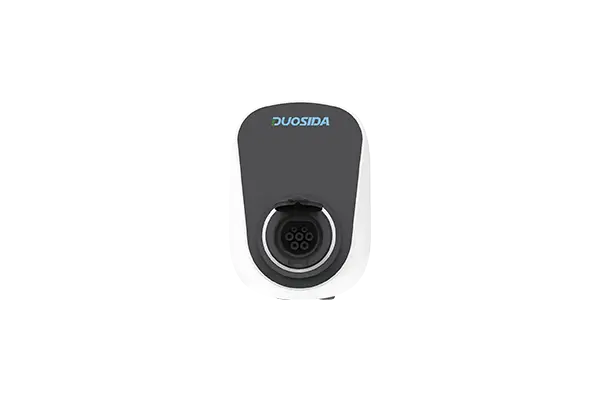
Outdoor Installations Need Environmental Considerations
An AC EV charging station installed outdoors faces conditions that may not exist inside a garage or parking structure.
Rain, dust, temperature changes, direct sunlight, and repeated physical contact can affect equipment over time. Installation location also influences cable management and connector accessibility.
Therefore, project specifications should include environmental requirements from the beginning.
The buyer should confirm:
Required IP protection
Operating temperature range
Mounting method
Cable management
Connector storage
Electrical protection
Installation clearance
The specific protection and environmental specifications should always be confirmed against the exact charging station model selected for the project.
This is particularly important for international buyers because installation environments can vary significantly between regions.
Wall-Mounted or Floor-Mounted?
The physical installation method can also influence the final product selection.
Wall-mounted equipment can make sense where a suitable structural wall is already available. It can reduce the amount of floor space occupied by the charging equipment and may work well in garages, parking structures, offices, and residential applications.
A floor-mounted or pedestal installation can be more practical in open parking areas where there is no suitable wall near the parking space.
The choice should also take cable routing into account. A charging station should be positioned so that drivers can connect the vehicle without creating unnecessary cable tension or obstructing pedestrian and vehicle movement.
For larger projects, the mounting structure should be considered together with civil works and electrical installation rather than treated as an independent decision.
Smart Functions Become More Relevant as the Project Grows
A single residential charging station may only require straightforward charging operation.
A commercial charging network, however, can benefit from additional control and management functions.
Depending on the model and configuration, smart charging stations may support functions such as RFID authorization, APP-based operation, communication connectivity, charging status monitoring, and fault management.
These functions become particularly useful when the operator needs to distinguish users, manage access, or monitor several charging points.
For a project developer, it is therefore useful to define the required management functions before selecting the charging station rather than adding them after installation.
Connector Compatibility Should Be Confirmed Early
The charging station and the vehicle-side interface need to be considered together.
DUOSIDA's wider product portfolio includes Charging Socket and Charging Plug products, with product categories covering European, Japanese, China National, and American standards.
This is relevant for international projects because EV charging standards and connector configurations can vary between markets.
For an overseas buyer, the technical inquiry should clearly specify:
Target market
Vehicle connector standard
AC voltage
Phase configuration
Required charging current
Cable length
Plug or socket configuration
Installation environment
Communication requirements
Providing these details early helps the manufacturer identify a suitable configuration and reduces the possibility of selecting a station that does not match the vehicle or site infrastructure.
Think About the Complete Charging Ecosystem
An EV charging station does not operate in isolation.
The complete installation may include the charging station, charging plug or socket, vehicle interface, electrical protection devices, distribution equipment, communication system, mounting structure, and cable management.
This is one reason it can be useful to work with a supplier that has experience across multiple EV charging product categories.
DUOSIDA's product range extends beyond Charging Station to Charging Socket, Charging Plug, Charging Mode 2, Charging Mode 3, HPC Products, NACS Products, Electrical Discharge Products, Vehicle Outlet Socket, Adapter, Electric Lock, Connector Holder, and High Voltage Connector Products.
For an OEM, system integrator, or charging infrastructure developer, this broader product ecosystem can simplify technical communication when several types of charging components are required within the same project.
A Practical Checklist for AC EV Charging Station Selection
Before sending an inquiry to an EV charging station manufacturer, buyers can prepare a basic specification sheet.
Application
Residential
Workplace
Hotel
Commercial property
Fleet depot
Public or destination charging
Electrical
Input voltage
Single-phase or three-phase supply
Required charging power
Available site capacity
Vehicle onboard charger rating
Installation
Indoor or outdoor
Wall-mounted or floor-mounted
Cable routing
Available installation space
Environmental conditions
Charging interface
Vehicle connector standard
Plug or socket
Cable length
Connector storage requirements
Management
Plug-and-charge
RFID
APP
Communication connectivity
User authorization
Charging status monitoring
This information gives the manufacturer a clearer picture of the project and allows the proposed charging station configuration to be evaluated against actual operating requirements.
Selecting the Right AC Charging Station for the Project
There is no single AC EV charging station configuration that fits every application.
A residential installation may prioritize simple operation and convenient overnight charging. A workplace may need several charging points for employees. A hotel or commercial property may need user management and outdoor installation capability. A fleet depot may place greater emphasis on charging schedules and overall site capacity.
The practical approach is to start with how vehicles will actually use the charging infrastructure, then work backward to determine power, connector type, installation method, environmental requirements, and management functions.
Zhangjiagang UCHEN New Energy Technology Co., Ltd. (Youcheng Technology, stock code: 873087) focuses on high-performance charging products for new energy vehicles. Through the DUOSIDA Charging Station product range, buyers can explore the company's charging station category and connect it with a broader product portfolio covering charging interfaces and other EV connection solutions.
For global EV manufacturers, charging infrastructure developers, distributors, and project integrators, this application-based approach provides a more practical starting point than choosing a charging station based on power rating alone.