
EV Charging Plug Types by Country: A Complete Guide to Global Charging Standards
 2026-07-23

Choosing the wrong charging plug can result in compatibility issues, certification challenges, and increased development costs. Whether you are designing an electric passenger car, a commercial vehicle, or charging infrastructure, selecting the correct charging plug should be one of the first considerations during product development.
As a company specializing in high-performance charging products for new energy vehicles, DUOSIDA develops and manufactures EV charging plugs, charging sockets, vehicle inlets, high-voltage connectors, and related charging components for customers worldwide. With products supporting multiple international charging standards, the company helps OEMs and charging equipment manufacturers deliver reliable charging solutions for different regional markets.
Why EV Charging Plug Standards Differ
Unlike fuel vehicles, electric vehicles rely on standardized electrical interfaces to ensure safe communication between the vehicle and charging equipment. However, because different countries developed their EV industries independently, several charging standards emerged.
Each standard reflects regional electrical infrastructure, regulatory requirements, automotive industry preferences, and charging technology development.
Today, the most widely used charging plug standards include:
· Type 1
· Type 2
· CCS1
· CCS2
· GB/T
· CHAdeMO
· ChaoJi
Understanding these standards allows manufacturers to develop products that meet local regulations while supporting future market expansion.
North America: Type 1 and CCS1 Charging Plugs
North America primarily uses the SAE J1772 standard for AC charging, commonly known as the Type 1 charging plug.
Type 1 plugs are widely installed on passenger EVs sold in the United States and Canada. They support single-phase AC charging and are commonly found in residential and workplace charging applications.
As demand for faster charging has increased, CCS1 has become the dominant DC fast charging solution across North America.
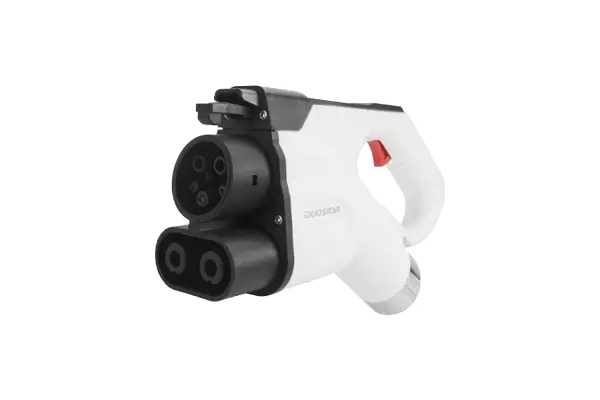
CCS1 combines the existing Type 1 interface with two additional DC power contacts, allowing vehicles to support both conventional AC charging and high-power DC charging using a single vehicle inlet.
Typical applications include:
· Passenger electric vehicles
· Commercial EV fleets
· Public fast charging stations
· Highway charging infrastructure
For manufacturers targeting North America, CCS1 compatibility has become increasingly important.
Europe: Type 2 and CCS2 Charging Plugs
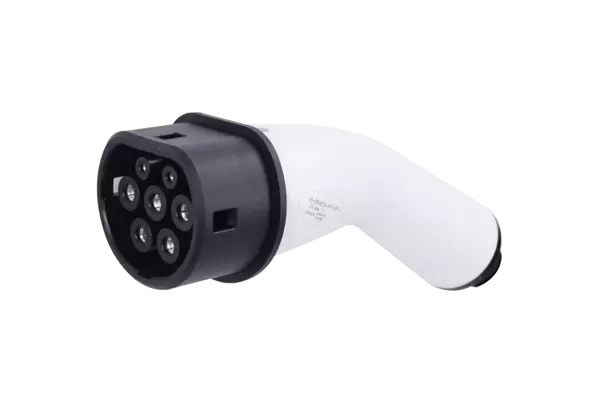
Europe standardized on the IEC 62196 Type 2 connector, making it the most common AC charging plug throughout the European Union.
Compared with Type 1, Type 2 supports both single-phase and three-phase charging, making it suitable for Europe's electrical grid.
Most European public charging stations now use CCS2 for DC fast charging. Because CCS2 builds upon the Type 2 interface, vehicle manufacturers can integrate both AC and DC charging into one charging system.
For European projects, businesses often require reliable Type 2 charging plug solutions that comply with international standards. DUOSIDA offers a range of Type 2 EV charging plugs designed for passenger vehicles, charging stations, and OEM applications.
China: GB/T Charging Plug Standard
China has developed its own national charging standard known as GB/T.
Unlike European and North American systems, GB/T uses a unique connector design for both AC and DC charging.
China has built one of the world's largest EV charging infrastructures, making GB/T one of the most widely deployed charging standards globally.
GB/T charging plugs are commonly used in:
· Passenger EVs
· Electric buses
· Logistics vehicles
· Municipal fleets
· Public charging stations
Because of China's growing influence in the global EV supply chain, many international manufacturers also produce GB/T-compatible products.
DUOSIDA manufactures multiple GB/T charging plug solutions that support different current ratings and application requirements for vehicle manufacturers and charging equipment suppliers.
Japan: CHAdeMO Charging Plug
Japan pioneered DC fast charging through the CHAdeMO standard.
CHAdeMO charging plugs remain widely installed throughout Japan and are also available in selected international markets where Japanese vehicle brands have a strong presence.
One of the advantages of CHAdeMO is its mature charging ecosystem developed over many years.
Although many new global vehicle platforms now favor CCS systems, CHAdeMO continues to serve existing vehicle fleets and charging infrastructure.
Manufacturers supplying Japanese markets should carefully evaluate compatibility requirements before selecting charging components.
Next-Generation Charging: ChaoJi
As charging technology advances, higher charging currents and shorter charging times are becoming industry priorities.
The ChaoJi charging standard was developed to address future high-power charging requirements.
Compared with previous charging interfaces, ChaoJi offers:
· Higher current capacity
· Improved safety
· Better thermal management
· Smaller connector size
· Enhanced long-term scalability
For companies preparing next-generation EV platforms, customizable ChaoJi charging plug solutions provide flexibility for future charging infrastructure.
CCS Charging Systems Continue to Expand
Combined Charging System (CCS) has become one of the fastest-growing charging standards worldwide.
There are two major versions:
· CCS1 for North America
· CCS2 for Europe and many international markets
The popularity of CCS continues to increase because it simplifies vehicle design while supporting both AC and DC charging.
Manufacturers planning global vehicle platforms often integrate CCS charging solutions for improved international compatibility.
For high-power charging projects, businesses can also explore CCS charging plug products suitable for commercial charging infrastructure and passenger vehicle applications.
Factors to Consider When Selecting an EV Charging Plug
Selecting an EV charging plug involves more than choosing a regional standard.
Target Market
The first question should always be where the vehicle or charging equipment will be sold.
Different countries require different charging interfaces, and local regulations may not permit alternative connector types.
Charging Speed
Charging power requirements vary depending on vehicle type.
Passenger vehicles may primarily use AC charging, while buses, trucks, and commercial fleets often require high-power DC charging.
Charging plug selection should match the expected charging performance.
Vehicle Architecture
Battery voltage, onboard charger design, communication protocols, and electrical protection systems all influence charging plug selection.
Manufacturers should evaluate compatibility early during vehicle development.
Product Reliability
Charging plugs experience thousands of connection cycles during their service life.
A quality charging plug should provide:
· Stable electrical performance
· Excellent insulation
· Strong mechanical durability
· Weather resistance
· Reliable locking mechanisms
These factors directly influence long-term charging safety.
Supplier Experience
Choosing an experienced manufacturer reduces engineering risks and shortens product development cycles.
An established supplier can also provide technical support for certification, customization, and global market compliance.
Why Work with DUOSIDA?
As global EV adoption accelerates, manufacturers increasingly need charging partners capable of supporting multiple international standards.
DUOSIDA focuses on high-performance charging products for new energy vehicles and continuously develops solutions covering AC charging, DC fast charging, vehicle connectors, charging plugs, charging sockets, high-voltage connectors, and customized charging assemblies.
Its product portfolio supports mainstream international charging standards while meeting the quality expectations of automotive OEMs, charging equipment manufacturers, and infrastructure developers.
By combining manufacturing capability with ongoing product innovation, DUOSIDA helps customers build charging systems suitable for global electric mobility markets.
Conclusion
There is no universal EV charging plug that fits every market.
North America relies on Type 1 and CCS1, Europe primarily uses Type 2 and CCS2, China follows the GB/T standard, Japan continues supporting CHAdeMO, and emerging technologies like ChaoJi are preparing the industry for future high-power charging.
Understanding these regional differences helps manufacturers reduce compatibility issues, simplify product development, and improve market competitiveness.
Whether developing passenger vehicles, commercial EVs, or charging infrastructure, selecting the appropriate charging plug is a strategic decision that directly affects long-term product success. Working with an experienced manufacturer such as DUOSIDA can help businesses navigate global charging standards while building reliable and future-ready EV charging solutions.