
Type 2 Vehicle Inlet vs. Type 2 Charging Connector: What's the Difference?
 2026-10-29

When discussing electric vehicle charging components, the terms vehicle inlet and charging connector are sometimes used interchangeably. However, they refer to different parts of the charging connection. Understanding the distinction is important for EV manufacturers, charging equipment developers, component buyers, and engineers working on vehicle electrical systems.
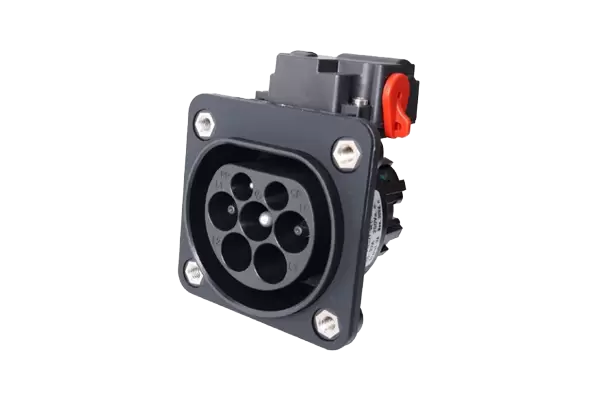
A Type 2 vehicle inlet is installed on the electric vehicle, while a Type 2 charging connector is the plug that connects to the inlet. Although the two components share a compatible interface, their installation locations, physical configurations, and roles in the charging system are different.
For businesses sourcing Type 2 AC charging components, recognizing these differences helps prevent purchasing errors and makes technical communication with suppliers more efficient. This article explains how the two components work together, what to consider when specifying each one, and how to identify suitable products for different EV charging projects.
1. The Basic Difference: Which Side of the Connection?
The simplest way to distinguish a Type 2 vehicle inlet from a Type 2 charging connector is to look at where each component is installed.
The Type 2 vehicle inlet belongs to the vehicle. It is mounted in the vehicle's charging-port area and provides the interface for connecting an external charging cable. Its installation involves the vehicle body, mounting structure, electrical connections, and the vehicle's charging system.
The Type 2 charging connector belongs to the charging cable or charging equipment. It is the plug that the user inserts into the vehicle inlet. Depending on the charging equipment design, the connector may be attached to a cable connected to a charging station or incorporated into a suitable charging cable assembly.
During AC charging, the connector and inlet form the physical connection between the charging equipment and the vehicle. The vehicle's onboard charger then converts the incoming AC electricity into DC power suitable for charging the battery.
The distinction is straightforward, but it matters in procurement. A vehicle manufacturer developing a new charging-port assembly needs the vehicle-side inlet, whereas a charging cable manufacturer may need the connector and its associated cable components.
2. How the Two Components Work Together
A Type 2 AC charging connection involves several components, each with a specific role.
Consider a typical AC charging session at home, at a workplace, or at a public charging location.
The vehicle is parked within reach of the charging equipment.
The driver takes the charging cable or connector supplied with the charging equipment.
The Type 2 connector is inserted into the vehicle's Type 2 inlet.
The charging system performs the required connection and control checks.
Once the necessary conditions are satisfied, AC charging begins.
The vehicle's onboard charger converts the AC input into DC power for the battery.
The inlet and connector must have compatible interfaces, but physical compatibility alone does not establish that every electrical configuration is suitable. The vehicle, charging cable, charging equipment, and relevant control functions must all meet the requirements of the intended charging application.
For example, a connector with a higher rated current cannot automatically increase the charging capability of a vehicle designed for a lower current. The complete charging system determines the usable charging rate.
For further background on the distinction between vehicle-side and charging-equipment components, see the New Zealand Transport Agency's guidance on charging-point connectors and socket outlets.
3. Comparing Their Main Functions
Although the two components work together, their responsibilities within the charging system differ.
| Comparison | Type 2 Vehicle Inlet | Type 2 Charging Connector |
|---|---|---|
| Installation location | Mounted on the vehicle | Attached to the charging cable or equipment |
| Main purpose | Provides the vehicle-side charging interface | Establishes the connection with the vehicle inlet |
| Main design considerations | Mounting dimensions, vehicle wiring, installation space, and environmental exposure | Grip and handling, cable connection, electrical contacts, and cable durability |
| Integration requirements | Vehicle body design and electrical architecture | Charging cable assembly and charging equipment design |
| Typical purchasing role | EV manufacturers and vehicle component integrators | Charging cable manufacturers and charging equipment suppliers |
This comparison also explains why product terminology matters when searching for components online.
A search for "Type 2 AC Vehicle Inlet" should lead to vehicle-side products, while "Type 2 AC Vehicle Connector" may refer to a cable-mounted plug. Buyers should check the product description and installation purpose rather than relying on the word "Type 2" alone.
4. What EV Manufacturers Should Consider When Selecting a Type 2 Inlet
For vehicle manufacturers, selecting the correct inlet involves more than matching the connector interface. The component must fit the vehicle's electrical requirements and physical design.
Current rating and charging configuration
The inlet's rated current should match the vehicle's intended AC charging configuration. This requires coordination with the onboard charger, wiring, protective devices, and other relevant electrical components.
DUOSIDA offers Type 2 AC vehicle inlet products with different listed current options, including:
These options provide starting points for projects with different charging requirements. The final selection should be based on the specifications of the exact model and the vehicle's electrical design.
Mounting and packaging
The inlet must fit the designated charging-port location. Engineers should check mounting dimensions, panel openings, rear clearance, and access for electrical connections.
The installation also needs enough room for cable routing and assembly. Checking these details before finalizing the vehicle body design can reduce the need for later modifications.
Environmental requirements
The inlet is installed in an area that may be exposed to rain, dust, road contamination, and temperature changes. Buyers should review the product's declared protection rating and installation conditions, along with any sealing or protective-cover requirements.
The complete installed assembly must meet the vehicle project's environmental requirements; a component rating should not be treated as proof that every installation will provide the same level of protection.
Documentation and verification
Before approving a component, request the relevant dimensional drawings, electrical specifications, model identification, and available test documentation. Confirm that the proposed product meets the applicable requirements for the target vehicle and market.
These steps help ensure that the selected inlet is suitable for integration rather than simply compatible in appearance.
5. What Charging Connector Buyers Need to Check
Charging cable and equipment manufacturers face a different set of design priorities when selecting a Type 2 connector.
The first consideration is compatibility with the intended vehicle inlet and applicable charging-interface requirements. Buyers should then evaluate the connector's current rating, voltage rating, cable specification, contact design, and declared environmental performance.
Cable configuration is particularly important. The cable must be appropriate for the intended current and charging application, and the connector's cable termination must match the specified assembly method.
Mechanical handling also matters. The connector should be practical for repeated insertion and removal, while its construction should suit the operating environment. Where the equipment is intended for outdoor use, the relevant protection rating and conditions should be verified.
DUOSIDA lists a Type 2 AC Vehicle Connector with 16A, 20A, and 32A options. This is a connector-side product for charging equipment, distinct from the vehicle inlet products discussed above.
When comparing products, buyers should use the specifications for the exact model and cable configuration. Similar product names do not necessarily mean that all variants have identical electrical or environmental ratings.
6. Common Purchasing Mistakes to Avoid
Confusing an inlet with a connector can create avoidable delays during component sourcing. Several checks can help prevent these problems.
Ordering the wrong component. Confirm whether the project requires a vehicle-mounted inlet or a cable-mounted connector before requesting a quotation or sample.
Comparing only the rated current. Two products with the same current rating may have different dimensions, cable configurations, or installation requirements. Compare the full technical documentation.
Assuming every Type 2 product has identical specifications. Product variants may differ in current rating, protection level, materials, or construction. Verify each model separately.
Overlooking the system-level requirements. A compatible inlet and connector do not guarantee that the complete vehicle and charging equipment are suitable for every operating condition. Check the vehicle's onboard charger and the charging equipment specifications as well.
Failing to confirm the exact model. Use the product code and latest technical documentation when communicating with the supplier, particularly when several variants are available.
A clear technical inquiry should identify the component type, target current rating, intended application, installation requirements, and applicable standards. This makes it easier for the supplier to recommend the appropriate product and provide relevant documentation.
7. Exploring Type 2 Charging Products from DUOSIDA
Zhangjiagang UCHEN New Energy Technology Co., Ltd., referred to as Youcheng Technology (stock code: 873087), focuses on the development and market promotion of high-performance charging products for new energy vehicles. Its DUOSIDA website presents a range of EV charging components for different applications.
For vehicle manufacturers, the DUOSIDA Type 2 AC Vehicle Inlet range is a useful starting point when evaluating vehicle-side charging interfaces. The alternative 16A/32A Type 2 AC Vehicle Inlet provides another product configuration to review against project requirements.
For charging equipment and cable developers, the Type 2 AC Vehicle Connector product represents the connector side of the charging connection.
Buyers can explore these products and other charging components through the DUOSIDA official website. When contacting the company, specifying whether the requirement is for a vehicle inlet or a charging connector helps establish the correct starting point for technical discussions.
Conclusion
A Type 2 vehicle inlet and a Type 2 charging connector share a compatible interface, but they serve different purposes. The inlet is installed on the vehicle, while the connector is attached to the charging cable or equipment and plugs into the inlet.
For EV manufacturers, the priority is to choose an inlet that matches the vehicle's electrical architecture, mounting arrangement, and environmental requirements. For charging cable and equipment manufacturers, the focus is on connector compatibility, cable configuration, handling, and electrical performance.
Understanding this distinction at the beginning of a project helps buyers identify the correct component, communicate requirements more clearly, and avoid unnecessary sourcing and integration problems.