
Sourcing NACS DC Charging Plugs from China: A Buyer's Checklist
 2026-11-16

As the North American electric vehicle charging market continues to expand, demand for NACS-compatible charging components is increasing among charging station manufacturers, EV infrastructure developers, and electrical equipment suppliers. For international buyers, sourcing NACS DC charging plugs from China can provide access to a broad range of charging products and manufacturing resources.
However, selecting a supplier involves more than comparing product specifications. Buyers need to verify charging standard compatibility, electrical performance, mechanical durability, cable configuration, and quality control before placing an order. A suitable supplier should also be able to provide clear technical information and support product evaluation during the purchasing process.
This guide outlines the main factors international buyers should consider when sourcing NACS DC charging plugs from Chinese manufacturers, using DUOSIDA products from Zhangjiagang UCHEN New Energy Technology Co., Ltd. as a practical reference.
1. Confirm Compliance with the Required NACS Standard
The first step is to confirm whether the charging plug meets the standard required for the target market and charging equipment.
For North American applications, buyers should pay attention to the relevant NACS requirements, including SAE J3400 and applicable technical specifications. Compatibility should not be judged by appearance alone. The connector's physical interface, electrical characteristics, and intended application all need to be checked.
When communicating with a supplier, ask for:
Applicable charging standards and specifications
Product drawings and interface dimensions
Rated voltage and current
Electrical connection requirements
Available technical documentation
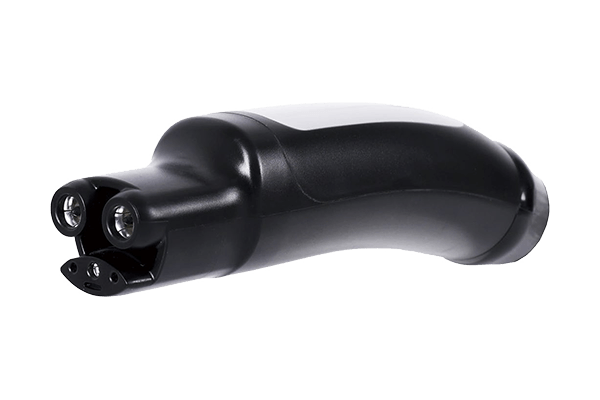
The DUOSIDA NACS DC Charging Plug is listed as meeting North American Charging Standard TS-0023666 and SAE J3400 regulations and requirements. This provides a starting point for buyers evaluating NACS-compatible components for charging station applications.
Before procurement, the exact product configuration and its suitability for the intended equipment should still be confirmed with the supplier.
2. Compare Current Ratings and Electrical Specifications
Rated current is one of the most important factors when selecting a DC charging plug. It determines the current-carrying capability specified for the product and must match the requirements of the charging system.
For example, DUOSIDA offers two NACS DC charging plug configurations:
| Product Model | Rated Current | Standard Cable Specification |
|---|---|---|
| V2-DSN-EV-250P | 250A | 4×2AWG+1×14AWG+(2×18AWG)(S)+4×18AWG |
| V2-DSN-EV-300P | 300A | 4×1AWG+1×14AWG+(2×18AWG)(S)+4×18AWG |
Both models are listed with an operating voltage of 1000V. The product page also specifies a maximum contact resistance of 0.5mΩ and a terminal temperature rise below 50K.
These parameters help buyers compare the two configurations and determine which option is more appropriate for their charging equipment.
It is important to remember that the actual charging power depends on the vehicle, charging station, battery system, cable assembly, and operating conditions. A plug's rated current should not be treated as a guaranteed charging output.
3. Check the Cable Configuration Before Ordering
Cable configuration is often overlooked during the initial sourcing process. However, it directly affects product integration, installation, and compatibility with charging equipment.
A complete NACS DC charging plug assembly may involve power conductors, signal wires, shielding, and other wiring requirements. Buyers should verify the cable specification rather than assuming that all products with the same connector interface use identical cable assemblies.
When reviewing a supplier's quotation or technical proposal, check:
Conductor specifications and wire sizes
Number of power and signal conductors
Cable length and available configurations
Shielding requirements
Cable flexibility and routing space
Compatibility with the charging station design
DUOSIDA provides standard cable specifications for both its 250A and 300A NACS DC charging plug models. This makes it easier for equipment developers to begin evaluating the cable arrangement during the design stage.
If a project requires a different cable length or configuration, buyers should discuss the technical requirements with the supplier before confirming the order. Any customized arrangement should be reviewed for electrical and mechanical suitability.
4. Evaluate the Contact Materials and Electrical Safety
The conductive contact area plays a central role in power transmission. Material selection, surface treatment, and contact resistance can influence electrical performance during repeated charging operations.
The DUOSIDA NACS DC charging plug uses copper alloy contact sleeves with silver plating. Its published specifications include:
Insulation resistance greater than 100MΩ under DC 1000V for one minute
Withstand voltage of 3000V AC for one minute
Maximum contact resistance of 0.5mΩ
Terminal temperature rise below 50K
For buyers, these figures are useful when comparing products from different suppliers. However, specifications should be supported by relevant test documentation for the exact model being purchased.
A practical procurement process should include reviewing electrical test requirements, confirming inspection methods, and checking whether the supplier can provide the necessary technical records.
5. Review Mechanical Durability and Environmental Performance
Charging plugs used in public stations and commercial facilities are handled frequently. They may also be exposed to outdoor temperatures, accidental impact, and repeated connection cycles.
Mechanical durability should therefore be included in supplier evaluation.
The DUOSIDA product page lists the following performance characteristics:
| Item | Published Specification |
|---|---|
| Mechanical lifespan | More than 10,000 no-load insertion and withdrawal cycles |
| Coupled insertion force | Less than 90N |
| Impact resistance | 1-meter drop and 2-ton run-over test |
| Operating temperature | -30°C to +50°C |
| Internal protection rating | IP67 |
| Housing material | Thermoplastic, UL94 V-0 flame-retardant grade |
These specifications provide useful reference points for buyers evaluating product suitability.
The IP67 rating is specified for the internal part of the connector. Buyers should confirm the exact protection conditions and avoid assuming that the same rating automatically applies to every part of the complete charging assembly.
For projects involving outdoor charging stations, it is also important to consider installation conditions, cable management, storage, and routine maintenance.
6. Assess the Supplier's Manufacturing and Product Development Capabilities
A reliable sourcing decision should consider the supplier behind the product, not just the connector itself.
For international buyers, useful supplier evaluation points include:
Product range: Does the company offer different charging components and product configurations? A broader portfolio can make it easier to coordinate sourcing for related equipment.
Technical communication: Can the supplier explain product specifications, cable configurations, and compatibility requirements clearly?
Manufacturing experience: Does the company have relevant experience in developing and producing EV charging products?
Quality documentation: Can it provide product drawings, inspection records, and applicable test documentation?
Order support: Can the supplier communicate clearly about samples, technical confirmation, production arrangements, and delivery requirements?
Zhangjiagang UCHEN New Energy Technology Co., Ltd., also known as Youcheng Technology (stock code: 873087), is positioned as a first-class charging solution service provider in China. The company focuses on the development and market promotion of high-performance charging products for new energy vehicles.
Through its DUOSIDA brand, the company covers several EV charging product categories, including NACS products, HPC products, charging sockets and plugs, adapters, vehicle outlet sockets, charging stations, electric locks, and high-voltage connectors.
For buyers who need more than one type of charging component, this product range provides additional options for evaluating related sourcing requirements.
7. Request Samples and Complete Technical Validation
Before moving to mass production or a large purchasing order, buyers should arrange sample evaluation whenever possible.
A sample allows the engineering team to check whether the product matches the intended charging equipment and installation requirements.
A useful sample evaluation process may include:
Checking the connector's physical dimensions and interface compatibility.
Reviewing the cable specification and connection arrangement.
Confirming electrical parameters against the technical documentation.
Inspecting housing quality, contact surfaces, and assembly condition.
Evaluating insertion and withdrawal operation.
Conducting the required electrical and mechanical tests.
Recording any issues that need to be resolved before production approval.
For charging equipment manufacturers, sample testing is particularly important when integrating a new connector into an existing charger design. It helps identify potential compatibility issues before they affect a larger production batch.
Buyers should also agree with the supplier on the approved product model and technical specification. This helps ensure that subsequent orders follow the same confirmed requirements.
8. Clarify Communication and Order Requirements
Technical compatibility is only one part of a successful international purchasing process. Clear communication is equally important.
Before confirming an order, buyers should establish:
Exact product model and rated current
Applicable charging standard
Cable specification and length
Required technical documents
Sample approval procedure
Inspection requirements
Packaging and shipping arrangements
After-sales communication process
Providing these details in writing can reduce misunderstandings between the buyer and supplier, especially when a project involves multiple charging equipment models or different installation environments.
For customized requirements, it is better to confirm technical feasibility before finalizing the purchasing arrangement rather than relying on assumptions made during initial discussions.
9. Why Consider DUOSIDA for NACS DC Charging Plugs?
For overseas charging equipment manufacturers and EV infrastructure suppliers, DUOSIDA offers NACS DC charging plug options with different current ratings.
The V2-DSN-EV-250P and V2-DSN-EV-300P models provide two configurations for buyers to evaluate according to their charging system requirements. Their published specifications cover current rating, operating voltage, cable configuration, contact materials, mechanical performance, and electrical safety parameters.
Youcheng Technology's broader EV charging product portfolio also includes HPC connectors, charging sockets, charging plugs, adapters, and other charging-related components.
International buyers can review the DUOSIDA NACS DC Charging Plug product page for model specifications and use the official DUOSIDA website to explore additional product categories.
For a specific project, buyers should provide their required charging standard, rated current, cable configuration, and application details when contacting the supplier. This makes technical communication more efficient and helps both parties identify a suitable product configuration.
Conclusion
Sourcing NACS DC charging plugs from China requires a structured evaluation process. Buyers should verify standard compatibility, compare current ratings, check cable configurations, review electrical and mechanical specifications, and assess the supplier's technical and manufacturing capabilities.
The DUOSIDA V2-DSN-EV-250P and V2-DSN-EV-300P provide 250A and 300A product options for NACS DC charging applications. Their published specifications give equipment manufacturers and procurement teams a practical basis for initial evaluation.
By requesting technical documentation, testing samples, and confirming order details before mass production, international buyers can reduce sourcing risks and build more reliable supplier relationships for EV charging equipment projects.