
How to Choose a Two-Core High Voltage Connector for EV Applications
 2026-10-22

Electric vehicles rely on a network of high-voltage connections to transfer electrical power between batteries, power distribution units, motor controllers, and other electrical components. Selecting the right connector is therefore an important part of vehicle design. A connector must match the system's electrical requirements while fitting the available installation space and meeting the demands of its operating environment.
For engineers, OEMs, and component buyers, a two-core high voltage connector can be a suitable option when a system requires two electrical connection paths within a compact connector structure. However, choosing the right model involves more than checking the number of cores. Rated voltage, current, cable size, mounting method, shielding, and environmental protection all need to be considered.
Zhangjiagang UCHEN New Energy Technology Co., Ltd., known as Youcheng Technology (stock code: 873087), focuses on the development and market promotion of high-performance charging products for new energy vehicles. Through its DUOSIDA brand, the company offers EV charging products and high-voltage connection solutions for different application requirements.
1. Start With the Electrical Requirements of the Application
Before comparing connector models, define the electrical conditions of the system in which the connector will be installed.
The first factors to confirm are rated voltage, operating current, cable cross-section, and the expected electrical load. These parameters should be evaluated together rather than independently. A connector that meets the voltage requirement may not be suitable for the required current or cable configuration.
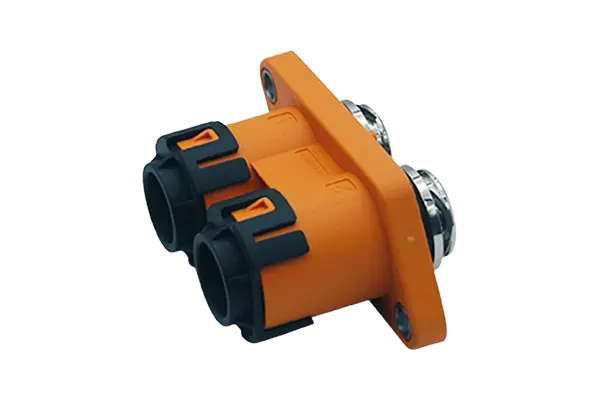
For example, the DUOSIDA Two-Core Throughhole Connector is designed for high-voltage connection applications, including EV battery boxes and motor driver systems. Its published specifications include a rated voltage of 1000V DC and a maximum rated current of 200A. The product supports shielded cables in the 25–50 mm² range.
These specifications provide a starting point for engineers evaluating the connector for a particular electrical system. The final selection should still account for the actual cable, operating conditions, thermal requirements, and installation design.
Buyers should also distinguish between a component's maximum rating and its suitable operating point in a real application. Current capacity can be affected by cable size, ambient temperature, conductor configuration, and heat dissipation. Confirming these details early helps prevent mismatches during system integration.
2. Match the Connector Structure to the Installation Space
Electrical performance is only one part of connector selection. The physical structure must also fit the equipment layout.
High-voltage connectors may be installed in battery enclosures, power distribution assemblies, motor-related systems, or other restricted spaces. The available mounting area, cable routing direction, access for assembly, and maintenance requirements can all affect which connector design is appropriate.
A through-hole connector may be worth evaluating when the design calls for a connection installed through a panel or enclosure wall. Before choosing this structure, engineers should check the mounting dimensions, panel thickness, sealing arrangement, cable exit direction, and accessibility of the connection point.
The DUOSIDA Two-Core Throughhole Connector is one option to review when the project requires a two-core connection and a through-hole installation arrangement.
For a new vehicle platform, it is useful to review the connector alongside the enclosure drawing rather than treating it as an isolated component. This allows the design team to identify potential interference with nearby components and confirm that the cable can be routed without excessive bending or mechanical strain.
3. Evaluate Protection and Shielding Requirements
Electric vehicles operate under changing environmental and electrical conditions. Moisture, dust, vibration, temperature variation, and electromagnetic interference may affect the performance of high-voltage connections.
Protection requirements should therefore be defined according to the connector's actual installation location. A connector installed inside a protected enclosure may face different conditions from one exposed to a more demanding environment.
The DUOSIDA Two-Core Throughhole Connector lists an IP67 protection rating and 360° shielding. These features are relevant when evaluating environmental protection and shielding requirements for an EV electrical system.
However, an IP rating should not be treated as a guarantee that every installation will provide the same protection. The completed assembly also depends on the mounting interface, seals, cable connection, and installation quality. Engineers should confirm the specified test conditions and the required protection level for the complete system.
Shielding should likewise be evaluated in the context of the vehicle's electrical architecture. The connector's shielding arrangement needs to work with the cable shield, enclosure design, and grounding strategy. A component specification alone cannot replace system-level electromagnetic compatibility evaluation.
4. Compare Different Two-Core Connector Options
Not every EV project requires the same connector structure. Depending on the application, engineers may need to compare through-hole designs with other plastic connector configurations.
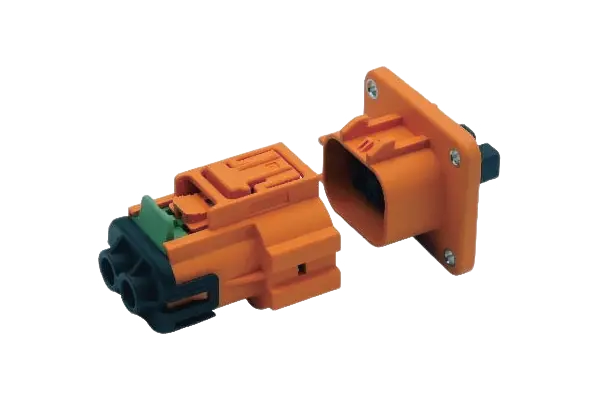
DUOSIDA offers several products in its high-voltage connector category, including the Two-Core 280 Plastic Connector and the Two-Core 630 Plastic Connector.
These products provide additional options for buyers evaluating two-core high-voltage connection solutions. Rather than selecting a model based on its name alone, the engineering team should compare the official specifications and drawings for each candidate.
A practical comparison should cover:
Rated voltage and current
Supported cable cross-section and cable type
Connector dimensions and mounting arrangement
Protection rating and sealing requirements
Shielding configuration
Locking method and mating interface
Operating temperature range
Applicable test reports and compliance requirements
The most suitable connector is the one that meets the project's electrical and mechanical requirements without creating unnecessary installation or maintenance difficulties. If two models appear similar, checking their detailed drawings and technical specifications is more reliable than assuming they are interchangeable.
5. Consider the Complete Connection System
A high-voltage connector works as part of a larger electrical assembly. Its performance depends on the quality of the cable termination, mating interface, mounting arrangement, and surrounding components.
For this reason, connector evaluation should include the complete connection process. Check whether the proposed cable is compatible with the terminal design and whether the specified crimping or fastening method can be implemented consistently during production.
The design team should also consider vibration, cable movement, strain relief, and the possibility of accidental damage during assembly or maintenance. These factors are especially important when a connector is installed in a confined space or connected to relatively heavy high-voltage cables.
For OEM projects, it is helpful to confirm assembly procedures and inspection requirements before moving into volume production. A connector that meets the initial electrical specification may still create manufacturing difficulties if installation access is poor or cable termination is difficult to control.
Technical documentation, installation drawings, and sample evaluation can help identify these issues before the design is finalized.
6. What Should Buyers Confirm With a Connector Supplier?
For overseas EV manufacturers and system integrators, effective supplier communication can make connector selection more efficient. Instead of requesting a quotation using only a general product name, prepare a clear technical requirement list.
At minimum, provide the intended application, rated voltage, expected operating current, cable specification, mounting dimensions, environmental conditions, and shielding requirements. If the project has specific compliance or validation requirements, include those as well.
It is also useful to share enclosure drawings, cable routing information, or photographs of the existing installation when available. This information gives the supplier a clearer understanding of the actual design constraints and helps determine whether a standard model is appropriate.
Youcheng Technology, operating under the DUOSIDA brand, focuses on high-performance EV charging products and related connection solutions. Buyers can explore the company's official website to review its broader product portfolio, including charging plugs, charging sockets, HPC products, NACS products, charging stations, and high-voltage connectors.
For projects involving multiple connection components, reviewing the wider portfolio can help engineering and procurement teams identify relevant products within the same product range. The final choice should nevertheless be based on verified specifications and the requirements of the individual application.
Conclusion
Choosing a two-core high voltage connector for an EV application requires a coordinated assessment of electrical performance, mounting structure, environmental protection, shielding, and cable compatibility. The correct connector is not necessarily the model with the highest rating, but the one that meets the project's requirements and integrates reliably into the complete electrical assembly.
DUOSIDA's Two-Core Throughhole Connector, Two-Core 280 Plastic Connector, and Two-Core 630 Plastic Connector offer different options for evaluation. By comparing their technical documentation and confirming the installation requirements with the supplier, OEMs and engineering teams can make a more informed selection for their EV systems.