
China EV Charging Plug Manufacturer for Global EV Markets
 2026-08-12

The global EV charging market is no longer built around one universal connector. As electric vehicle adoption expands across Europe, North America, Asia, and other regions, charging equipment manufacturers need different connector configurations for different vehicles, charging systems, and local market requirements.
For companies sourcing EV charging components, this creates a practical challenge: finding a supplier that can provide the right charging plug, maintain consistent quality, and support different market requirements without creating unnecessary supply-chain complexity.
This is where experienced Chinese EV charging manufacturers can play an important role.
Zhangjiagang UCHEN New Energy Technology Co., Ltd., also known as Youcheng Technology, focuses on the development and market promotion of high-performance charging products for new energy vehicles. Through the DUOSIDA product portfolio, the company provides charging plugs and other EV charging components for customers serving different international markets.
Global EV Markets Need More Than One Charging Plug
An EV charging plug is not simply a cable-end accessory. It is the physical interface through which electrical power and control signals are transferred between charging equipment and the vehicle.
The connector therefore needs to match the vehicle and charging system.
Different regions have developed different charging standards and connector configurations. For example, Type 2 is widely used in European charging applications, while Type 1 is associated with many North American and Japanese AC charging applications. CCS1 and CCS2 extend the charging interface for DC charging applications.
For an international EV charging equipment manufacturer, having access to several connector configurations can be important when developing products for multiple markets.
The current DUOSIDA Charging Plug product range includes CCS1, Type 1, Type 6, CCS2, and Type 2 products, with different electrical ratings and application configurations.
Why the Factory Behind the Product Matters
When purchasing charging plugs for an EV charging project, it is easy to focus on the connector specification and overlook the manufacturing process.
However, the factory has a direct influence on product consistency.
Charging plugs are used repeatedly throughout their service life. They may be exposed to mechanical insertion and removal, outdoor environments, temperature changes, and continuous electrical operation.
For B2B buyers, the important question is not only whether a sample works. The question is whether the manufacturer can produce thousands of units with consistent specifications.
A capable EV charging plug factory should have control over:
- Raw material selection
- Connector component production
- Assembly processes
- Electrical testing
- Mechanical inspection
- Finished-product inspection
- Packaging
- Batch management
- Production scheduling
This is particularly important for distributors and charging equipment manufacturers that need repeat orders.
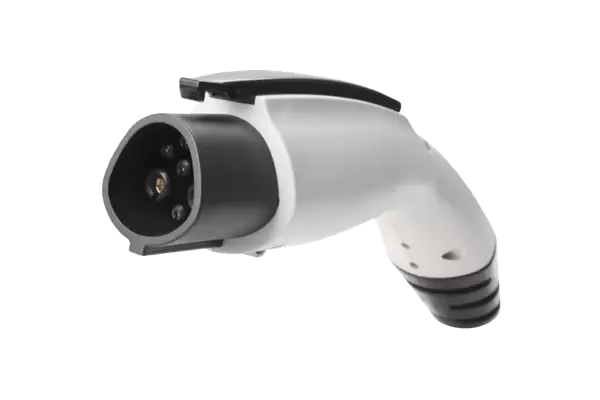
A Product Range Designed Around Different Charging Standards
One of the advantages of working with an experienced EV charging manufacturer is access to multiple product standards.
DUOSIDA currently categorizes its Charging Plug products according to European Standard, Japanese Standard, China National Standard, American Standard, Thai Standard, and Australian Standard.
This type of product structure is useful for B2B customers because market expansion often requires more than one connector.
A company selling charging equipment in Europe may primarily need Type 2 and CCS2 products. A customer targeting North America may require Type 1 or CCS1 solutions. Other projects may require products developed around regional charging requirements.
Instead of creating a separate supplier relationship for every connector type, buyers can work with a manufacturer that already operates across several EV charging categories.
Type 1 and Type 2 for Different Applications
Type 1 and Type 2 are two of the most recognizable AC charging connector configurations.
Type 1 products are commonly associated with North American and Japanese vehicle charging applications, while Type 2 is widely used in European charging infrastructure.
The important point for B2B buyers is that the connector should be selected according to the target vehicle and charging system.
DUOSIDA's current Charging Plug range includes Type 1 AC vehicle connectors with configurations such as 16A, 32A, 40A, and 50A. It also lists Type 2 AC vehicle connector products with 16A and 32A configurations.
This gives equipment manufacturers different options when developing AC charging products for specific applications.
CCS1 and CCS2 for DC Charging
For customers involved in DC charging equipment, CCS products are another major consideration.
CCS1 and CCS2 are based on different regional connector configurations. Choosing between them depends largely on the target market and compatible vehicle architecture.
The DUOSIDA Charging Plug category currently includes CCS1 vehicle connectors with 80A, 150A, and 200A configurations, as well as CCS2 vehicle connectors with 80A, 150A, and 200A ratings.
For B2B purchasing, current rating is only one part of the evaluation. Buyers should also confirm connector structure, vehicle compatibility, installation requirements, cable configuration, operating conditions, and the intended charging application.
A professional supplier should be able to provide the technical information required for this evaluation.
Electrical Ratings Should Match the Application
The correct charging plug cannot be selected based only on the connector name.
Electrical ratings also need to match the charging equipment.
For example, a connector designed for a lower-current AC application should not be treated as interchangeable with a higher-current DC connector simply because the external appearance is similar.
Before confirming an order, buyers should verify:
Rated current: The connector should be suitable for the intended charging current.
Voltage requirements: The electrical specification should match the charging system.
AC or DC application: AC and DC charging connectors have different designs and operating requirements.
Vehicle interface: The connector must match the vehicle-side charging inlet.
Operating environment: Temperature and other environmental conditions should be considered.
Cable requirements: Cable size and configuration should be appropriate for the intended application.
This technical review is especially important for OEM projects.
Manufacturing Consistency Is Critical for B2B Orders
A charging plug may pass initial sample testing but still create problems if mass-production consistency is poor.
For this reason, European, American, and Asian buyers should evaluate the manufacturer's production process before moving to large orders.
A reliable factory should have procedures for incoming inspection, production control, assembly inspection, electrical testing, and final inspection.
The goal is simple: the product delivered in the tenth production batch should remain consistent with the approved sample.
For distributors, this can reduce customer complaints and product replacement issues.
For EV charging equipment manufacturers, consistent components can also simplify assembly and quality management on their own production lines.
Why China Has Become an Important EV Charging Supply Base
China has developed a large EV supply chain covering charging connectors, charging stations, high-voltage components, charging cables, power electronics, and other new energy vehicle components.
For international buyers, this provides access to manufacturers with experience in both domestic and export-oriented EV applications.
However, sourcing from China works best when buyers distinguish between a trading company and a manufacturer with actual engineering and production capabilities.
A factory-oriented supplier can potentially provide better support for:
- Product customization
- OEM projects
- Technical drawings
- Sample development
- Production changes
- Quality control
- Repeat orders
- Packaging requirements
- Long-term supply planning
For companies developing their own EV charging products, these capabilities can be more valuable than simply finding a catalog product.
OEM Charging Plug Solutions for EV Equipment Manufacturers
Not every charging project can use an off-the-shelf connector.
An EV charger manufacturer may need a specific cable length, connector configuration, product label, packaging format, or mechanical arrangement.
OEM requirements can also arise when a distributor wants to sell charging products under its own brand.
In these situations, the supplier's engineering capability becomes important.
A professional manufacturer should first review the customer's application and determine whether the requested modification is technically feasible.
Depending on the project, customization may involve:
- Connector configuration
- Cable length
- Electrical specification
- Product labeling
- Packaging
- Color or appearance requirements
- Installation structure
- OEM branding
The actual customization scope should be confirmed through technical communication and sample evaluation.
More Than a Charging Plug Supplier
For customers developing complete EV charging systems, purchasing one connector is often only the beginning.
A charging system may also require charging sockets, Mode 2 and Mode 3 products, high-power charging components, NACS products, electrical discharge products, adapters, electric locks, charging stations, connector holders, and high-voltage connectors.
The DUOSIDA product portfolio covers multiple EV charging categories, allowing customers to evaluate related products from one specialized supplier.
This can be useful for B2B customers because connector compatibility is easier to manage when related products are developed around the same charging application.
It can also reduce communication between different suppliers during product development.
What Should Global Buyers Check Before Ordering?
For an international buyer, a practical supplier evaluation should begin with the application rather than the supplier's sales claims.
Ask the following questions:
- Which country is the charging product intended for?
- Which vehicle models will use the connector?
- Is the application AC or DC charging?
- What current and voltage are required?
- Which connector standard is required?
- What cable configuration is needed?
- What operating temperature range is expected?
- Does the supplier provide product drawings and specifications?
- Can the factory support samples before mass production?
- Can the supplier maintain consistent production for repeat orders?
These questions can quickly reveal whether a supplier is suitable for a long-term B2B relationship.
Why Consider DUOSIDA for Global EV Charging Projects?
Zhangjiagang UCHEN New Energy Technology Co., Ltd. is positioned as a first-class charging solution service provider in China and focuses on high-performance charging products for new energy vehicles.
Its DUOSIDA product portfolio covers a broad range of EV charging products rather than a single connector category. The product structure currently includes Charging Plug, Charging Socket, Charging Mode 2, Charging Mode 3, HPC Products, NACS Products, Electrical Discharge Products, Vehicle Outlet Socket, Adapter, Electric Lock, Charging Station, Connector Holder, and High Voltage Connector Products.
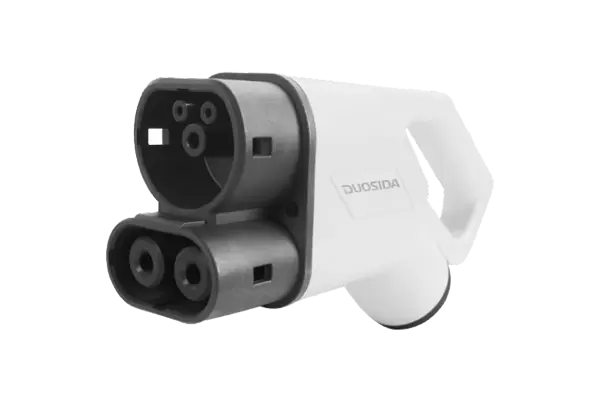
This broader manufacturing focus can be useful for customers that need several EV charging components for one project.
The DUOSIDA official website provides further information about the company, its product portfolio, and charging solutions.
Building a Stable Global Supply Chain
For international EV businesses, the ideal supplier is not necessarily the company with the largest catalog.
It is the supplier that can understand the application, provide the correct product, maintain consistent quality, communicate clearly with engineers, and support the project after the first order.
Charging plugs are relatively small compared with a complete charging station, but they are critical interfaces within the charging system. Poor connector selection can create compatibility issues, assembly difficulties, or unnecessary maintenance problems.
A manufacturer with experience across different charging standards can help buyers avoid some of these issues during the product development stage.
For distributors, this means having a reliable source for multiple connector configurations. For charging equipment manufacturers, it means having a supplier capable of supporting different product platforms. For OEM customers, it means having a factory that can discuss customization and production requirements directly.
Conclusion
The global EV market requires charging plugs that match different vehicle platforms, charging standards, and regional applications. Type 1, Type 2, CCS1, CCS2, and other connector configurations each have their own application requirements.
For B2B buyers, the decision should therefore go beyond finding a connector that looks suitable.
Electrical ratings, vehicle compatibility, charging type, mechanical design, operating conditions, quality control, customization capability, and long-term production stability should all be considered.
China has become an important manufacturing base for EV charging components, giving international customers access to a mature supply chain and specialized production capabilities.
For companies looking for a China EV charging plug manufacturer, DUOSIDA provides a broader product portfolio covering multiple charging standards and EV charging categories. With the support of Zhangjiagang UCHEN New Energy Technology Co., Ltd., customers can evaluate Charging Plug products together with other components required for complete EV charging applications.
For global EV charging markets, the right supplier is not simply a source of connectors. It should be a manufacturing partner capable of supporting product development, quality control, customization, and stable supply as the market continues to evolve.