
CHAdeMO Inlet: Key Specifications EV Manufacturers Should Evaluate
 2026-10-23

For electric vehicle manufacturers, selecting a charging inlet involves more than checking the connector shape or rated current. The inlet must match the vehicle's electrical architecture, charging requirements, installation space, cable arrangement, and safety validation process. A mismatch at the component selection stage can lead to redesign work, additional testing, or delays during vehicle integration.
The CHAdeMO Inlet (DC Input: 125A/150A/200A) is designed for projects evaluating different DC current ratings for electric vehicle charging interfaces. For engineering teams and purchasing departments, the key question is not simply which rating is highest, but which configuration fits the intended vehicle and charging system.
This article outlines the main specifications and integration factors EV manufacturers should review before selecting a CHAdeMO inlet, with practical guidance for product evaluation and supplier communication.
1. Understand the Role of a CHAdeMO Inlet
A CHAdeMO inlet is the vehicle-side interface used to connect a compatible DC charging connector to an electric vehicle. It forms part of the charging connection between the vehicle and the charging equipment.
CHAdeMO is a DC charging standard that also defines communication between the vehicle and the charger. Therefore, compatibility involves more than physical connection: the vehicle's charging system and the external charging equipment must support the relevant charging protocol and operating requirements. CHAdeMO's official explanation provides further background on the standard.
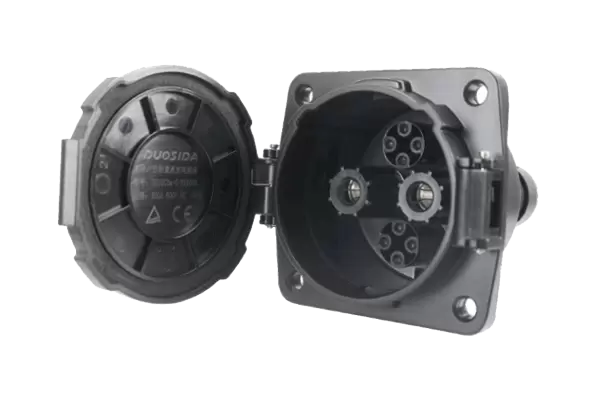
For vehicle manufacturers, the inlet should be evaluated as part of the complete charging system. Its selection affects the vehicle-side interface, mounting arrangement, electrical connections, and the validation work required before production.
Before comparing models, engineering teams should establish several basic requirements:
The charging standard and vehicle compatibility requirements.
The expected DC charging current and operating conditions.
The available installation space and mounting method.
The cable routing and connection arrangement.
The applicable electrical, mechanical, and environmental validation requirements.
Establishing these requirements early makes it easier to compare inlet options against the actual project specification.
2. Compare the 125A, 150A, and 200A Current Ratings
One of the first decisions is choosing the appropriate rated current. The CHAdeMO inlet offered in 125A, 150A, and 200A configurations provides three options for projects with different electrical requirements.
However, a higher current rating does not automatically make a component the better choice. The selected inlet must be compatible with the vehicle's charging design and the requirements of the complete electrical system.
125A: Evaluate for the Intended Charging Duty
A 125A configuration may be worth evaluating when the vehicle's design requirements fit this current class. Engineers should verify the expected charging profile, electrical architecture, and the inlet's approved operating conditions before confirming suitability.
The main consideration is whether the component meets the intended application without introducing unnecessary changes to the vehicle design.
150A: Match the Component to the System
For a project requiring a 150A-rated interface, the inlet should be assessed alongside the current-carrying components, cable arrangement, and thermal design.
The engineering team should confirm that the proposed configuration is suitable for the required charging duration and operating environment. Rated current alone cannot establish how a complete vehicle will perform under every charging condition.
200A: Verify the Requirements for Higher Current
A 200A inlet may be considered when the vehicle's charging architecture calls for this current rating. The selection process should include a review of the electrical design, thermal behavior, connection interfaces, and relevant validation requirements.
The vehicle's actual charging capability also depends on other system components and charging conditions. Selecting a 200A inlet does not, by itself, guarantee a particular charging power or charging time.
For all three ratings, the final choice should be based on verified product documentation and the vehicle manufacturer's design requirements.
3. Electrical Specifications to Check Before Selection
The rated current is an important starting point, but it is only one part of the technical evaluation. Before approving a CHAdeMO inlet for a vehicle project, manufacturers should request and review the complete specification sheet.
Rated voltage and current compatibility
Confirm the inlet's rated voltage and current against the vehicle's DC charging system. Both parameters must be suitable for the intended operating conditions. Do not assume that products with similar current ratings have identical voltage ratings.
Contact resistance and temperature rise
Electrical resistance at the contact interface can affect heat generation during current flow. Manufacturers should review the supplier's specified contact resistance, temperature-rise limits, test methods, and applicable operating conditions.
Insulation and dielectric performance
Insulation resistance and dielectric withstand requirements should be checked against the project's applicable standards and electrical safety requirements. The test voltage, duration, and acceptance criteria should be documented rather than inferred from a product's appearance or current rating.
Terminal and cable compatibility
Confirm the specified conductor size, terminal arrangement, and connection method. Cable selection should account for current, routing, ambient temperature, installation constraints, and the vehicle's thermal design.
Environmental protection
Ask for the documented protection rating and clarify the conditions under which it applies, including whether the inlet is mated or unmated. Environmental protection requirements should reflect the intended vehicle installation and exposure conditions.
These checks help engineering and procurement teams compare products on a consistent basis rather than relying on headline specifications alone.
4. Mechanical Installation and Vehicle Integration
Even when the electrical rating is suitable, an inlet must fit the vehicle's physical design. Mechanical integration should therefore be reviewed before the project enters a later validation or production stage.
Mounting dimensions and available space
Confirm the installation dimensions, mounting-hole locations, required clearances, and access needed for assembly and maintenance. The inlet must fit the designated vehicle panel or mounting structure without interfering with nearby components.
Charging-port accessibility
The inlet's location affects how users connect the charging plug. Engineers should consider access to the charging port, connector insertion and removal, and the surrounding bodywork.
Cable routing and strain management
The rear connection area must accommodate the cable arrangement specified for the product. Routing should avoid excessive bending, interference with moving parts, and unnecessary stress on the electrical connections.
Mechanical durability
Review the supplier's available mechanical endurance data and relevant test conditions. Where the vehicle project has additional vibration, impact, or durability requirements, these should be included in the component approval process.
It is useful to conduct an installation review using the supplier's dimensional drawings and the vehicle's packaging model before finalizing the inlet selection. Resolving fit and routing issues at this stage can reduce unnecessary prototype modifications.
5. Safety Validation and Documentation
A charging inlet should be approved through a documented evaluation process. For OEM projects, this process should involve the component supplier, vehicle engineering team, and quality personnel where appropriate.
Start by confirming the applicable charging-interface requirements and the product's declared compliance documentation. Do not assume that every CHAdeMO inlet has the same certification status or that one test report automatically covers every vehicle application.
The evaluation process should address the following areas:
Electrical performance under the specified operating conditions.
Insulation and dielectric testing.
Temperature rise and contact performance.
Mechanical durability and connection reliability.
Environmental protection under the declared conditions.
Dimensional conformity and installation requirements.
Traceability of the approved model and its technical documentation.
The test plan should define acceptance criteria and identify which tests are performed by the component supplier and which are required at the vehicle-system level.
Manufacturers should also confirm whether the delivered product configuration matches the configuration evaluated during validation. Changes to components, materials, cable arrangements, or installation conditions may require additional review.
A clear documentation process is particularly important when several inlet current ratings are being evaluated for different vehicle variants.
6. Questions to Ask a CHAdeMO Inlet Supplier
A supplier's ability to provide technical information is an important part of component selection. Before placing an order or approving a design, purchasing teams should request answers to practical questions.
Can the supplier provide complete specifications for each current rating?
The 125A, 150A, and 200A versions should be evaluated using their own confirmed technical data. Check whether the ratings correspond to clearly identified models and configurations.
Are dimensional drawings available?
Engineering teams need reliable drawings to check mounting dimensions, connector access, and cable routing. Request the latest revision before finalizing the vehicle layout.
What test reports and compliance documents are available?
Ask which standards the product is designed to meet, what testing has been completed, and whether supporting reports are available for review.
Can the supplier support technical clarification during integration?
Communication about installation requirements, model differences, and documentation can help the engineering team resolve questions before production approval.
How are model identification and product consistency managed?
For OEM purchasing, confirm how product versions are identified and how changes to the approved configuration are communicated. This is especially relevant when a project uses more than one current rating.
These questions help buyers assess whether a component is suitable not only for initial sampling, but also for a structured product-development and procurement process.
7. Exploring CHAdeMO and Other EV Charging Components from DUOSIDA
Zhangjiagang UCHEN New Energy Technology Co., Ltd., referred to as Youcheng Technology (stock code: 873087), is positioned as a charging solution service provider in China, focusing on the development and market promotion of high-performance charging products for new energy vehicles.
Through the DUOSIDA official website, vehicle manufacturers and charging-system buyers can explore the company's EV charging product range.
For projects specifically evaluating vehicle-side DC charging interfaces, the CHAdeMO Inlet with 125A, 150A, and 200A DC input options is a relevant starting point. Buyers can use the product page to identify the intended model and request the technical information needed for their application.
Manufacturers working on broader charging-system designs may also review other product categories available on the website, including vehicle charging sockets, high-power charging products, NACS products, and high-voltage connectors. Each category serves a different interface or application, so compatibility should be checked against the specific vehicle and charging-system requirements.
When contacting a supplier, it is useful to provide the target current rating, required charging standard, installation constraints, intended operating environment, and any project-specific compliance requirements. This gives both parties a clearer basis for discussing product suitability.
Conclusion
Selecting a CHAdeMO inlet requires a coordinated review of electrical ratings, mechanical integration, safety validation, and supplier documentation. The 125A, 150A, and 200A options provide different starting points, but the correct choice depends on the vehicle's actual charging architecture and verified component specifications.
For EV manufacturers, the most practical approach is to define system requirements first, compare each candidate inlet against those requirements, and confirm the relevant documentation before design approval. Reviewing the DUOSIDA CHAdeMO Inlet product page is a useful next step when evaluating these current-rating options for an EV project.