
What Are the Best Manufacturers of Complete Mode 3 Charging Cables for Residential and Workplace Charging
 2026-09-09

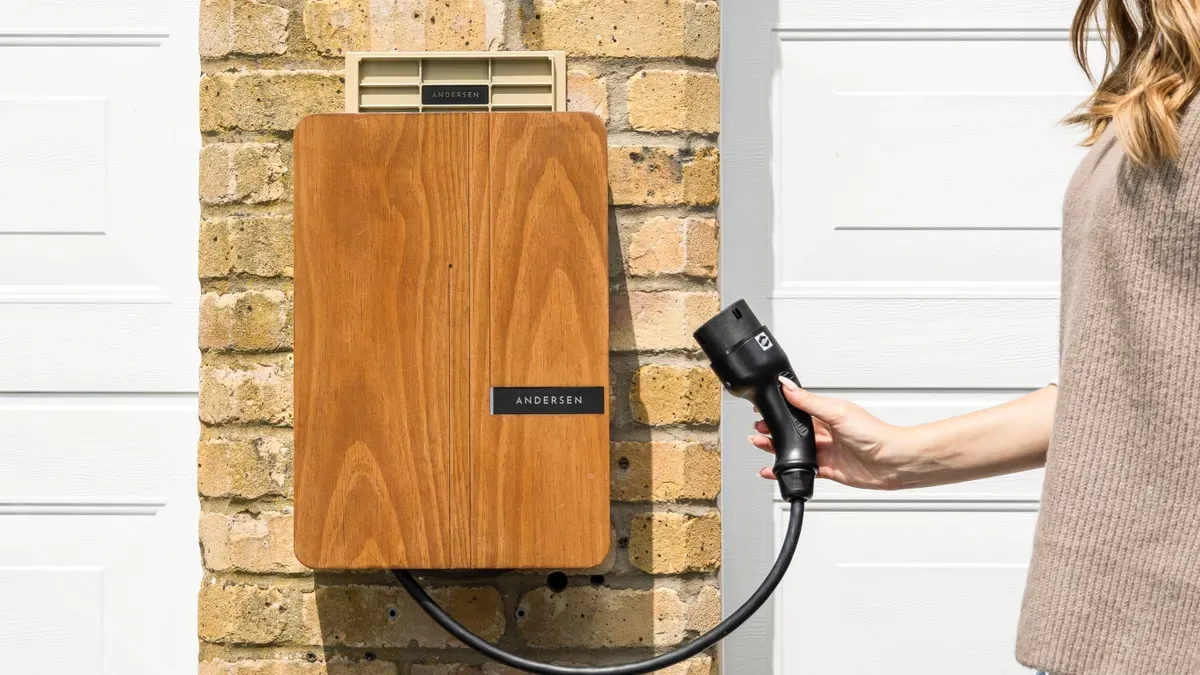
Choosing the right equipment for electric vehicle charging starts with finding trusted manufacturers. For home and workplace use, Phoenix Contact, ChargePoint, and Tesla lead the market with complete mode 3 charging cables. These certified kits meet IEC 62196 standards and have SAE J1772 connectors for North America or Type 2 for Europe.
Check that the connector works with your EV before purchasing. Cable length is usually 5 to 10 meters, and power ratings go up to 32A. For home use, a shorter, lighter cable often works fine. Workplace charging needs higher durability for fleets and optional smart features. Pick a complete cable with built-in IC-CPD protection for safe, reliable EV charging every session.
Key Takeaways
The connector type depends on your EV's charge port. North America uses J1772. Europe uses Type 2.
A complete charging cable must have IC-CPD protection. It keeps your EV safe from electrical problems.
Pick cable length based on how you park. A 5-meter cable fits home garages. Workplace stations require longer cables.
Trusted brands such as Phoenix Contact and ChargePoint offer certified cables. These products follow safety rules.
Workplace charging needs strong cables with useful features. Look for load balancing and RFID access.
Top Manufacturers of Mode 3 Charging Cables

Phoenix Contact, ChargePoint, and Tesla lead the market for complete Mode 3 charging cables. These brands offer certified kits with built-in IC-CPD protection for homes and workplaces. DUOSIDA, a Chinese maker with UL, TUV, and CE certifications, also builds high-quality charging products for both places. Each brand provides tethered cables attached to the EVSE or portable options you can unplug and take with you. All follow Mode 3 standards, which keeps your EV and the charging station talking safely.
Key Features for Home and Workplace EV Charging
When picking a cable for your property, check several specs. Cable length usually runs from 5 to 10 meters, with common choices at 5m, 7m, 7.5m, and 10m. Some brands offer up to 12m for flexible parking layouts. For home charging, a 5-meter cable often works when you park near the wallbox. Workplace stations do better with longer cables to fit different parking angles and vehicle sizes.
The connector type decides if the cable fits your EV. North American cars use the SAE J1772 connector, while European models use the Type 2 (Mennekes) connector. Passive adapters can help with cross-compatibility, but always check the connection before buying. The J1772 standard only supports single-phase charging. Type 2 connectors handle three-phase charging with higher voltage and current limits, which suits commercial setups.
Power ratings depend on your electrical system. Workplace areas often use 16A or 32A cables in single-phase or three-phase setups. The cable size changes with the rating: single-phase 16A cables use 3×2.5+2×0.5 mm², while 32A versions need 3×6+2×0.5 mm². Three-phase cables require five conductors, with 16A using 5×2.5+2×0.5 mm² and 32A using 5×6+2×0.5 mm². These specs keep current flowing safely without overheating.
Workplace charging needs tougher gear than home use. Frequent plugging and unplugging wears down connectors over time. Look for reinforced cable jackets and strain relief at connection points. Smart features like load balancing and RFID access control add value for commercial sites, letting you run many charging stations smoothly.
Choosing the Right Cable for Charging Needs
Match your cable specs to your current EVSE and driving habits. Start with connector compatibility, making sure the plug fits your vehicle's inlet. Next, figure out your power needs. A three-phase 22 kW setup charges faster for workplace use. A single-phase 7.4 kW setup gives a cheaper option for homes.
Pick cable length based on your parking setup. A 5 to 10 meter length fits flexible parking spots without extra slack. For outdoor use, choose an IP65-rated cable to resist rain and dust. This protection stops moisture from getting in and causing safety issues.
A certified, complete cable removes compatibility problems. Check that your product includes the IC-CPD device, which guards against overcurrent, overvoltage, and residual current. This built-in safety feature sets a complete charging cable apart from a passive extension cord. Without it, you could harm your vehicle's battery or start a fire.
Think about your daily charging routine. If you charge overnight at home, a basic cable with the right length and connector works fine. For workplace charging serving many employees, invest in stronger cables with reinforced connectors and smart features. DUOSIDA offers good options here, mixing certification compliance with cost savings for business use.
Always confirm your cable meets the IEC 62196 standard for your region. This certification ensures it works with your EVSE and your EV. Check the amperage rating against your circuit breaker capacity to avoid tripping or electrical problems.
Tesla – Portable and Wall-Connected Solutions
Tesla gives you two main ways to charge your EV. The Mobile Connector is for home users who want flexibility. The Wall Connector offers strong performance for workplace settings. Both options carry Tesla's trusted name for reliability and work smoothly with Tesla cars.
Tesla Mobile Connector for Home Charging
The Tesla Mobile Connector comes with an 18-foot cable. This gives you enough reach from your wall outlet to your car's charge port. This portable unit fits easily in your trunk. You can charge at home, at a friend's house, or at a vacation rental. Just plug the adapter into a regular household outlet, and the connector does the rest.
This portable option works well for overnight charging. You plug in when you get home, and the car charges steadily through the night. The 18-foot length fits most garage layouts without needing to park your car in a precise spot. For apartment dwellers or homeowners without dedicated parking, this mobility is very useful. You can carry your charging ability wherever you go, easing range anxiety on road trips or visits to family.
Tesla Wall Connector for Workplace Charging
The Tesla Wall Connector provides a maximum output of 11.5 kW. This makes it a strong choice for workplace installations. This Level 2 charger powers up vehicle batteries much faster than standard household outlets. It cuts downtime for employees who need their cars ready for afternoon meetings or long commutes home.
Workplace charging needs coordination across many vehicles. The Wall Connector works with the Tesla app for scheduling and power sharing between multiple units. This feature lets you manage charging sessions from afar and ensure fair access across your employee fleet.
The Tesla Wall Connector works with the Tesla app for scheduling and power sharing between multiple units. This confirms that load balancing is an easy, user-managed feature.
Group Power Management supports up to six Gen 3 Wall Connectors sharing available power wirelessly. This works well for multi-unit commercial setups where dedicated circuits for each stall are not possible. The system automatically spreads power evenly across all connected chargers when installed on the same circuit. It adjusts output based on demand to prevent electrical overload while keeping good charge rates for each vehicle.
For workplace managers, this load balancing feature removes the need for costly electrical upgrades. You install multiple Wall Connectors on existing circuits, and the system handles power distribution smartly. Each employee connects their vehicle, and the charging network shares electricity efficiently across all active sessions.
ChargePoint and JuiceBox – Smart EV Charging Options
For smart features, ChargePoint and JuiceBox offer different choices. ChargePoint links you to a big public network. JuiceBox focuses on controlling access at work. Both provide certified Mode 3 cables for your car. Each one has strengths for home and business charging stations.
ChargePoint Home Flex Cable Details
The ChargePoint Home Flex gives a top power of 50 amps. It also delivers 12 kW at 240V and 50A.
Flex has a top power of 50 amps and output of 12 kW (240V, 50A). A licensed electrician can adjust this during setup down to 3.8 kW (240V, 16A).
An electrician sets the power between 16A and 50A for your wiring. This fits many home electrical systems. The cable sends power to your electric vehicle smoothly.
The Home Flex works with Siri shortcuts and Amazon Alexa. Its app covers destination and DC charging spots. The ChargePoint network has 15,454 public places. This helps when you need power away from home. You control your electric vehicle's charging from one screen.
The 23-foot cable uses the SAE J1772 connector. This fits most non-Tesla electric vehicles. The cable works for home and workplace charging stations.
JuiceBox Smart Cable for Workplace Charging
JuiceBox offers the Pro series with these power choices:
7.4 kW output
11 kW output
22 kW output
You choose the output for your site. The 22 kW version gives faster power for business settings.
The JuiceBox Pro 40 includes for access control:
Built-in RFID reader for card checks
JuiceNet Enterprise software for manager control
RFID cards sold separately for employee use
'Behind a gate' mode for easy operation
Employees tap their RFID card to begin a session. Wi-Fi and the JuiceNet Enterprise plan unlock full features. This works well for fleets of commercial evs. The ev cable fits your building's needs.
The JuiceBox adds Google Assistant with Amazon Alexa. You get voice control on more platforms. JuiceBox targets home and workplace charging stations. The smaller network means you depend more on workplace charging stations. You get a smart cable for your building.
For commercial ev use, the tough jacket handles frequent plugging. Each electric vehicle gets power based on its ev needs. Strain relief points make the cable last longer. Any vehicle in your fleet works with this cable.
Phoenix Contact – Durable Mode 3 Charging Cables
Phoenix Contact brings years of industrial automation know-how to EV charging. You get parts built for tough conditions and nonstop use. Their full Mode 3 charging cables work well in home garages and busy workplace setups. The company designs every plug and control unit to handle daily wear for many years.
Phoenix Contact AC Charging Solutions
Phoenix Contact makes AC charging products that put reliability first. You will find their gear in factories, parking garages, and business fleets where downtime is costly. Their charging cables have strong shells that resist bumps, water, and temperature changes. This toughness makes them a great pick for shared workplace stations that see many plug-in and unplug actions each day.
The company offers both fixed and portable styles. A fixed cable stays attached to your wallbox, ready to plug in right away. A portable unit lets you bring charging power with you to different spots. You choose the style that fits your parking setup and how you use it. For home use, a fixed setup keeps everything neat and easy to reach. For workplace flexibility, portable options let employees share gear across different parking spots.
Phoenix Contact also supplies the communication parts inside their cables. The control pilot feature makes sure your EV and the charging station share safety data all the time. This talk stops charging from starting unless both sides confirm a good connection. You feel at ease knowing the system checks every detail before power moves.
Certifications and Connector Compliance
Certification matters when you pick charging gear for your site. Phoenix Contact products carry the approvals that regulators and insurance companies accept. Their Mode 3 cables meet IEC 62196 standards, which set rules for plug design and safety performance. This certification proves the product works with standard charging stations in your area.
You must match the plug type to your electric vehicle's port. North American models use the SAE J1772 plug for AC charging. European cars typically use the Type 2 plug, also called Mennekes. Phoenix Contact makes both types, so you choose the one that fits your car. The company also makes sure their plugs handle the rated current without getting too hot.
Look for extra safety marks beyond the basic standard. Products with UL listing or TÜV certification have passed independent test labs. These marks prove the cable can handle repeated bending, pulling, and outdoor exposure. When you choose a certified Phoenix Contact cable, you avoid the matching problems that come with uncertified options. You also keep your car's battery safe from wrong voltage or current flow.
Understanding EV Charging Modes and Levels
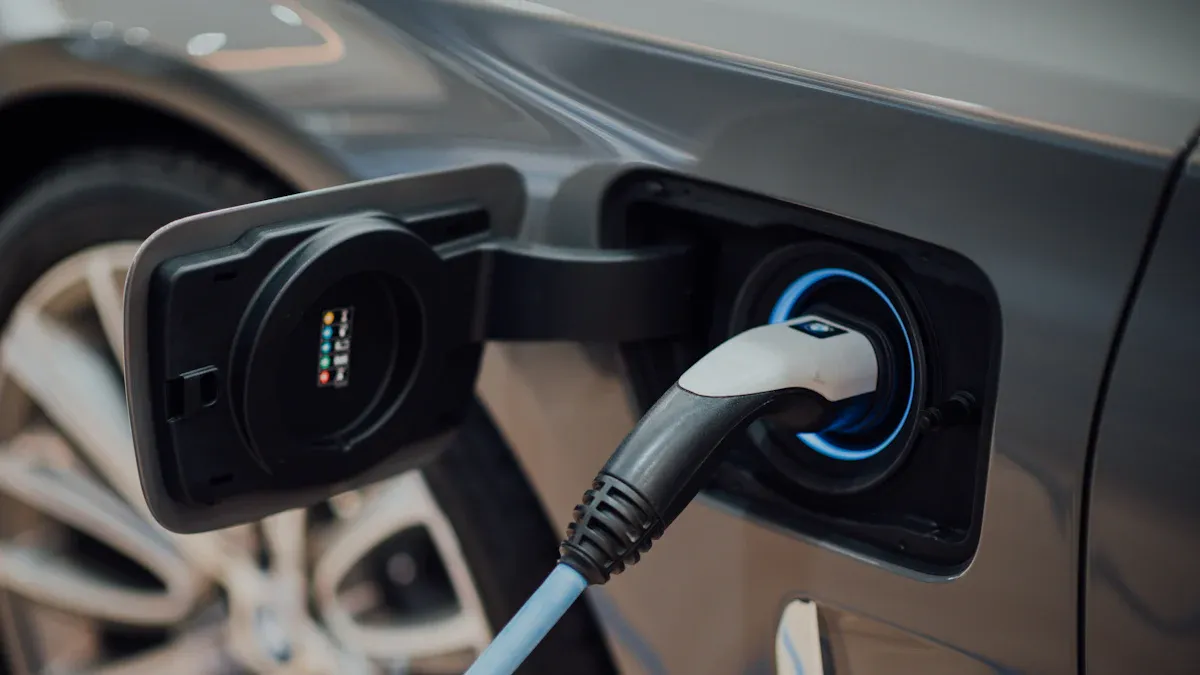
Many drivers mix up Mode 3 AC charging with Level 3 DC fast charging. These two methods do different jobs and use different gear. Knowing the difference helps you pick the right cable for your home or work station.
Mode 3 Charging Cables Explained
Mode 3 charging cables link your EV to a dedicated AC charging station. This station has a control pilot that runs the whole session safely. Per IEC 61851-1, the control pilot watches how your EV and the station talk. It sends a 1 kHz ±12 V PWM signal to tell your car the max current it can take. Your car reads this and adjusts its power use.
The control pilot also checks if the cable is connected and if charging is requested. It spots problems through states A to F, which show everything from "no car connected" to "need airflow" or "error found." This signal stops charging unless both sides confirm a good link.
Full Mode 3 charging cables come with an IC-CPD (In-Cable Control and Protection Device) built in. This part keeps every session safe and reliable. The IC-CPD guards against too much current, too much voltage, and stray current. Without it, you could hurt your car's battery or start a fire. A full cable with IC-CPD is not the same as a simple extension cord.
Understanding Charging Speeds: Mode 3 vs. Level 3 EV Charging
Level 3 charging runs on direct current and sends power at much higher rates. This method skips your car's onboard charger. The station changes AC to DC outside, then sends high-voltage current straight to your battery. Level 3 charging usually gives 50–350 kW, and some stations reach 500 kW.
Aspect | Mode 3 AC (Level 2) | Level 3 DC Fast Charging |
|---|---|---|
Current delivered to vehicle | Alternating Current (AC) | Direct Current (DC) |
Location of AC-to-DC conversion | Inside the vehicle (onboard charger) | At the charging station (external equipment) |
Power limitation | Limited by onboard charger size (typically 7.2–19.2 kW) | Not limited by onboard charger; station delivers hundreds of amps |
Charging speed | Slower | Significantly faster due to higher kW output |
EVs charge via AC (Level 1 or 2) or DC (Level 3 fast charging). While the grid supplies AC, batteries store DC. AC charging converts power on-board, which is slower, whereas DC fast charging converts it at the station, bypassing the on-board charger and delivering more power, making Level 3 charging much faster.
Level 3 charging uses different plugs. CCS and CHAdeMO carry direct current, not the SAE J1772 or Type 2 plugs found on Mode 3 cables. You cannot use a Mode 3 cable at a DC fast station. The plug won't fit, and the signal method is totally different. Trying it could break both the cable and your car's port.
For homes and workplaces, Mode 3 AC charging is the smart pick. Your EV charges overnight or during work hours without overloading the grid. Level 3 charging fits highways and big depots where speed matters more than cost.
Picking the right mode 3 charging cables needs careful planning. Think about connector type, current rating, cable length, and phase compatibility. Your cable must match your car's socket and your charger's output. A good brand gives long-lasting reliability.
Phoenix Contact, ChargePoint, and Tesla have certified products for home and office. DUOSIDA also has UL, TUV, and CE-certified items worth considering. These brands give reliable charging gear.
Before you buy, check your EV's charge port type. North American drivers need J1772 connectors; European drivers need Type 2. Confirm that it works with your existing EVSE.
Always check that your cable is a complete kit with built-in IC-CPD protection, not a passive extension cord. This safety device stops overcurrent and protects your EV's battery.
FAQ
How do I know which connector type my EV needs?
Look at your vehicle's charge port. Cars in North America use the SAE J1772 connector. Cars in Europe use Type 2. Tesla cars can use J1772 with an adapter. Your owner's manual tells you the right connector. Check this before you buy any cable.
What cable length should I choose for home charging?
Measure from your wallbox to your car's charge port. Add a few extra feet so you can move around. A 5-meter cable fits most garages. Longer cables, up to 10 meters, help when you park at odd angles or share the station between two cars.
Why does the IC-CPD matter in a charging cable?
The IC-CPD guards against too much current, too much voltage, and stray current. Without this built-in part, you could harm your battery or start a fire. A full mode 3 charging cable kit includes this safety feature. A plain extension cord does not offer this protection.
Can I use a Mode 3 cable at a DC fast charging station?
No. DC fast charging uses CCS or CHAdeMO connectors. These send direct current at much higher power levels. Mode 3 cables carry alternating current only. The plugs do not match, and the communication methods are completely different. Trying this could damage both the cable and your vehicle.
What is the difference between home and workplace charging cables?
Home cables focus on ease with lighter build and standard lengths. Workplace cables need tough jackets and strain relief for constant plugging and unplugging. Commercial stations often need smart features like RFID access control and load balancing. Pick durability for shared spaces.