
The 7 Best EV Charging Suppliers for Custom Design and Manufacturing
 2026-07-31

Evaluating top EV charging suppliers means checking engineering skills. You must also check design expert knowledge and production growth. Splitting work across different companies causes big mix-ups. A single manufacturing partner makes new product setup easy. They also handle big-volume manufacturing. Integrated OEM solutions drive safe electric vehicle charging rollouts. This helps public infrastructure grow. Specialized charging station companies deliver fast charging equipment. They also provide AC charging units for electric vehicles. Quality EV charging products help support key sustainability goals. Modern EV charging hubs power fleet EVs very safely. Scalable EV charging hardware allows fast setup. This helps electric transport networks expand. Dependable EV charging equipment ensures strong, stable charging operations.
Key Takeaways
One OEM maker makes design easy.
It lowers total production costs.
Custom EV hardware needs tough housing.
It needs smart cooling systems.
It needs global safety passes.
Big makers like DUOSIDA and ABB help.
They give growing custom answers.
These work for global markets.
Clear IP rights protect custom designs.
Software integration helps protect them, too.
This happens during big production runs.
markdown
Key Criteria for EV Hardware Manufacturing
Integrated ev charging suppliers make hardware creation easy. In-house engineering teams remove technical problems early. They help during initial product development.
Custom R&D and Hardware Design
Skilled engineers draft strong architecture for electric vehicles. Industrial design teams build strong IK10 steel housing. They build it for every station. Custom ev charging solutions need modular power electronics components. They use parts like Vienna rectifiers. Engineers boost energy conversion efficiency for electric transport. Advanced thermal controls direct energy flow safely. They protect internal batteries from damage. Flexible mass customization allows custom station enclosure design. This helps commercial operators get custom stations. Specialized ev charging solutions protect sensitive electronics. They keep parts safe in harsh weather.
Rapid Prototyping and Testing
Engineers test structure early for custom station hardware. Specialized design testing checks fast energy delivery. It tests power under extreme ambient temperatures. Advanced high-power dc fast charging units need testing. They require fast thermal management tests. Automated testing rigs push dc power limits. They check core internal components. Engineers run stress tests on charging modules. This protects public charging infrastructure. Advanced ev charging solutions ensure long-term durability. They last long at high-use public sites.
Compliance and Global Certifications
Global markets require strict safety rules. These rules govern electric vehicle charging hardware. North American regulators enforce UL 2202. This applies to dc fast charging products. European markets require CE mark validation. It falls under EN IEC 61851-1. Outdoor enclosures must meet IP54 or IP65. These ratings ensure good weather protection. Certified energy meters track energy flow. They allow for exact billing. Modern ev platforms implement ISO 15118 protocol. This connects evs with grid infrastructure safely.
Scalable Serial Assembly Lines
Efficient ev production requires smart design principles. Workers use these principles during manufacturing. Top factories set up automated assembly lines. They use them for continuous manufacturing. Modern manufacturing plants speed up production schedules. This helps many commercial clients. Automated testing systems check every ev unit. They test them before shipping. Integrated manufacturing methods cut overall production costs. They also help advance sustainability. Clean manufacturing processes help the environment. They support sustainability across all production phases. High-volume manufacturing plants build charging solutions. They serve businesses needing commercial infrastructure. Tier-1 manufacturing facilities deliver scalable solutions. They help build modern electric transport networks. Quality manufacturing supports widespread sustainability. It powers zero-emission vehicles and fleet electric vehicles. Modern manufacturing lines empower operators directly. They help operators deploy fast charging hubs quickly. They help charge evs efficiently every day. They supply stable electric power to vehicles. They help maintain high energy output continuously. They help manage dc power very well. They utilize durable components for long life. They help build reliable infrastructure for everyone.
7 Best EV Charging Suppliers for Custom Production
Choosing top makers needs careful hardware checks. The market has special fleet choices. It also has public network options. Top partners mix fast builds with strict engineering.
DUOSIDA: Complete Turnkey OEM/ODM Solutions
DUOSIDA began making items in June 2004. The firm trades on a stock exchange. They offer total engineering services. They design outer cases first. Then they scale up plant builds. Their catalog features connecting parts. It also includes full charging posts. They make high-voltage plugs too. They even craft wireless systems.
Their global plants hold top certifications. They hold UL, CSA, and TUV marks. They also hold BS, CE, and PSE. They meet IATF 16949 rules. DUOSIDA serves huge car companies. They work with top charging station companies. They sell across Europe and North America. Their specialized factory supports custom projects. This helps clients make green charging solutions. These tools power next-gen cars.
Key Takeaway: Integrated OEM/ODM capabilities from DUOSIDA enable seamless hardware customization and high-volume manufacturing for global markets.
ABB: Global Scale in DC Fast Charging
ABB leads global plant builds for power hardware. The firm sells in 85 markets. They built 1 million chargers globally. This includes 50,000 fast DC units.
Big utilities trust ABB hardware for projects. So do commercial operators. Their modular posts give clean power. They power cars and big fleets. Smart software controls the energy flow. It manages every charging station well. The firm grows factory output fast. This matches global EV targets.
Phihong USA: Fleet-Focused Custom Hardware
Phihong USA works with Zerova Technologies. Together, they build custom fleet tools. They engineer strong, durable units. They meet strict UL rules. They follow UL 2594 guidelines. They also match UL 2231 rules. Their hardware offers scalable charging solutions. They help firms run heavy fleets.
Phihong Fleet Capabilities:
• Dynamic Voltage Control: Programmable AC-DC and DC-DC power modules
• Smart Controllers: Dock controllers with CANBus, RS-485, and Ethernet
• Protective Enclosures: IP67/IP67-rated ruggedized hardware housing
• Integrated Telemetry: Real-time diagnostic logging and OTA update support
Their custom hardware fits tough yards:
Category | Specifications & Capabilities |
|---|---|
Power Output Range | High-efficiency direct current (DC) charging modules spanning from 1.5 kW up to 10 kW. |
Voltage Control & Power Modules | Programmable output voltages with Integrated Battery Management System (BMS) interaction, along with modular AC-DC power bricks featuring EMI and surge defenses. |
Design & Customization Services | End-to-end custom engineering, including bespoke enclosure design, tailored docking firmware, pre-compliance testing, and defined electrical specs for OEM fleets. |
Ampaway: Proprietary Level 2 and Level 3 Systems
Ampaway leads among ev charging suppliers. They design custom Level 2 units. They also build Level 3 units. Their charging solutions cover wide power ranges. They start at standard Level 2. They go up to 100kW+ units.
The firm builds many product types:
AMP MAX PLUS
AMP MAX
AMP LITE
AMP CORE
AMP CORE DUO
AMP FLEX
These systems use tough internal parts. They safeguard sensitive internal chips. Teams place them in busy spots. They deliver stable electric power daily.
BTC Power: High-Power Commercial Charger Design
BTC Power makes strong hardware. They build parts in Irvine, California. They engineer Level 2 AC units. They also make ultra-fast DC systems. Their units fit ISO 15118 rules. They pass Buy America laws. They also follow BABA and NEVI standards.
Business buyers choose from diverse hardware options:
Gen 4 All-in-One (AiO) DC Fast Charger: Includes liquid-cooled cables and dynamic power scaling.
Gen 4 360 kW Power Cabinet: Delivers dynamic power distribution to multiple charging posts.
Gen 2 Dispenser: Supports 200A and 350A continuous direct current outputs.
Gen 4 HPCD 500 Amp Public Dispenser: Serves high-demand public charging locations.
Customization Category | Available Design Options |
|---|---|
Current & Amperage Ratings | 200, 400, or 500 Amp configurations |
Dispenser Layout | Single or dual dispenser configurations |
Connectors & Ports | SAE Combo CCS1, CHAdeMO, single/dual CCS1, and NACS |
Displays & Screens | 7-inch quick interaction screen or 15-inch outdoor color touchscreen |
Branding & Aesthetics | Custom company branding and logo application on the dispenser |
Payment Integration | Credit card readers, RFID, Payter CC Reader (Apple & Android Pay) |
Cable Options | Standard or retractable liquid-cooled cables for higher amperage |
Their units offer steady charging power. A recent poll shows strong market views. Business users share high ratings:
Deployment Survey Metric | Finding / Percentage |
|---|---|
Decision-Makers Surveyed | 200+ commercial EV decision-makers |
Operational Necessity | 94% consider EV charging essential to their business operations |
Positive Business Impact | 92% report a positive impact from their charging programs |
Future Investment Intent | 97% plan to increase their charging infrastructure investments |
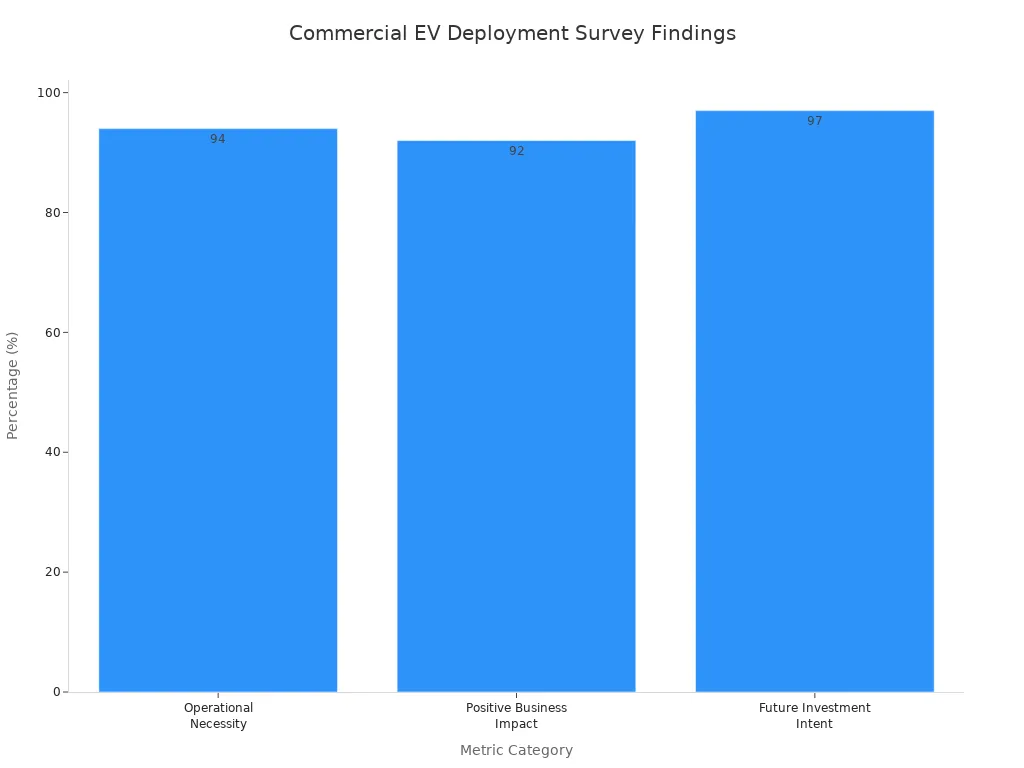
These top scores boost local sites. Sites build more posts fast.
Tritium: Advanced Liquid-Cooled Architecture
Tritium builds fast DC charging hardware. They design items for tough spots. Sealed outer cases block dirt. They keep out dust and moisture. Units use liquid cooling for heat. They run from -35°C to +55°C.
Tritium items sell in 50 countries:
Model Name | Maximum Power Output | System Architecture / Features |
|---|---|---|
RT50 | 50 kW | Standalone unit |
RTM75 | 75 kW | Modular System Architecture (MSC) |
RT175-S | 175 kW | Standalone unit |
PKM150 | 150 kW | Modular System Architecture (MSC) |
PK350 | 350 kW | Standalone unit |
TRI-FLEX | 400+ kW | Scalable hub-and-dispenser modular system |
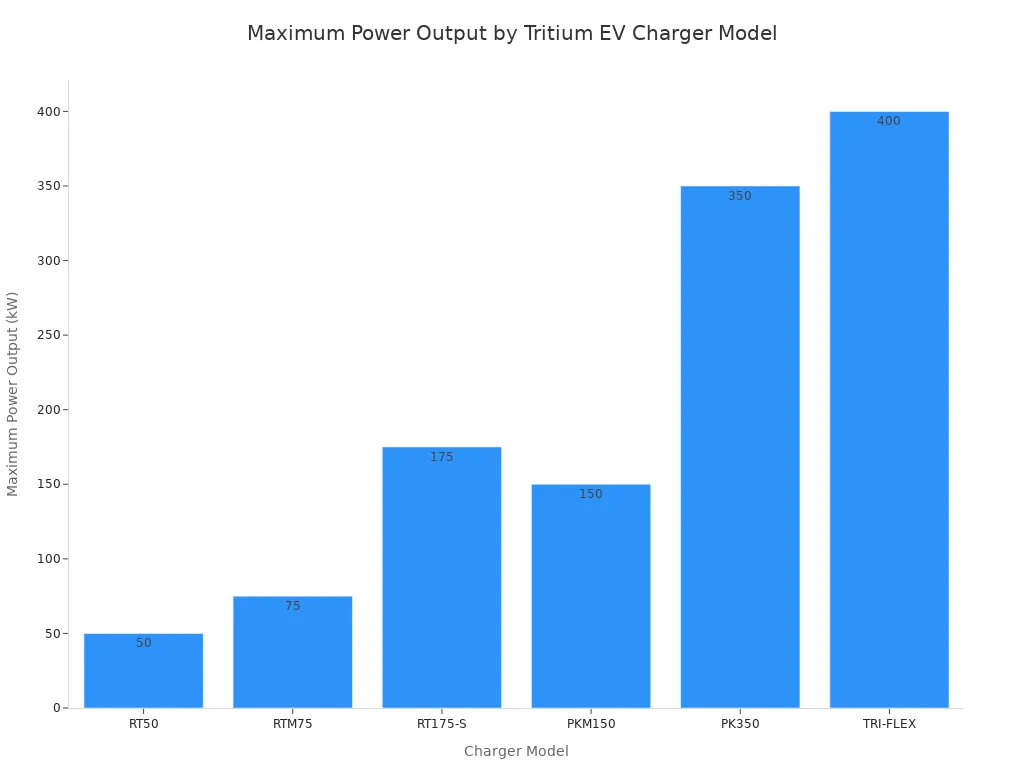
Their TRI-FLEX design holds power parts inside. They sit in a central box. This setup gives fast power transfers. It keeps outer stalls small.
DBT CEV: Custom Modular Infrastructure
DBT CEV is an old charging partner. They rank among veteran charging station companies. They started work in 1992. The firm employs 45 staff. This includes 25 skilled engineers. They tripled factory builds recently. They expanded in Northern France.
Category | Details & Metrics |
|---|---|
Manufacturing Capabilities | Multi-standard fast chargers (CHAdeMO and CCS Combo) with expanded production capacity in Northern France. |
European Market Presence | Technology adopted in 15 out of 27 European nations across highway corridors, service stations, and hotels. |
Their modular stations help local teams. They set up public networks fast. These tools support green goals. They help city fleets go electric. Experienced ev charging suppliers offer flexible builds. These parts build strong global transport networks. Specialized charging solutions help commercial fleets grow fast.
Sourcing Considerations for Custom EV Equipment
Picking good ev charging suppliers needs close factory checks. Buyers look at parts supply, code rules, and build rights.
Supply Chain and Component Sourcing
Making complex tools needs safe part supplies. Fast charger lines stop if key build parts get late. One missing power part can stop the whole factory.
Production Volatility: Late parts cause big build delays on busy lines.
Single Point of Failure: Fast charger power parts use small supply chains. Missing one power part halts all car builds now.
Smart build partners buy key parts early. They keep extra power parts on hand for smooth work. This act guards the main charging post while building. Safe power parts change grid power to charge car cells well. Strong factory buying speeds up full fast post building.
Firmware and OCPP Software Integration
Modern car charge setups need strong internal code. Charge tools must handle big power moves safely. Techs put strong computer chips inside each fast post.
Protocol Assurance Measure | Functional Role in Ensuring Compatibility |
|---|---|
Formal Certification & QA | Official code tests check for steady software work. |
Hardware Capabilities | Good chips and memory run safe OCPP 2.0.1 code. |
Firmware Upgrades | Air code updates keep post performance safe. |
Security Compliance | Data coding guards private info between cars and grids. |
Top brands make custom charging tools for firms. Safe ev charging solutions link work cars to main control code. These tools send clean power to cars fast. Whole ev charging solutions give fleets non-stop power control. Advanced ev charging solutions help green goals stay strong.
Tooling Ownership and IP Rights
Custom design jobs need clear legal pacts. Plant clients own sole rights for custom post plans.
???? Key Takeaway: Clear legal tool pacts guard custom design rights during big factory growth.
Wise design choices make mass production fast. Factory crews build strong gear for modern car fleets. Great dc fast charging posts give good clean power output. Strong charge networks build long-term green goals. Business bosses set up dc fast charging gear in towns easily. These strong car charge setups help clean road cars drive safe.
⚡ Full-service factories speed up the electric car push. Joined making gives complete ev charging solutions. These tools boost long-term green health.
Supplier Target | Ideal Project Scope |
|---|---|
DUOSIDA | Custom OEM/ODM electric vehicle charging platforms |
Global Leaders | High-power dc fast charging networks |
Buying bosses must check top charging station companies:
Check for automated paste inspection tools on active lines.
Check staff paper passes, test logs, and safety records.
Good charging hardware guards power systems. Great charging gear powers fleet vehicles and modern evs. Smart charging units give steady power transfers. Clean power drives fast electric car growth. Safe charging hubs give quick energy delivery. Trusted charging setups power electric vehicles safely. Wise bosses pick checked ev hardware suppliers today!
FAQ
What custom design choices do EV charging suppliers offer?
Top EV charging suppliers offer custom cases. They add custom logos. They adjust power output.
Engineers build custom AC and DC posts. They set up charging plugs. They adjust cables and control boards. They customize internal power modules. Custom hardware boosts overall charging reliability. It improves energy efficiency. It fits specific project needs.
Why do business buyers select turnkey OEM EV charging suppliers?
One supplier simplifies early prototype tests. They streamline big volume assembly lines. Using one factory prevents costly firmware mix-ups. Integrated manufacturing cuts total equipment costs. It speeds up charger deployment. It guarantees steady power output everywhere.
Which safety marks validate global EV charging hardware?
Top markets require UL 2202. They need CE, TUV, and CSA marks. Outdoor chargers need IP54 or IP65 ratings. Certified hardware ensures safe daily operations. It provides accurate billing metrics. It balances power dynamically. It enables secure ISO 15118 smart charging.
How does DUOSIDA execute custom EV charging hardware builds?
DUOSIDA offers complete turnkey design services. They provide full manufacturing support. They started in June 2004. They make high-voltage charging connectors. They build wireless charging systems. They craft modular charging stations. They hold UL, CSA, and TUV certificates. They maintain IATF 16949 quality standards. They supply platforms to big car makers. They serve global charging operators.