
Top EV charging inlet manufacturers with automotive-grade OEM validation
 2026-08-11

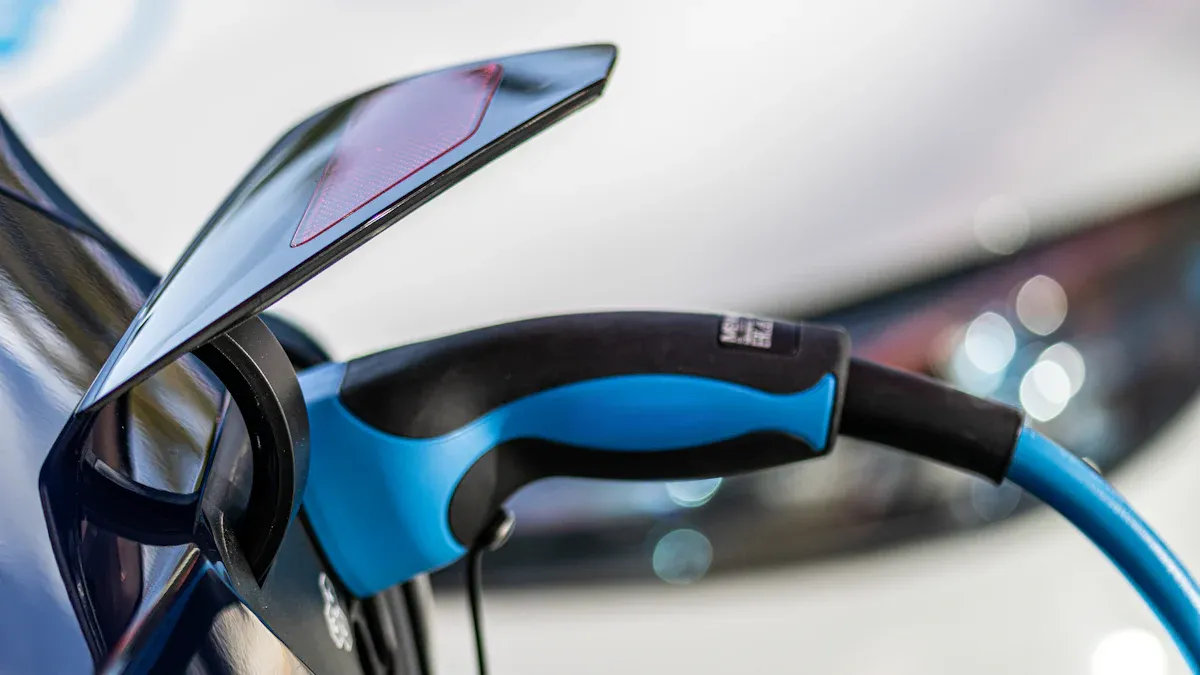
Top hardware companies like TE Connectivity, Amphenol, Phoenix Contact, ITT Cannon, Huber+Suhner, DUOSIDA, Ampure, Lectron, and VVDN Technologies build strong parts for electric cars. An OEM-validated ev charging inlet must pass tough carmaker tests, going far beyond basic factory rules through harsh weather, physical, and safety checks. Important approval rules require parts to follow IATF 16949, ISO 26262, IEC 62196, SAE J1772, SAE J3400 NACS, and GB/T 20234. Car design teams pick fully approved parts to build dependable charging setups. Modern ev charging systems keep power flowing smoothly in every type of car design. Official vehicle models rely on new EV hardware ideas and careful quality checks.
Key Takeaways
Car makers need electric vehicle charging ports to follow tough global safety and quality rules like ISO 26262.
Top makers create tough charging inlets that handle extreme temperatures and thousands of plug-in uses.
Powerful charging systems use special liquid coolers to keep parts from getting too hot during fast charges.
Adaptable charging port designs allow automakers to sell cars worldwide without altering the vehicle's underlying structure.
Essential Standards for Automotive EV Charging Inlets
Quality Frameworks and Functional Safety
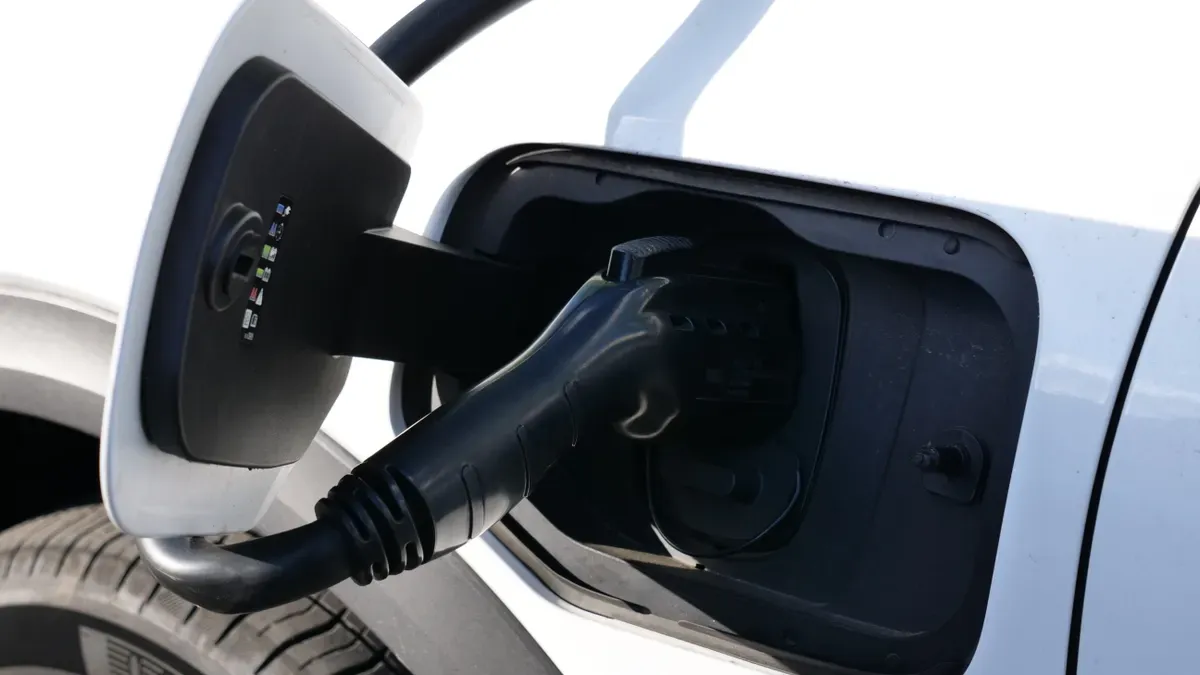
Car companies need strong parts for every ev charging inlet. Suppliers follow safety rules like ISO 26262 ASIL-B or ASIL-C to stop fires and electric problems while cars charge fast. Teams test hardware in severe cold at -40°C and heat at +125°C. They test parts on shaking machines and plug them in 10,000 times.
The IATF has approved Stakeholder Communiqué SC-2024-004, EV Charging Systems and related components.
The purpose of this Communiqué is to advise all IATF stakeholders that organisations manufacturing electric vehicle (EV) charging systems and their related components are eligible for certification to IATF 16949 (see Rules 5th section 1.0) as an accessory part.
The IATF Rules 6th Edition starts on January 1, 2025, to make supply chains better. Good makers like DUOSIDA build parts that survive water spray and car washes.
Component | Required IP Standards | Purpose/Description |
|---|---|---|
Vehicle Inlet Assembly | IP6K7, IP6K5, IP6K9K | Protection against immersion or high-pressure jets. |
General Reference | IPX7 | Protection against temporary submersion. |
General Reference | IPX9 / IPX9K | Protection against high-temperature, high-pressure water jets. |
Compliance with Global Inlet Protocols
Cars must connect safely to local chargers. Simple designs help companies sell cars worldwide, though shapes and signals change across global rules.
Standard | Common Name | Pin Configuration Summary | Communication Protocol Summary |
|---|---|---|---|
IEC 62196 (Type 1) | SAE J1772 / J-Plug | Five pins: Two AC conductors, protective earth, control pilot, proximity pilot. | Control pilot handles basic signaling. Proximity circuit supports plug detection. |
IEC 62196 (Type 2) | Mennekes | Seven contacts: L1, L2, L3, neutral, protective earth, control pilot, proximity pilot. | Control pilot handles basic signaling. |
GB/T 20234 | GB/T AC (China) | Separate AC and DC vehicle interfaces. | Control pilot functions handle basic signaling. |
SAE J3400 | NACS | Compact five-pin connector: Two large power contacts, ground, control pilot, proximity pilot. | Connector supports DC fast charging communication. |
Factories test these plugs before building lots of cars. Great hardware helps every electric car charge without problems.
Top Validated EV Charging Inlet Manufacturers
Automakers select component manufacturers based on strict qualification processes and proven hardware performance. Leading Tier-1 suppliers supply primary hardware for modern electric vehicles, while engineering partners develop specialized assemblies for custom platform designs. These engineering teams evaluate thermal thresholds and modular integration flexibility before specifying hardware for serial vehicle production.
Established Global Tier-1 Suppliers
TE Connectivity produces the modular AMP+ series to support regional plug formats. Their modular platform offers custom options like 90-degree or 180-degree cable exit angles, flap designs, and status LED indicators. Their AMP+ Inlet CI 500 handles 500 amps continuous current at 1000 VDC to supply up to 500 kW of power. Meanwhile, the AMP+ Inlet CI 250 handles 250 amps continuous at 1000 VDC. The AMP+ Inlet CI 200 delivers 200 amps continuous at 1000 VDC, and the AMP+ Inlet CI 32 manages AC current up to 32 A. For safety, these units meet IPXXB finger safety standards and maintain IP67 water protection for cable exits. TE locking actuators endure 80,000 charge cycles to optimize lock reliability. Their CCS Type 1 variation transfers up to 12 kW AC and 120 kW DC power, whereas the CCS Type 2 variation transfers up to 22 kW AC and 200 kW DC power.
Amphenol Interconnect solves high thermal loads during rapid ev charging sessions. The company collaborates with VOSS Automotive and Gebauer & Griller to integrate a polymer heat exchanger into the CHARGESOK CCS2 socket. This active cooling method targets DC contact chambers because these points experience maximum thermal stress. The system circulates water-glycol mixtures or immersion fluids directly around contact chambers to clear intense heat during high-power ev power transfer.
Phoenix Contact designs CHARX control units to orchestrate communication between the ev charging inlet and public charging infrastructure. The CHARX Control vehicle charging controller acts as the central controller between the vehicle and external chargers. Their controllers implement DIN 70121, ISO 15118-2, and ISO 15118-20 standards to establish the technical foundation for reliable CCS1 and CCS2 interoperability.
Supplier | Key Product Series | Max Power Specifications | Standard Protocols |
|---|---|---|---|
TE Connectivity | AMP+ Series | 500 A continuous, 1000 VDC | CCS1, CCS2, IEC 62196 |
Amphenol | CHARGESOK CCS2 | High-power DC direct cooling | CCS2 |
Phoenix Contact | CHARX Control | Controller integration | DIN 70121, ISO 15118 |
Specialized OEM Partners and Hardware Integrators
Established in 2004, DUOSIDA (Zhangjiagang UCHEN New Energy Technology Co., Ltd., Stock Code: 873087) serves mainstream domestic and international automakers as a validated ev hardware provider. DUOSIDA holds IATF 16949, UL, TUV, CSA, and CE certifications to supply every certified ev charging inlet across global assembly lines.
Specialized suppliers expand choices for vehicle platforms and commercial infrastructure network systems. Ampure delivers validated hardware directly into OEM production supply chains. Lectron applies automotive-informed validation processes to deliver custom charging solutions for consumer electric vehicles. Meanwhile, ITT Cannon and Huber+Suhner engineer high-power RADOX hardware for heavy-duty ev trucks during fast ev charging operations. Finally, VVDN Technologies provides platform integration for an automotive-grade on-board charger inside multi-standard vehicle architectures during active ev charging cycles. These hardware specialists help vehicle engineering teams accelerate development schedules and optimize ev powertrain capabilities.
High-Power EV Charging and Thermal Integration
Active Cooling and Temperature Sensing
High-power energy transfer generates intense thermal energy at contact pins during fast ev charging cycles. Actively cooled charging inlets leverage liquid-cooling systems as the gold standard method for managing heat during rapid ev charging operations. For example, TE Connectivity AMP+ 500 Series inlets handle a max continuous current of 500 Amps. This hardware relies on active cooling at the station alongside embedded thermal sensing inside the ev assembly.
The liquid cooling process for an ev charging inlet closed-loop system involves specific sequence steps:
A heat exchanger within the system transfers heat generated during charging to a water-glycol coolant mixture.
The coolant circulates through the cooling system and absorbs thermal energy.
The heated coolant travels to a radiator or secondary heat exchanger.
The secondary unit dissipates heat into the air or transfers heat to another cooling loop.
Over-Temperature Safety Mechanisms
Engineers integrate direct cooling technologies to protect electric vehicles from thermal damage. Amphenol-Tuchel, VOSS, and GG Group developed the CHARGESOK socket with the Power2Flow harness. This hardware provides direct cooling of DC contact chambers in CCS2 sockets and supports CCS1, CCS2, NACS, GB/T, and CHAdeMO protocols. The integrated polymer heat exchanger works with water-glycol or immersion fluids to enable up to 70% higher current compared to non-cooled solutions.
Integrated thermal sensors continuously monitor contact temperatures during every ev session. Control units throttle power automatically if temperatures exceed safety thresholds. Megawatt-class hardware like the Autel MaxiCharger DT1000 uses paired 1,000 A liquid-cooled CCS technology to sustain extreme high-current output. Extreme systems like the Alpitronic HYC1000 reach power ratings up to 1,000 kW and 1,000 A DC. These active thermal protections guarantee safe operation for every ev driver on an ev platform. Safe ev system operation protects battery health for every ev fleet. Advanced temperature sensors monitor every ev application during every ev charging event. Robust temperature monitoring prevents severe component damage and eliminates thermal runaway risks across high-power infrastructure networks.
Procurement Criteria for OEM EV Platforms
Multi-Standard Architecture Compatibility
Car companies create flexible platform designs to support electric vehicles in different world markets. Diverse global regions require unique physical plug shapes along with different digital communication rules. Vehicle setups must support CCS1, CCS2, SAE J3400 NACS, and GB/T formats without altering internal car frames. Engineering teams select a single EV charging port size to streamline vehicle factory lines. This shared physical design reduces redesign expenses and speeds up project timelines for every EV build program.
Cross-standard compatibility demands solid communication control between internal EV control chips and public charger stations. Special controllers run ISO 15118 and DIN 70121 signaling systems to setup fast EV charging sessions safely. Modern EV designs handle both single-phase AC power flow and high-power EV charging through one shared plug setup. These flexible charging setups help car engineering teams launch vehicles worldwide with few hardware updates and lower testing costs.
Supply Chain Resilience and Scalability
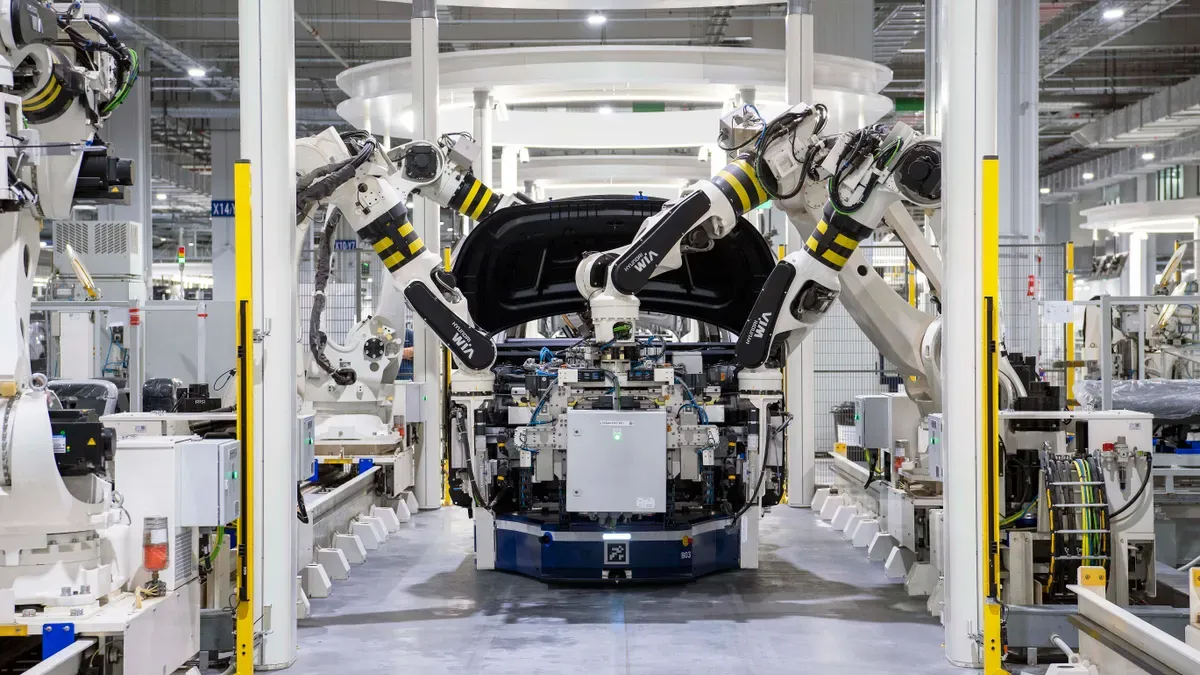
Purchasing managers check factory production limits to avoid line delays when EV factory output grows quickly. Approved parts suppliers run certified plants that follow IATF 16949 quality standards and strict automotive rules. For instance, DUOSIDA runs certified factory locations to ship large orders of EV parts for local and global car brands. Dependable supply partners offer strict quality checks, backup material sources, and robot assembly lines. These smart steps secure a steady flow of EV parts across global car plants.
Growing regional charging networks creates huge market demand for tough, high-power EV hardware. Automobile makers form long-term business partnerships with major suppliers to reserve high-volume assembly lines. Modern car testing labs check every EV part under extreme heat and harsh weather during fast EV charging runs. Dependable suppliers help factories boost output quickly while reducing long-term supply chain risks for every built-in EV car model.
Car buyers select car plugs by testing safety rules, smart heat control, and global shape matches. Top makers and trusted hardware brands like DUOSIDA speed up new electric car builds. Tested parts lower total development costs and stop costly safety fixes across every single vehicle platform.
Car engineering teams use this simple review list when checking supplier quotes for fast electric car charging setups:
Check for IATF 16949 quality standard stamps along with key ISO 26262 safe car rules.
Make sure heat sensors connect directly with active liquid cooling parts inside the car design.
Test plug fits across different regional shapes like CCS1, CCS2, NACS, and GB/T designs.
Confirm strong robot factory speed to keep a steady supply of electric parts shipping on time.
FAQ
What standards govern automotive-grade EV charging inlets?
Top factories check car charging ports using strong quality rules like IATF 16949 and ISO 26262 safety guidelines. Local connection rules include SAE J1772, SAE J3400 NACS, IEC 62196, and GB/T 20234. Tough IP67 and IP69K ratings guarantee total water protection against powerful, hot water sprays.
Why do high-power EV charging inlets require active liquid cooling?
Fast charging runs up to 500 A create extreme heat at metal plug pins. Smart liquid cooling setups pump water-glycol fluid straight around the inner wire pin chambers. This steady heat removal prevents hot power errors and protects costly car battery parts during quick power flows.
How do engineers test EV charging inlet durability?
Smart teams put hardware through hard shaking tests and extreme heat shifts between -40°C and +125°C. Charging ports must handle over 10,000 plug-in steps without losing good contact. Approved suppliers like DUOSIDA keep UL, TUV, and CE paper marks to prove lasting pin performance.
How do validated inlets ensure compatibility across public charging infrastructure?
Built-in car charge chips run DIN 70121 and ISO 15118 digital message systems. These tiny computer setups match electric power needs between the car system and public charger networks. Safe matching works seamlessly across local CCS1, CCS2, NACS, and GB/T plug setups.